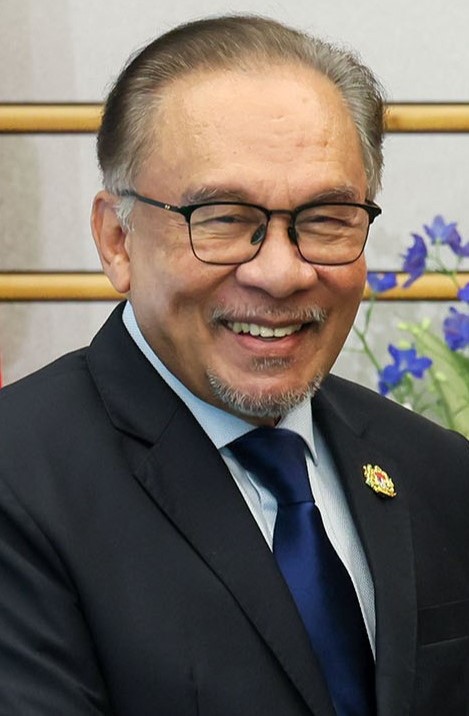
Prime Minister Anwar Ibrahim met with Johor Regent Tunku Ismail in Kuala Lumpur this week, with both leaders expressing their intention to maintain robust ties between the Johor state administration and the federal government. The audience signals a deliberate effort by the premier to engage directly with one of Malaysia's most prominent state rulers on matters concerning inter-governmental cooperation and political stability in the region.
Johor holds particular strategic importance within Malaysia's political economy. As the nation's second-largest state and home to major industrial zones, foreign investment hubs, and significant port infrastructure, the state's relationship with Putrajaya carries consequences well beyond its borders. The meeting underscores recognition from the federal level that sustained collaboration on economic development, infrastructure projects, and administrative coordination requires consistent engagement at the highest levels.
The accord reached during their discussion reflects an apparent shared understanding of the need to prevent friction that could impede development initiatives or create governance complications. In Malaysia's federal system, where states retain considerable autonomy over land, agriculture, local government, and certain other matters, periodic tension between state and federal authorities is not uncommon. The explicit commitment to preserve goodwill suggests both sides wish to avoid scenarios where disagreements escalate or public disputes undermine investor confidence or project execution.
Anwar's initiative to seek an audience with the Johor Regent carries symbolic weight. While formal protocols typically govern such interactions, the prime minister's personal engagement indicates priority placed on the relationship. In Malaysian politics, direct communication between federal and state leadership often serves as a mechanism to address underlying concerns, signal political will for cooperation, and establish informal channels for resolving issues before they become public disputes or constitutional questions.
For Malaysian observers and business stakeholders, the meeting carries implications for several ongoing matters. Johor's continued development ambitions, including infrastructure expansion and industrial zone diversification, depend partly on federal support through budgetary allocations, policy coordination, and regulatory alignment. A stable relationship between state and federal administrations creates the conditions necessary for long-term planning and investment commitment.
The emphasis on maintaining relations also reflects the political reality that both the federal government and Johor's state administration benefit from demonstrated cooperation. Public perception of governance effectiveness improves when different tiers of government appear aligned on developmental priorities. This perception matters for investor confidence, public service delivery, and the legitimacy of institutions managing Malaysia's complex federal architecture.
Regionally, Johor's position as a gateway to Southeast Asia and its role as a major node in regional commerce networks means that state-level stability affects not just Malaysian economic performance but broader regional connectivity. Any disruption to administrative or political consensus in Johor reverberates across neighbouring jurisdictions and impacts the seamless operation of cross-border economic zones and infrastructure corridors.
The timing of such public assurances often reflects an awareness within government circles that maintaining explicit commitment to inter-governmental harmony requires periodic reaffirmation. Without such gestures, rumours or perceptions of discord can take root, potentially weakening institutional effectiveness and complicating the implementation of coordinated policies. By meeting and issuing joint statements affirming commitment to collaborative governance, both leaders preempt speculation and reinforce professional relationships.
Historically, Malaysia has navigated periods where state and federal tensions have created administrative complications or delayed project completion. The commitment articulated during this meeting suggests both Anwar's administration and the Johor leadership recognise that proactive relationship management produces better outcomes than reactive crisis management. This approach aligns with broader contemporary expectations in Malaysian governance for predictability and reduced political volatility.
The discussion likely covered multiple portfolios given their respective positions. Federal development schemes, state-level infrastructure priorities, coordination on economic zones, and alignment on policies affecting cross-border commerce typically feature in such high-level engagements. By confirming their intention to preserve good relations, both sides communicate to their respective administrations, stakeholders, and the public that governance will proceed on the basis of institutional cooperation rather than confrontation.
Moving forward, the challenge lies in translating this stated commitment into consistent operational effectiveness. Maintaining good relations requires more than periodic meetings and joint statements. It demands sustained attention to grievances, prompt resolution of administrative disputes, and genuine collaboration on problem-solving. The meeting represents a beginning rather than a conclusion to the work of nurturing a productive federal-state partnership.
For Malaysian observers, particularly those monitoring developments affecting business and investment, this reaffirmation offers some reassurance that governance structures will operate with sufficient predictability to support medium-term planning. Whether this commitment translates into tangible improvements in service delivery, infrastructure execution, and coordinated policy implementation will become apparent through concrete outcomes in the months ahead.