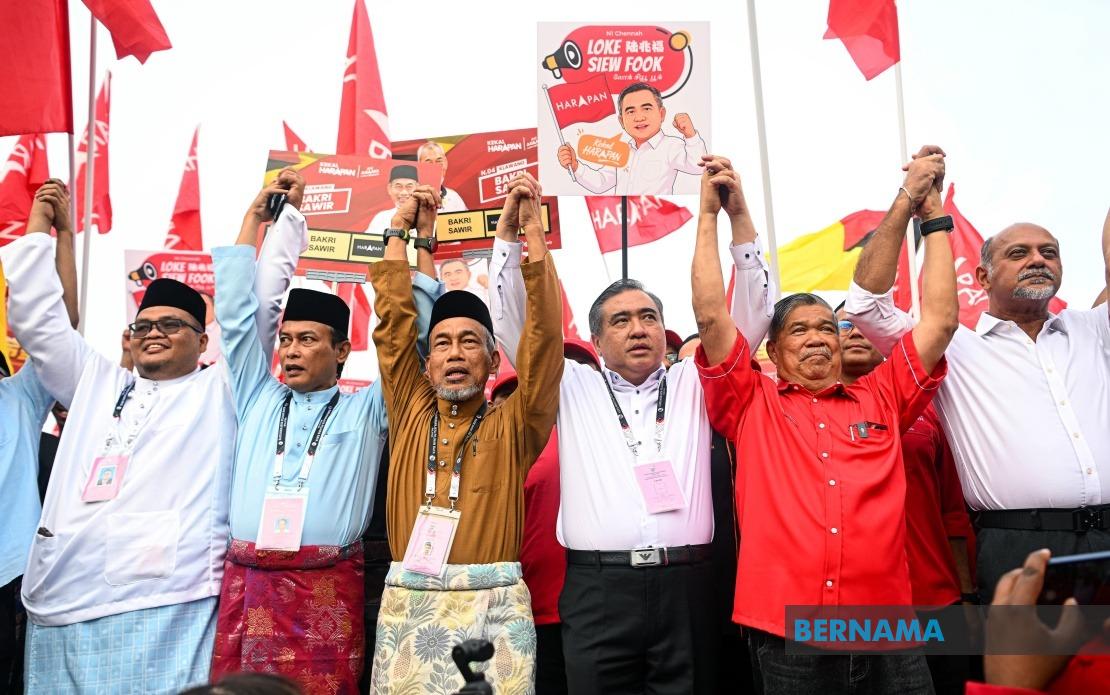
Transport Minister Anthony Loke is bracing for a direct contest to retain the Chennah state seat, which he has represented continuously for over a decade, as the 16th Negeri Sembilan state election unfolds. The DAP secretary-general will be challenged by Siow Kong Choon, who holds the position of state MCA Youth chief and carries the Barisan Nasional ticket into this closely watched battle. The matchup was formally confirmed after the nomination process concluded at the Dewan Besar Kuala Klawang nomination centre in Jelebu, with the returning officer, Abdul Rahim A Aziz, announcing the final lineup.
Loke's entry into the race came moments before his challenger, with the Seremban Member of Parliament filing his nomination at 9.05 am, followed by Siow at 9.09 am on the July 18 nomination day. This straight fight configuration suggests neither coalition has faced significant difficulty in fielding candidates, and indicates both the DAP and BN regard the seat as sufficiently competitive to warrant senior figures taking centre stage. For observers tracking Negeri Sembilan politics, the direct contest between these two represents a clear ideological and organisational clash in a state where DAP has made steady electoral inroads over recent years.
Loke's previous electoral performance in the constituency provides him with considerable momentum heading into this campaign. In the 2023 Negeri Sembilan state election, he secured 5,888 votes to decisively defeat his Perikatan Nasional opponent Rosmadi Arif, establishing a commanding majority of 2,200 votes. That victory underscores the strength of his personal political machinery and the receptiveness of Chennah voters to his representation. However, the arrival of a BN candidate rather than a PN challenger represents a tactical shift, suggesting the coalition may have adjusted its strategy in targeting what it perceives as winnable ground.
Siow Kong Choon's candidacy brings fresh momentum to the BN campaign in Negeri Sembilan, where the coalition has worked to recover electoral ground following years of weakness. His standing as state MCA Youth chief positions him as a rising figure within the party hierarchy, and BN's selection of him signals a commitment to fielding competitive candidates in seats where the outcome remains uncertain. The MCA's presence in a three-cornered fight would have fragmented the anti-DAP vote, making a straight contest potentially advantageous for the party structure—whether it ultimately benefits BN or DAP remains an open question dependent on voter behaviour and campaign effectiveness.
The Negeri Sembilan state election itself reflects broader shifts in Malaysian electoral politics, with the state becoming an increasingly competitive arena between the ruling coalitions and opposition forces. That Loke, a prominent DAP figure now serving as Transport Minister in the federal government, must actively defend his seat illustrates how electoral contests have tightened across peninsular Malaysia. His dual responsibilities managing the transport portfolio while campaigning in Chennah will require careful time management, and may provide both opportunities and vulnerabilities that BN could potentially exploit during the campaign period.
The Election Commission has structured the poll timeline to allow adequate preparation and voting accessibility. Early voting has been scheduled for July 28, providing flexibility for those unable to cast ballots on the main polling day of August 1. This staggered approach is increasingly standard in Malaysian electoral administration and reflects efforts to maximise participation while maintaining security and integrity of the process. For Negeri Sembilan voters, the extended timeline means campaign activity will continue across multiple weeks, allowing candidates and their supporting organisations to engage constituencies thoroughly.
Look back to Loke's previous 2,200-vote margin reveals both confidence and caution in his camp. While the margin is substantial and suggests genuine support among Chennah constituents, it is not insurmountable should BN generate sufficient momentum through improved turnout or candidate appeal. The swing required to unseat Loke would require either a significant shift in voter sentiment or demographic changes that have occurred since 2023. Political analysts watching the contest will scrutinise vote totals carefully, as results from Chennah may provide early signals about BN's capacity to regain ground in Negeri Sembilan more broadly.
The MCA's participation in this contest carries particular significance for the party's positioning within BN. Having fielded a candidate in Chennah signals the party's commitment to rebuilding presence in state assemblies, an objective that has gained urgency as MCA leadership seeks to demonstrate party relevance and organisational capacity to its grassroots members. Whether Siow can translate his youth leadership credentials into electoral success remains to be determined, but his candidacy demonstrates MCA's willingness to contest seats previously held by opposition parties.
For Malaysian voters observing from other states, the Negeri Sembilan election provides a preview of electoral dynamics that may manifest in future contests. The state's relatively balanced political demographics mean results often foreshadow national trends. A decisive Loke victory would suggest DAP retains strong capacity in peninsular constituencies, while an upset by Siow could indicate BN's revival efforts are gaining traction. The Chennah contest, despite being one of several seats contested, may disproportionately influence how political observers interpret the overall mandate emerging from the Negeri Sembilan polls.
The campaign ahead will test both candidates' ground operations and their ability to articulate compelling reasons for voter support. Loke enters with incumbency advantage and a track record of service, while Siow brings freshness and BN's organisational machinery to bear. Local issues—whether relating to state development priorities, infrastructure improvements, or service delivery—will likely dominate both camps' messaging as they compete for an electorate that has demonstrated its willingness to vote strategically across different electoral levels.

