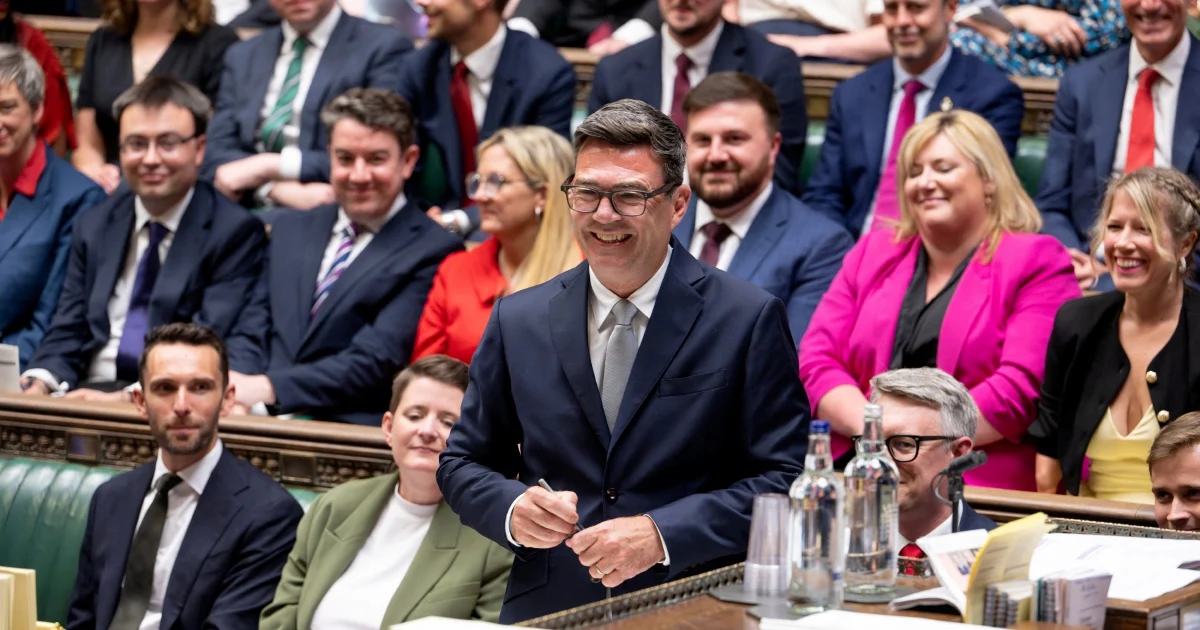
Andy Burnham, the high-profile mayor of Greater Manchester, received an overwhelming reception in parliament on Monday following Prime Minister Keir Starmer's announcement that he would step down as Labour leader. The display of support from his parliamentary colleagues underscores his growing prominence within the party and hints at a potential leadership transition that could reshape British politics with a distinctly regional flavour.
Burnham's trajectory to national prominence has been unconventional for a Labour frontrunner. Rather than accumulating ministerial titles in Westminster, he has spent the past decade consolidating power in the North of England, a region long frustrated by perceived neglect from central government. His mayoral role, established through the devolution framework, has allowed him to operate with unusual autonomy and build a substantial power base outside the traditional parliamentary hierarchy. This positioning has become a considerable asset as the party contemplates its future direction following Starmer's departure.
The timing of Burnham's emergence reflects broader discontent within Labour regarding the party's electoral performance and internal cohesion. Starmer's decision to resign comes amid mounting pressure from colleagues over party management and strategic direction. In this context, Burnham represents an alternative vision—one grounded in regional grievances and provincial concerns that have historically felt marginalised by Westminster-centric politics. His ascendancy would signal a significant shift in how Labour approaches its relationship with Britain's regions.
Burnham's public profile has grown substantially through his handling of major issues affecting Greater Manchester, from pandemic policy to transport investment and economic development. He has cultivated an image as an assertive negotiator willing to challenge central government on behalf of his constituents. This reputation has resonated particularly with Labour members and MPs seeking a leader who can speak to concerns beyond the capital. His background as a former health secretary also provides him with relevant experience in national governance, distinguishing him from purely regional politicians.
The nickname "King of the North" reflects how supporters perceive his role as an advocate for regions long experiencing relative economic decline and political underrepresentation. This framing carries both opportunity and risk. While it appeals to voters and activists frustrated with London-centric governance, it potentially pigeonholes him as a regional champion rather than a genuinely national figure capable of commanding support across all constituencies. The next phase of his political career will involve demonstrating that northern interests and broader British concerns can be effectively represented simultaneously.
For Malaysian observers and Southeast Asian stakeholders, Burnham's potential elevation carries interesting implications. Britain's internal regional politics often inform its external engagement, particularly regarding investment priorities and trade partnerships. A leadership transition favouring regional development could influence how UK devolved governments in Scotland, Wales, and Northern England approach international economic relationships. This might create opportunities for closer bilateral engagement with these regions, which possess considerable autonomy in certain policy areas.
Burnham's potential leadership candidacy also reflects contemporary global political trends where traditional party establishments face challenges from figures operating outside conventional hierarchies. His mayoral platform demonstrates how sub-national governance can become a launching pad for national ambitions, a pattern observed in various democracies where regional leaders leverage local popularity into broader political leverage. This phenomenon warrants attention as it suggests evolving patterns of political recruitment and advancement.
The coming weeks will prove crucial in determining whether parliamentary enthusiasm translates into formal candidacy and ultimately into leadership victory. Labour's selection process involves both MPs and party membership, meaning Burnham must appeal across different constituencies within the party. His north-south divide narrative may resonate strongly with activist members, but he will also need to convince parliamentary colleagues that he can construct an effective national coalition capable of defeating the Conservative government.
The broader significance of this moment extends beyond immediate leadership mechanics. Burnham's emergence raises fundamental questions about how major parties balance regional representation with national coherence. His potential ascendancy could presage a recalibration of Labour's geographical focus, with greater emphasis on industrial heartlands and post-industrial communities that have felt abandoned by globalisation. This reorientation would represent a stark departure from Starmer's more centrist, London-influenced approach.
Starmer's departure also creates a leadership vacuum at a critical moment for British politics, with economic challenges, public service pressures, and social fragmentation creating urgent demands for political renewal. The contest to replace him will test whether Labour can chart a credible alternative path to Conservative governance while maintaining internal unity. Burnham's candidacy represents one particular vision of that future—anchored in regional recovery and prioritising communities beyond metropolitan elites.
As Conservative Prime Minister and Labour contemplate their respective futures, the stakes extend beyond internal party matters. Britain's international standing, economic performance, and social cohesion all depend on political stability and coherent governance. Whether Burnham or another candidate ultimately leads Labour, the process of renewal underway within Britain's largest opposition party will significantly shape the country's trajectory over the coming years.