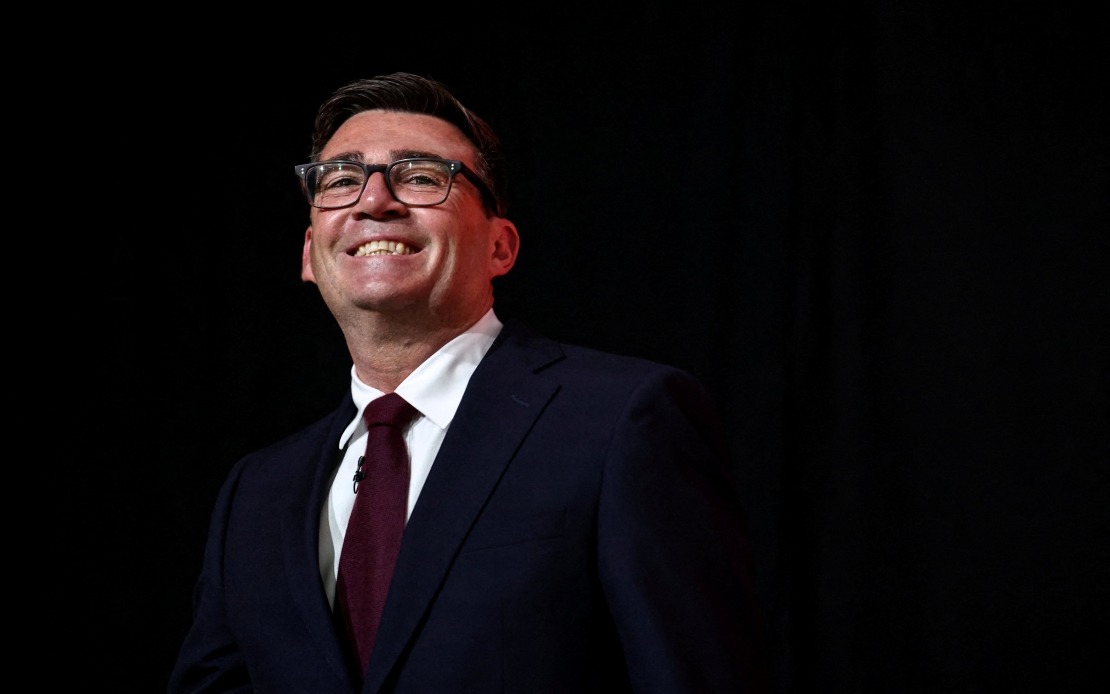
Andy Burnham has secured election as the new leader of the Labour Party, a development that places him on an imminent path to the office of United Kingdom Prime Minister. The announcement came in London on July 17, with Burnham publicly affirming his readiness to assume the country's highest political office and to build upon the substantial achievements of his predecessor, Keir Starmer.
In his remarks following the leadership announcement, Burnham struck an emotional and reflective tone, acknowledging both the personal significance of the moment for himself and his family, whilst simultaneously emphasising his conviction that he possesses the capacity and resolve required for the role ahead. His public positioning suggests a carefully calibrated transition strategy, one that seeks to consolidate the momentum generated during Starmer's tenure whilst projecting forward momentum and renewal within the party's leadership structure.
The incoming prime minister took particular care to acknowledge Starmer's transformational impact on Labour's electoral prospects and governing record. Burnham highlighted the remarkable trajectory that the party has travelled during Starmer's premiership, moving from what he characterised as one of the worst electoral defeats in the party's modern history to securing one of its most decisive victories. This framing serves a dual purpose: it legitimises the continuity of Labour governance whilst simultaneously positioning Burnham as the natural custodian of Starmer's legacy and the architect of its continuation.
Throughout his two years in the Prime Minister's office, Starmer had overseen a government agenda marked by several flagship policy initiatives. Burnham's public enumeration of these achievements—encompassing expanded worker protections and tenant rights, improvements in National Health Service waiting time metrics, the restoration of rail services to public ownership, and passage of the Hillsborough Law—underscores the legislative foundation upon which he will build. The Hillsborough Law, in particular, represents a significant symbolic achievement in criminal justice reform, addressing longstanding grievances around the balance between individual rights and institutional accountability.
Burnham's political career before assuming the Labour leadership had established him as a significant figure within the party's regional power structures. His tenure as mayor of Greater Manchester provided him with executive experience managing one of England's major metropolitan areas, an experience that afforded him direct exposure to the practical challenges facing British communities across housing, economic development, public services, and infrastructure. This provincial power base distinguishes his profile within the broader Labour establishment and may inform his approach to governance beyond Westminster.
For Malaysian and Southeast Asian observers tracking developments in British politics, Burnham's ascension carries implications for the trajectory of UK-Commonwealth relations and the broader strategic orientation of the British government. Labour governments have historically maintained distinctive approaches to international development, trade partnerships, and regional engagement compared to their Conservative counterparts. The continuity of Labour governance under new leadership will likely preserve existing policy frameworks whilst potentially introducing refinements reflecting Burnham's particular strategic priorities and regional sensitivities.
The transition occurring within British political leadership also carries significance for the international order more broadly. As a significant power within the North Atlantic Treaty Organization and a permanent member of the United Nations Security Council, the United Kingdom's internal political transitions carry weight extending well beyond its borders. Burnham's stewardship of British foreign policy will intersect with ongoing geopolitical complexities in Europe, the Indo-Pacific region, and the Middle East, areas where Malaysia and regional partners maintain substantial interests.
Within the domestic British context, Burnham assumes leadership of a party that has secured two years of consecutive governance following its electoral victory. The challenge confronting any new Labour leader extends beyond the ceremonial aspects of leadership transition to encompass the substantive task of maintaining party cohesion, managing expectations amongst the party's diverse ideological factions, and sustaining public confidence in Labour's ability to address persistent economic and social challenges. The party's internal management dynamics, particularly regarding its left and centrist wings, will require careful navigation.
The timing of Burnham's elevation to the party leadership occurs within a specific historical moment for the United Kingdom. Challenges ranging from economic pressures to public service capacity constraints to regional devolution questions will confront his administration. His track record in Greater Manchester management will likely inform how his government approaches the distribution of resources and authority across England's regions, a question that carries particular resonance given ongoing debates about Westminster centralisation versus devolved governance.
Burnham's public statements emphasise continuity with Starmer's general policy direction whilst positioning himself as ready to lead and advance the agenda. His acknowledgment of Starmer's foundational contributions to Labour's recovery suggests an approach that seeks to consolidate electoral gains and policy achievements rather than pursuing dramatic ideological reorientation. This positioning implies stability for both domestic constituencies and international partners observing the transition in British leadership.

