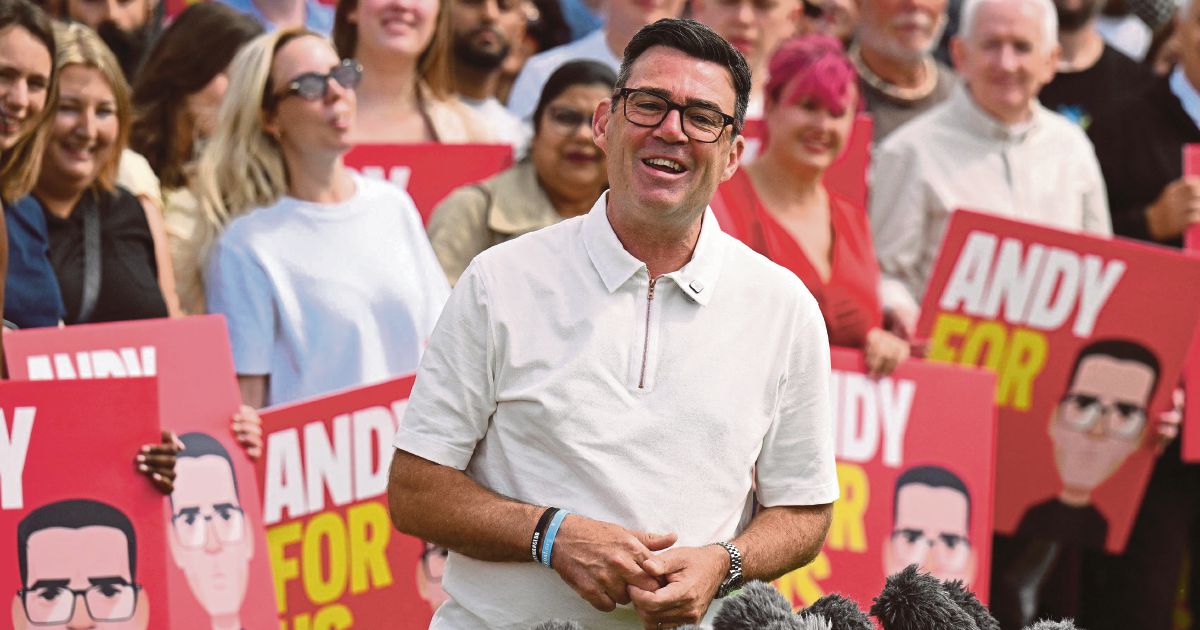
Andy Burnham took office on Monday as Britain's seventh prime minister within ten years, inheriting a nation grappling with persistent economic pressures and widespread disillusionment with public institutions. The politician, known for his prominent role in northern English politics, has framed his administration around a commitment to "rewire" the British system—a rhetorical commitment to restructure how government prioritises and addresses the challenges most affecting ordinary households and communities.
Burnham's ascension marks another rapid transition at the apex of British politics, reflecting the underlying instability that has plagued Westminster governance through successive electoral cycles and leadership contests. The frequency of prime ministerial changes in recent years has become emblematic of deeper fractures within the political system itself, raising questions about institutional effectiveness and whether frequent executive turnover can deliver the stability necessary for meaningful policy implementation.
The incoming Prime Minister has explicitly centred his agenda on the cost-of-living crisis, a phenomenon that has shaped British electoral politics and public sentiment for several years. Households across the United Kingdom continue experiencing elevated energy bills, food price inflation, and wage stagnation relative to inflation, creating tangible economic anxiety that transcends traditional demographic and geographic divides. Burnham's decision to elevate this issue signals recognition that addressing household economic pressures represents essential ground for rebuilding public confidence in government.
Equally significant in Burnham's stated priorities are poorly performing public services, particularly within the National Health Service and education sectors. Both institutions have faced mounting capacity challenges, staff shortages, and declining public satisfaction metrics. The healthcare system in particular has become a flashpoint for public frustration, with waiting lists reaching record levels and emergency services operating under severe strain. By positioning service improvement alongside economic relief, Burnham indicates an understanding that effective governance requires simultaneous attention to both household finances and the state institutions people depend upon.
Burnham's political identity as the 'King of the North' reflects his long association with Manchester and broader northern English governance as Mayor of Greater Manchester. This regional power base, built through years of devolved authority and metro-mayors' initiatives, has given him credibility in areas that have often felt neglected by Westminster-focused governments. Northern constituencies have experienced particular economic pressures in recent decades, and Burnham's elevation to national leadership carries symbolic weight for communities seeking greater recognition and resources from central government.
The concept of "rewiring" Britain that Burnham has adopted suggests more than incremental adjustment—it implies fundamental structural reform of how government operates and allocates resources. This language indicates frustration with existing arrangements and promises departure from the policy approaches of his predecessors. Whether such rewiring entails constitutional reform, devolution expansion, institutional restructuring, or primarily rhetorical repositioning remains to be clarified through concrete policy announcements and legislative proposals.
For Malaysian and Southeast Asian observers, Burnham's appointment illustrates broader global trends in political volatility and the challenges democracies face in managing extended periods of economic difficulty and public service strain. The British experience demonstrates that rapid leadership transitions, while potentially offering fresh perspectives, can also create uncertainty that complicates long-term planning and implementation. This pattern has relevance for other Commonwealth nations and established democracies managing similar economic pressures.
The appointment also reflects shifting regional dynamics within the United Kingdom, where devolved authorities and metro-mayors have accumulated greater political prominence and claim-making power relative to Westminster. Burnham's trajectory from local and regional politics to the prime ministership suggests that future British political leadership may increasingly emerge from these devolved structures rather than exclusively from traditional Westminster hierarchies. This decentralisation of political advancement could reshape how power flows within British governance.
Burnham's focus on tangible quality-of-life issues—energy costs, healthcare access, educational standards—represents a deliberate pivot toward material concerns rather than abstract constitutional questions or ideological frameworks. This pragmatic orientation may reflect lessons learned from recent British politics, where campaigns centred on symbolism or broader ideological appeals have yielded insufficient electoral returns. By anchoring his premiership to concrete household challenges, Burnham is positioning his government as responsive to immediate public needs.
The incoming administration will face significant resource constraints and competing demands within a challenging fiscal environment. Addressing cost-of-living pressures while simultaneously improving public services typically requires substantial public investment, yet fiscal consolidation has dominated British budget orthodoxy for years. Burnham's ability to navigate this tension—between his stated priorities and budgetary realities—will significantly shape the credibility and effectiveness of his government.
As Burnham establishes his administration, the international context remains consequential. Global energy markets, international inflation trends, and economic linkages with major trading partners all influence the cost-of-living environment within the United Kingdom. His government's ability to improve household circumstances will depend partly on external economic conditions beyond Westminster's control, yet public expectations will necessarily focus on whether his policies deliver tangible relief.

