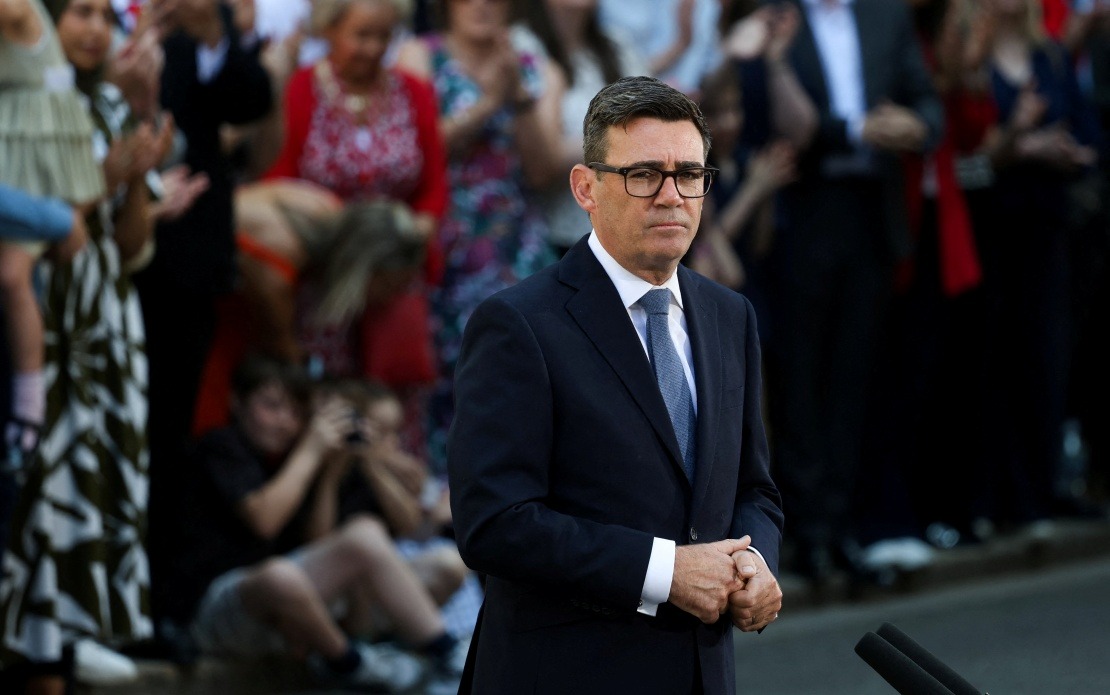
Labour Party leader Andy Burnham has been formally appointed as the United Kingdom's new prime minister following a formal audience with King Charles III at Buckingham Palace on Monday, July 20, marking a significant transition in British leadership. The appointment came immediately after Keir Starmer officially stepped down from the nation's highest political office, concluding his tenure with a final address outside 10 Downing Street where he declared his work complete.
The constitutional process unfolded with customary precision at the royal residence. Starmer, having already submitted his resignation as Prime Minister and First Lord of the Treasury to the monarch earlier that morning, paved the way for his successor's appointment. King Charles III subsequently requested that Burnham form a new government, formally conferring upon him the authority to lead the nation. The palace issued an official statement confirming the transactions: "Sir Keir Starmer MP had an audience of The King this morning and tendered his resignation as Prime Minister and First Lord of the Treasury which His Majesty was graciously pleased to accept."
Starmer's departure speech reflected the conventions of British political transitions, emphasizing continuity and gratitude rather than recrimination. In his remarks outside the famous black door on Downing Street, the outgoing prime minister expressed satisfaction with his time in office, saying simply "My work is done." He extended warm wishes to his successor, stating he hoped Burnham would enjoy "every success" in the role. Starmer also took the opportunity to thank the dedicated civil servants and political staff who had supported his administration throughout its tenure, and paid particular tribute to his wife Victoria for her personal backing during his years in the top job.
Burnham's elevation to prime minister represents a notable moment in contemporary British politics, particularly given his previous prominence in regional governance and Labour Party circles. His appointment signals the party's confidence in his ability to navigate the substantial challenges facing the United Kingdom at this juncture. The timing of this leadership change comes amid broader political developments affecting Britain and its relationship with international affairs, though the specific circumstances prompting Starmer's departure remain as outlined in his terse farewell statement.
The new prime minister was scheduled to travel to 10 Downing Street later on Monday to deliver his inaugural speech as prime minister, an occasion traditionally used to set out the administration's priorities and tone. These remarks would likely provide valuable insight into how Burnham intends to steer Labour's governing agenda and what direction he envisions for his government during the months ahead. Such speeches typically establish the prime minister's vision and communicate directly to both Parliament and the British public about the administration's intentions.
From a Commonwealth and regional perspective, this transition in British leadership carries implications for how the United Kingdom engages with its traditional partners and institutions. Malaysia and other Southeast Asian nations maintain significant diplomatic, trade, and cultural relationships with Britain. Any change in prime minister potentially influences the tenor of these bilateral relationships, investment policies, and cooperative frameworks across multiple sectors including commerce, education, and security partnerships.
The Labour Party, having delivered two prime ministers in relatively quick succession, now faces the task of maintaining party cohesion and public confidence through this transition. Burnham takes the helm at a moment when the party will need to demonstrate stable, decisive governance capable of addressing the pressing economic and social issues confronting British society. His experience and approach to governance will be closely watched by both domestic observers and international partners assessing the stability and direction of British policy.
The mechanics of prime ministerial transition in the British constitutional system, as demonstrated here, emphasize the importance of the monarchy as a stabilizing constitutional figure. King Charles III's role in accepting Starmer's resignation and inviting Burnham to form a government reflects the dignity and formality that characterize the British system of government. This orderly handover of power underscores the institutional strengths of the Westminster model, which has facilitated peaceful transfers of executive authority for centuries.
For observers tracking international politics and geopolitical developments, the change in British leadership merits attention to potential shifts in foreign policy priorities, trade agreements, and diplomatic positioning. Britain's engagement with the Indo-Pacific region, its approach to European affairs, and its role within various international institutions may see adjustments as Burnham establishes his administration's strategic preferences. Regional powers including Malaysia will likely monitor how the new British government approaches contemporary challenges including economic cooperation, technology partnership, and security matters affecting the broader international system.

