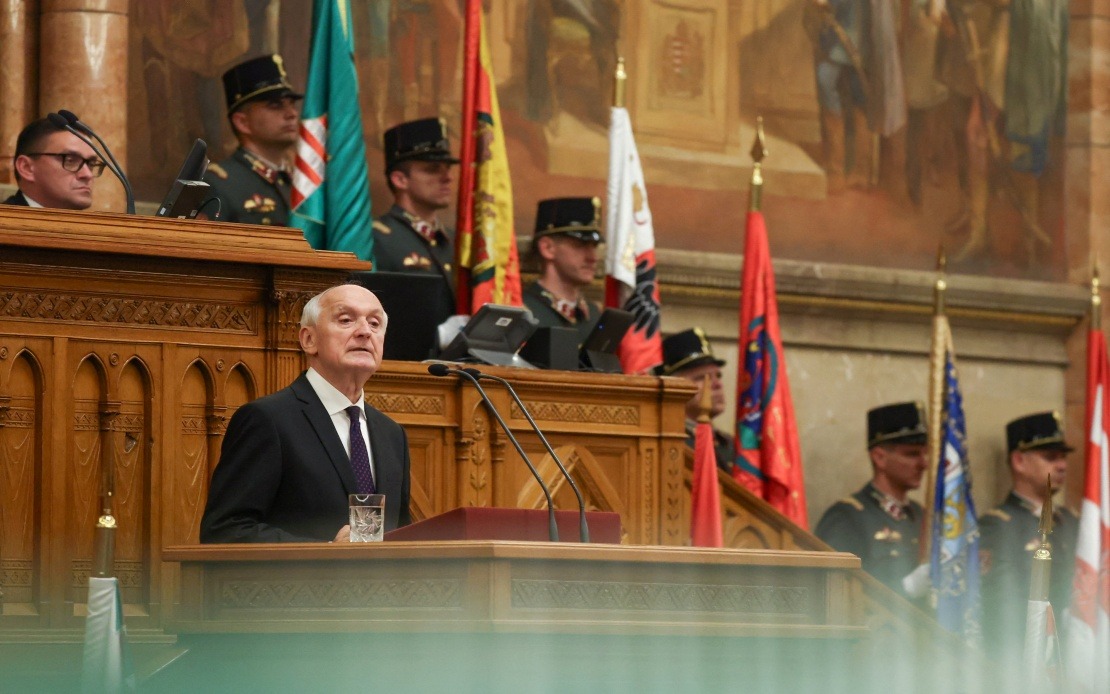
Andras Baka officially assumed the Hungarian presidency on August 19, 2026, marking a significant institutional transition in the Central European nation. Prime Minister Peter Magyar announced the inauguration through social media, extending wishes for the incoming president's success and health while emphasising the need for humanistic governance. The swearing-in came eight days after Baka's election by the Hungarian Parliament on August 11, completing a formal transition process amid considerable political controversy.
Baka brings substantial judicial experience to the role, having previously served as president of Hungary's Supreme Court between 2009 and 2011. His tenure at that time proved turbulent, as he ultimately resigned in response to comprehensive Supreme Court reforms initiated under then-Prime Minister Viktor Orban's administration. These reforms fundamentally restructured Hungary's highest judicial institution, reflecting broader governance changes that have defined Hungarian politics over the past two decades.
Before ascending to Hungary's top judicial position domestically, Baka spent formative years at the European Court of Human Rights based in Strasbourg, where he gained exposure to international legal frameworks and human rights jurisprudence. This background positioned him as a figure familiar with supranational legal standards, a distinction that carries particular significance given ongoing EU scrutiny of Hungary's judicial independence and rule-of-law compliance.
Following his departure from the Supreme Court, Baka transitioned into leading the Hungarian Curia, the restructured judicial body created through Orban's reform programme. He held this chairmanship from 2012 through 2020, spending nearly a decade navigating the reformed judicial landscape and managing the institutional aftermath of the controversial restructuring that had prompted his earlier resignation. This period required him to balance judicial responsibilities within a fundamentally altered institutional framework.
The presidential election itself proved contentious, with Hungary's major opposition blocs refusing to participate. Both Fidesz, traditionally the governing party under Orban, and the Christian Democratic People's Party boycotted the parliamentary vote to register protest against the removal of Baka's predecessor, Tamas Szujok. The opposition's strategy reflected deep frustration with constitutional amendments that enabled Szujok's departure, highlighting persistent divisions over how presidential transitions should proceed within Hungary's constitutional order.
This political standoff carries implications for Hungary's internal democracy and its relationship with European institutions. The boycott by significant parliamentary opposition groups suggests fundamental disagreement over constitutional procedures and presidential succession, issues that resonate beyond Hungary's borders. For Southeast Asian observers, the episode illustrates how even established democracies grapple with institutional conflicts and constitutional interpretation disputes.
Baka's judicial background and international experience may influence Hungary's approach to EU relations and rule-of-law matters that have proven contentious in recent years. His time at the European Court of Human Rights suggests familiarity with international human rights standards, potentially signalling a different tone from previous institutional arrangements. However, his role as chairman of the reformed Curia during the Orban era also suggests pragmatic engagement with the existing political framework rather than confrontational opposition.
The transition to Baka's presidency occurs within Hungary's evolving political landscape, where questions about judicial independence and constitutional governance remain subjects of international attention. The EU has maintained scrutiny regarding Hungary's adherence to rule-of-law principles, particularly concerning judicial autonomy and democratic safeguards. Baka's appointment and inaugural period will be closely observed to gauge whether the presidency might influence broader institutional dynamics.
For Malaysia and the broader Southeast Asian region, Hungary's institutional developments offer comparative insights into how judicial appointments intersect with political governance. The controversy surrounding Szujok's removal through constitutional amendment and the opposition's boycott reflect tensions common across diverse democracies regarding presidential powers, constitutional procedures, and institutional checks. Understanding how established European democracies manage such transitions provides perspective on regional governance challenges and constitutional interpretation disputes.
Baka's inaugural message, delivered through the prime minister's statements, emphasised humanistic governance values—a rhetorical commitment that may prove significant given Hungary's rule-of-law concerns. Whether his presidency translates stated commitments into institutional practice will shape perceptions of Hungary's democratic trajectory. The coming months will reveal whether his background in human rights jurisprudence influences presidential engagement with contemporary governance challenges.
The broader context includes Hungary's complex positioning within European institutions and its distinctive political evolution under Orban's long tenure. Baka's presidency occurs against this backdrop, raising questions about continuity versus potential reorientation in how the presidency engages with judicial reform legacy, EU obligations, and democratic institutions. His swearing-in represents both institutional closure regarding Szujok's departure and opening of a new chapter for presidential leadership in Hungary.

