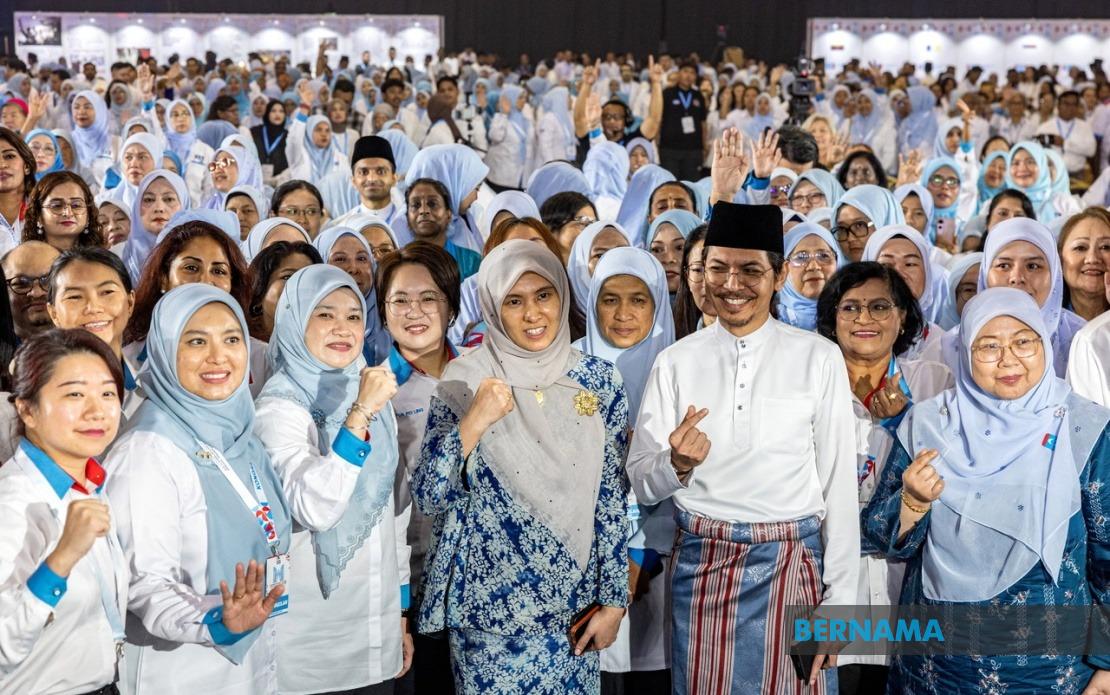
The head of Angkatan Muda Keadilan has called for a fundamental shift in how the party's elected representatives engage with voters, arguing that sustained community connections form the backbone of effective political strategy. Speaking during the 2026 AMK National Congress in Melaka, Muhammad Kamil Abdul Munim outlined a vision of leadership that prioritises direct, ongoing interaction with constituents rather than relying solely on top-down messaging from party headquarters.
Muhammad Kamil emphasised that maintaining strong relationships at the community level serves multiple strategic purposes for any political organisation. Beyond the obvious benefit of staying attuned to local concerns, these connections allow parties to shape public perception directly, countering narratives that rivals may attempt to establish. In an increasingly fragmented media landscape where competing political camps rapidly disseminate contrasting versions of events, the ability to reach voters through trusted local networks has become a critical competitive advantage.
The AMK chief articulated a comprehensive view of what sustains political influence, identifying five interconnected elements: the physical presence of leaders in communities, the consistency and clarity of party messaging, the effectiveness of campaign machinery, the quality of communication channels, and crucially, the strength of grassroots networks themselves. This layered approach recognises that no single factor guarantees political success; rather, these components must work together coherently to create an environment where the party's platform gains traction and legitimacy among voters.
One particularly significant aspect of Muhammad Kamil's remarks concerned the need to educate newer party members about fundamental ideological foundations. He warned that without deliberate efforts to instil understanding of the party's core values and historical struggles, the organisation risks gradually drifting from its original purpose and principles. This concern points to a recurring challenge in Malaysian politics: as parties grow and recruitment expands, maintaining organisational cohesion and ideological clarity becomes increasingly difficult.
The emphasis on educating new members about their duties and responsibilities reflects a broader anxiety within opposition and younger political movements in Malaysia. When membership expands rapidly without corresponding investment in political education, parties can develop hollow structures where members lack deep commitment to party principles and become susceptible to defection or disengagement. Muhammad Kamil's call for intensified grassroots programmes targeting new recruits suggests the AMK views this as an urgent priority.
Election preparation, according to Muhammad Kamil, must extend beyond crafting compelling national-level narratives. Many parties concentrate resources on shaping the broader political conversation—through media appearances, policy statements, and high-profile events. However, he argued that parallel attention to hyper-local issues and community-specific needs is equally essential. What resonates in Kuala Lumpur may fall flat in rural Perlis, and what addresses concerns in an urban Chinese-majority constituency may miss the mark in a Malay-majority village. Only through sustained grassroots presence can leaders identify and respond to these granular variations in voter priorities.
This strategic analysis aligns with evolving patterns in Malaysian electoral politics over the past decade. Parties that have successfully mobilised support, particularly at state and federal levels, have demonstrated sophisticated capacity for localised engagement alongside national campaign coordination. The DAP's strength in urban Chinese constituencies, PAS's entrenchment in certain Malay-Muslim areas, and UMNO's traditional machinery in rural regions all exemplify how grassroots networks translate into electoral performance. The AMK's focus on replicating this approach within the Keadilan structure suggests recognition that ideological positioning alone cannot ensure electoral competitiveness.
Muhammad Kamil's implicit critique of current practices suggests that some party leaders may be neglecting sustained community engagement in favour of episodic campaigning during election periods. The difference is significant: sustained networks allow parties to address grievances before they harden into voter dissatisfaction, while episodic contact often arrives too late to shift entrenched positions. Moreover, communities that experience regular attention from their representatives develop stronger affinity with those leaders and are more likely to turn out during elections.
The challenge for the AMK and similar parties lies in translating these principles into practice while managing limited resources. Building and maintaining robust grassroots networks requires sustained financial investment, allocation of senior leadership time, and development of capable local cadres—all of which compete with other organisational demands. Whether the party can successfully implement Muhammad Kamil's framework, rather than treating it as rhetorical flourish, will largely determine whether Keadilan strengthens its position ahead of the next electoral cycle.
For Malaysian political observers, this statement reflects a broader maturation of opposition party strategy. Rather than relying primarily on charismatic national figures or crisis-driven mobilisation, more sophisticated political organisations now recognise that durable electoral strength requires year-round engagement at the community level. As Malaysia heads toward the 2026 electoral cycle, the willingness of parties to invest in these foundations—and the competence with which they implement such strategies—will significantly influence which coalitions emerge victorious and which fade.

