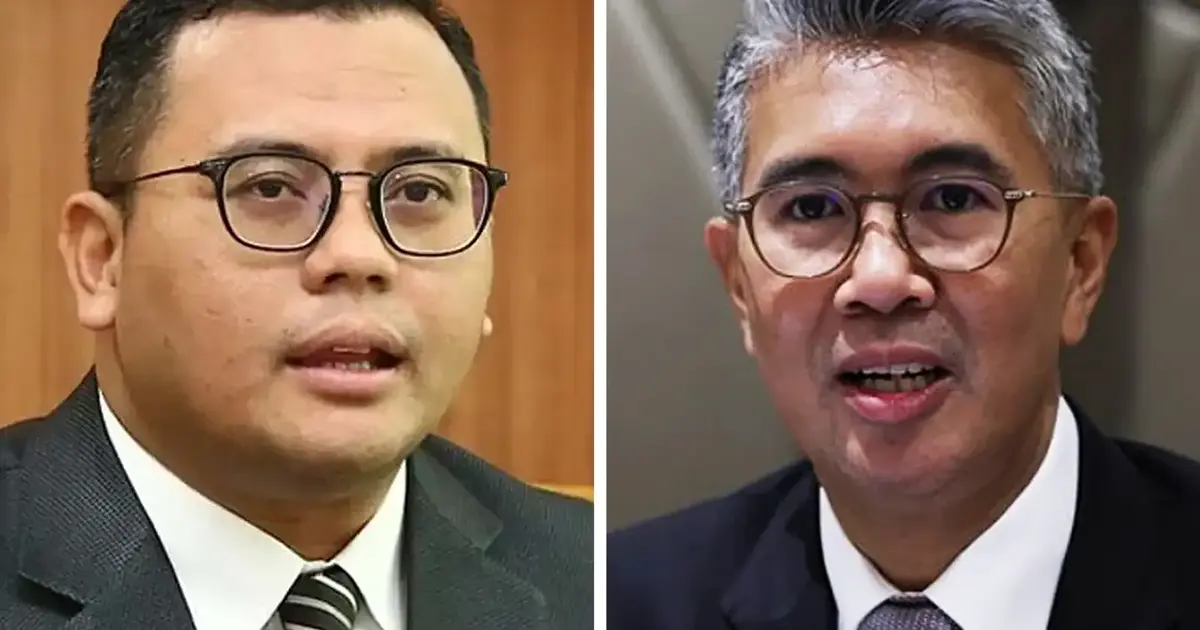
PKR president Anwar Ibrahim has restructured the party's election machinery by appointing Amirudin to steer the party's strategic direction in electoral contests, with Tengku Zafrul tasked to oversee coordination efforts across various campaign elements. The leadership assignments reflect a deliberate effort by Ibrahim to channel the party's considerable organisational resources and grassroots networks into a cohesive, disciplined election apparatus capable of maximising support at the ballot box.
The decision to partition these responsibilities stems from Ibrahim's conviction that a structured, hierarchical approach to campaign management would better harness PKR's capabilities. By designating Amirudin as the strategic architect, Ibrahim has entrusted him with setting policy priorities, determining campaign messaging, and charting the party's overall electoral direction. This positioning allows for clear strategic vision to guide all subordinate activities within the party's election machinery.
Tengku Zafrul's appointment as coordinator represents the operational spine of this arrangement. His responsibilities centre on ensuring that field activities, volunteer mobilisation, resource allocation, and communication channels function seamlessly across federal territories, state branches, and divisional units. The coordination role demands meticulous attention to timing, consistency, and logistical efficiency—elements crucial to scaling campaign efforts beyond individual constituencies into a nationwide operation.
For Malaysian politics, this structural innovation signals PKR's maturation as a major coalition partner. The party entered its current trajectory as a reformation movement but has now adopted institutional practices increasingly resembling those of longer-established parties. Establishing formal election command structures reflects confidence in the party's institutional longevity and suggests leadership succession planning extends beyond Anwar Ibrahim himself.
The separation of strategy from coordination also addresses a common weakness in Malaysian political campaigns: the tendency for strategic decisions made at headquarters to become diluted or inconsistently implemented at grassroots level. By creating an explicit coordination function reporting to the strategic lead, PKR is attempting to close this gap. Tengku Zafrul's role essentially translates Amirudin's strategic intentions into concrete campaign activities observable in the field.
Within the coalition context, this reorganisation carries implications for Pakatan Harapan's broader election readiness. As the largest coalition component by membership, PKR's internal efficiency directly affects the coalition's collective capacity to contest seats effectively and mobilise voters across multiple states. A well-coordinated PKR machinery strengthens the coalition's competitive position against Barisan Nasional and other political entities.
Amirudin's elevation to strategic leadership builds upon his profile as Selangor Menteri Besar and his experience managing a significantly populated state with complex electoral dynamics. His familiarity with ground realities across urban, suburban, and rural constituencies positions him to appreciate regional variations in campaign messaging and voter priorities. This ground knowledge, combined with access to strategic intelligence, should enable more sophisticated, geographically-calibrated electoral approaches than generic nationwide campaigns.
The timing of this reorganisation likely reflects PKR's preparation for electoral contests, whether state-level elections in various constituencies or preparations for the next general election. Political parties typically formalise campaign structures months before actual polling dates to allow sufficient time for training, resource allocation, and contingency planning. This announcement signals PKR is entering an active campaign preparation phase.
Tengku Zafrul's administrative background brings a different skill set to coordination compared to purely political operatives. His experience in navigating complex financial and institutional systems should translate into more sophisticated resource management and logistical planning. Coordination in modern electoral contests increasingly involves managing digital communications, data analytics, volunteer scheduling, and donor relations—domains where professional management expertise proves invaluable.
The explicit framing by Ibrahim that this structure ensures the party's strength is mobilised in an organised manner addresses criticisms sometimes levelled at PKR regarding internal cohesion and message discipline. By formalising campaign hierarchy and responsibilities, Ibrahim is attempting to reduce independent action by ambitious faction leaders who might pursue divergent campaign strategies or electoral alliances without coordination.
For Southeast Asian observers, PKR's institutional development mirrors trends across the region where maturing political parties are adopting more professional campaign management practices. The shift from personalised, leader-centric operations toward structured, delegated systems reflects broader democratic maturation and the increased sophistication required to contest elections in complex, diverse societies.
Looking forward, this arrangement establishes clear accountability for electoral outcomes. Should campaigns succeed, credit flows through the designated hierarchy. Conversely, if performance disappoints, responsibility becomes traceable to specific individuals and functions. This transparency can drive performance improvement and discourage scapegoating that historically fragmentised Malaysian political parties.
The dual-leadership model also provides some insulation for PKR president Ibrahim from day-to-day campaign execution controversies. By delegating operational responsibility, Ibrahim maintains sufficient distance to preserve his standing as national party president while Amirudin and Tengku Zafrul absorb any criticism arising from campaign difficulties or tactical disagreements. This separation of roles represents sophisticated political management aligned with modern party leadership practice.

