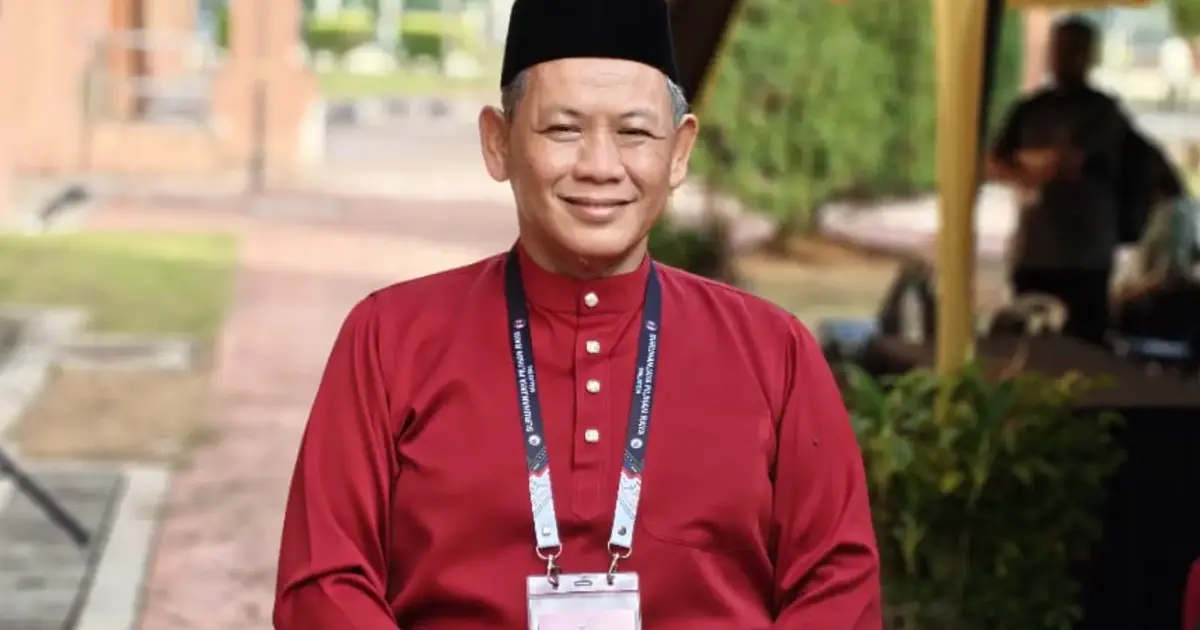
Negeri Sembilan Menteri Besar Aminuddin Harun is contesting the Linggi parliamentary seat in an emerging three-cornered battle that reflects broader political realignments across the country. The race positions him against Barisan Nasional's Faizal Ramli, the incumbent who secured the predominantly Malay constituency in the 2023 general election, alongside a third candidate representing Bersatu. The contest underscores how Malaysia's political landscape has fragmented beyond the traditional binary competition between federal government coalitions.
Faizal Ramli's victory in 2023 consolidated BN's grip on what has long been regarded as one of the party's reliable bases in Peninsular Malaysia. His success in the previous election reflected the broader momentum that carried BN to significant gains across the nation. However, the emergence of a Bersatu challenger in the current race signals that the homogeneity of support in this Malay-majority seat cannot be taken for granted. Bersatu's decision to field a candidate here represents a calculated attempt to fracture the opposition vote and capitalize on local grievances or factional divisions within competing factions.
Aminuddin's decision to contest from his position as Menteri Besar injects significant weight into the three-way contest. His tenure leading Negeri Sembilan has given him a platform to demonstrate administrative performance and build a public profile that extends beyond party machinery. The move also reflects confidence within his coalition that the incumbent may be vulnerable to a determined challenge, particularly if local issues have resonated more powerfully with constituents than national narratives. The race thus becomes a proxy for evaluating whether incumbent advantage and BN's organizational machinery remain sufficient to hold ground against invigorated opposition efforts.
Linggi's demographics and historical voting patterns provide important context for understanding the contest's significance. As a Malay-majority constituency, it has traditionally aligned with UMNO and BN platforms that emphasize communal interests and Islamic governance frameworks. The seat's stability has made it a barometer for changes in Malay-Muslim political sentiment across the wider region. Any shift in voting patterns here would carry implications for how political operatives assess the durability of their respective coalitions in similar constituencies nationwide.
The inclusion of a Bersatu candidate complicates the tactical calculus for all three camps. Bersatu's participation could dilute the opposition vote if poorly managed, yet it may also allow the party to consolidate support among specific demographic segments or geographic areas within the constituency. The three-way dynamic means that winning margins may narrow considerably compared to typical contests, potentially allowing a candidate with a plurality rather than majority support to prevail. This scenario has become increasingly common in Malaysian politics as the electorate fragments across multiple competing offers.
Aminuddin's positioning as both a state leader and parliamentary candidate places him in a unique position to articulate a comprehensive vision spanning local governance and national policy directions. His record in managing Negeri Sembilan provides a concrete foundation for campaigning, allowing him to point to specific achievements or initiatives undertaken during his tenure. Simultaneously, state-level performance can become a liability if constituents perceive gaps between promises and delivery or if economic conditions have deteriorated.
Faizal Ramli enters the contest with the advantage of incumbency, a crucial asset in Malaysian electoral contests where sitting members typically benefit from higher name recognition and established grassroots networks. The two years since his 2023 election have given him time to build relationships with local leaders, community organizations, and individual voters. His proximity to BN's resources and position within the federal government structure provide material advantages unavailable to challengers. However, incumbency can transform into a vulnerability if voters perceive their representative as disconnected from constituency concerns or overly aligned with unpopular national policies.
The broader political context surrounding this contest extends beyond personalities and local issues. Malaysia's trajectory toward coalition fragmentation and multi-candidate contests reflects deeper shifts in how voters evaluate their choices. Traditional loyalties based on communal identity and historical party affiliation continue to matter, yet they coexist increasingly with performance-based assessments and issue-specific voting calculations. Linggi's contest will provide valuable data on how these competing motivations shape electoral outcomes in constituencies with strong historical alignment to particular parties.
Southeast Asian observers have tracked Malaysia's political evolution as emblematic of broader regional trends toward electoral volatility and coalition fluidity. The Linggi race exemplifies how even seemingly secure political territory can become contested when multiple parties develop the organizational capacity and political messaging to mount credible challenges. The outcome will influence strategic calculations across the political spectrum regarding resource allocation and candidate selection in similar constituencies.
For Malaysian voters in Linggi specifically, the three-way contest presents distinct choices across ideological positioning, leadership style, and governing track records. The contest's resolution will depend heavily on local campaign intensity, candidate-voter interaction at the community level, and how effectively each camp mobilizes its support base. Whether Aminuddin can translate his state-level position into parliamentary representation, whether Faizal Ramli's incumbency proves decisive, or whether Bersatu emerges as a spoiler will reshape political momentum extending well beyond Negeri Sembilan.

