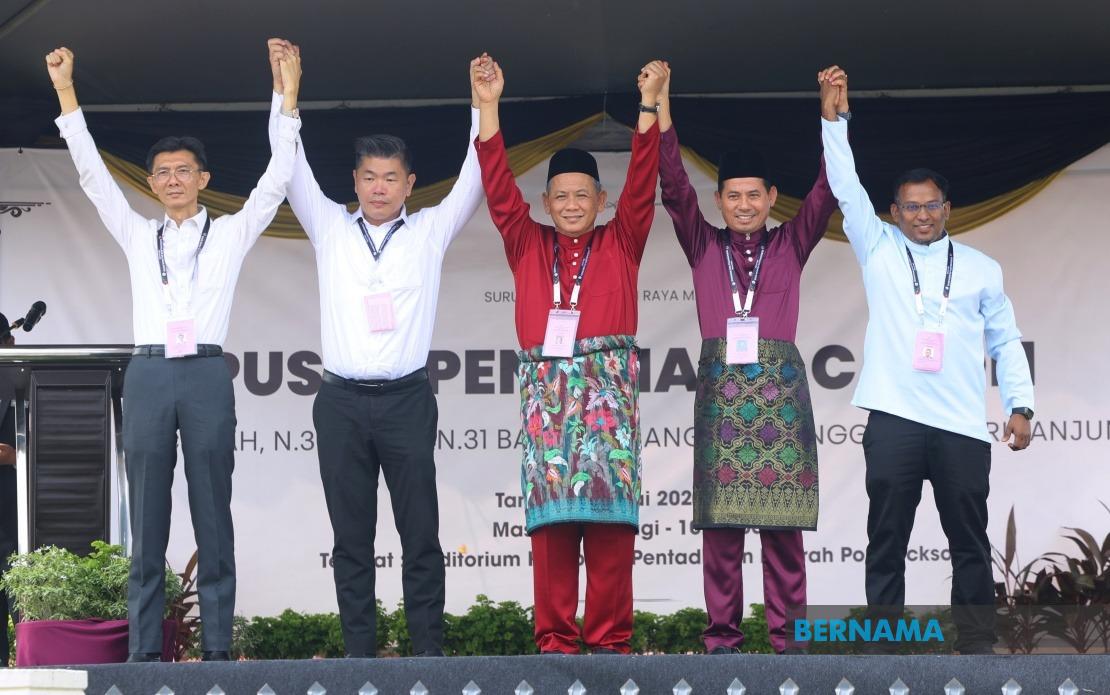
Negeri Sembilan Menteri Besar Datuk Seri Aminuddin Harun has unveiled an ambitious development blueprint for the Linggi state constituency, centring on the construction of a port facility and accompanying industrial park aimed at catalysing economic growth in the area. Speaking in Port Dickson after nomination proceedings on July 18, Aminuddin framed these infrastructure projects as cornerstones of a comprehensive plan to strengthen the region's competitiveness and generate fresh commercial prospects for local residents, signalling Pakatan Harapan's intent to shift the economic trajectory of what has historically been a stronghold for the ruling coalition.
The announcement comes as Aminuddin prepares to contest against incumbent Datuk Mohd Faizal Ramli of Barisan Nasional in the 16th Negeri Sembilan state election scheduled for August 1. As chairman of the state-level PH machinery, Aminuddin acknowledged the formidable challenge posed by Linggi's established voting patterns and the incumbent's consolidated position, yet projected confidence that the opposition bloc possessed the organisational strength and messaging coherence necessary to execute an effective campaign. He emphasised that the port and industrial development proposals emerged from his personal advocacy to party leadership, demonstrating both his commitment to constituency-level priorities and the receptiveness of the broader PH apparatus to his strategic vision for economic renewal.
The proposed infrastructure initiatives carry particular resonance for Negeri Sembilan's development agenda. Linggi's geographic positioning along the state's coast presents latent advantages for maritime commerce that remain substantially underdeveloped compared to ports in neighbouring Selangor and Johor. A functional port facility could theoretically redirect shipping activity and light manufacturing operations toward Negeri Sembilan, potentially generating employment clusters and enhancing the state's fiscal capacity through port revenues and industrial taxation. The industrial zone component would logically complement port operations, creating nodes for value-added manufacturing, logistics hubs, and light engineering enterprises that serve both domestic and regional supply chains. For Malaysian readers, such infrastructure announcements frequently signal attempts to rebalance development away from over-concentrated coastal economic corridors in more developed states.
Aminuddin's willingness to contest in traditionally difficult terrain reflects broader PH strategy across Peninsular Malaysia to mount serious challenges in constituencies deemed safe for Barisan Nasional, reflecting confidence in shifting electoral dynamics. The three-cornered contest involving Aminuddin, Mohd Faizal, and Datuk Zamri Md Said of Bersatu adds further complexity. Bersatu's participation as a separate contestant complicates the traditional binary between BN and PH, potentially fragmenting the opposition vote if coordination proves inadequate, though it also offers an alternative platform should either of the larger coalitions underperform. The presence of three competitive candidates suggests Linggi retains genuine electoral fluidity despite its historical categorisation.
Mohd Faizal's acknowledgment that BN cannot regard the contest as a mere formality reflects pragmatic recognition of evolving electoral conditions within Malaysia's states. His call for a campaign environment free from inflammatory rhetoric and unsubstantiated accusations implicitly concedes that the governing coalition faces sufficient competitive pressure that substantive engagement on policy matters has become necessary. His framing of the request as an appeal for electoral civility also hints at potential concerns regarding opposition momentum or campaign resources that might necessitate heightened expectations of dirty tactics. For Negeri Sembilan politics, such statements signal a departure from the complacency sometimes characteristic of dominant parties contesting in nominally secure territory.
The economic development dimension of Aminuddin's campaign represents a substantive policy offering that moves beyond conventional opposition rhetoric. Infrastructure projects tangibly address material concerns regarding employment, business opportunity, and wealth creation that resonate across class lines and demographic segments. The port development specifically targets expansion of Negeri Sembilan's economic base beyond its traditional reliance on palm oil processing, mining, and manufacturing concentrated around the Selangor border regions. For voters evaluating candidates primarily through an economic lens, such concrete proposals carry weight absent from purely rhetorical promises about administrative competence or ethical governance.
Regionally, the Linggi contest acquires additional significance within broader Southeast Asian patterns of opposition parties mounting competitive challenges to incumbent coalitions through localized economic incentives and infrastructure commitments. Malaysia's trajectory across recent electoral cycles has demonstrated that even traditionally consolidated state-level dominance proves vulnerable when opposition movements combine organisational capacity with credible policy platforms addressing constituent economic interests. The Negeri Sembilan contest therefore operates as a microcosm of wider patterns of electoral competitiveness and policy-driven political competition that characterise contemporary Malaysian democracy.
The timing of these announcements relative to the August 1 polling date provides approximately two weeks for campaign messaging to penetrate the constituency's electorate. Aminuddin's emphasis on securing the Menteri Besar's personal endorsement for the development initiatives attempts to attach PH's broader credibility and administrative record to these specific Linggi-focused proposals. Whether voters perceive the port and industrial zone plans as credible commitments or as opportunistic campaign promises contingent on electoral outcomes will substantially influence their persuasiveness as campaign messaging. The absence of detailed timelines, budget allocations, or preliminary feasibility assessments in public statements leaves room for scepticism among voters accustomed to unfulfilled infrastructure promises from incumbent administrations.
For Negeri Sembilan more broadly, the 16th state election represents a pivotal moment regarding the state's economic development trajectory. Whichever coalition secures the Menteri Besar post will determine funding priorities, development corridors, and infrastructure sequencing across the state's diverse constituencies. Linggi's emergence as a genuinely contested seat suggests that Negeri Sembilan's political settlement remains malleable and responsive to campaign-driven persuasion rather than locked into structural patterns of dominance. The outcome will carry implications extending beyond Linggi itself, potentially reshaping the state's political complexion and economic development orientation for the subsequent five-year electoral cycle.

