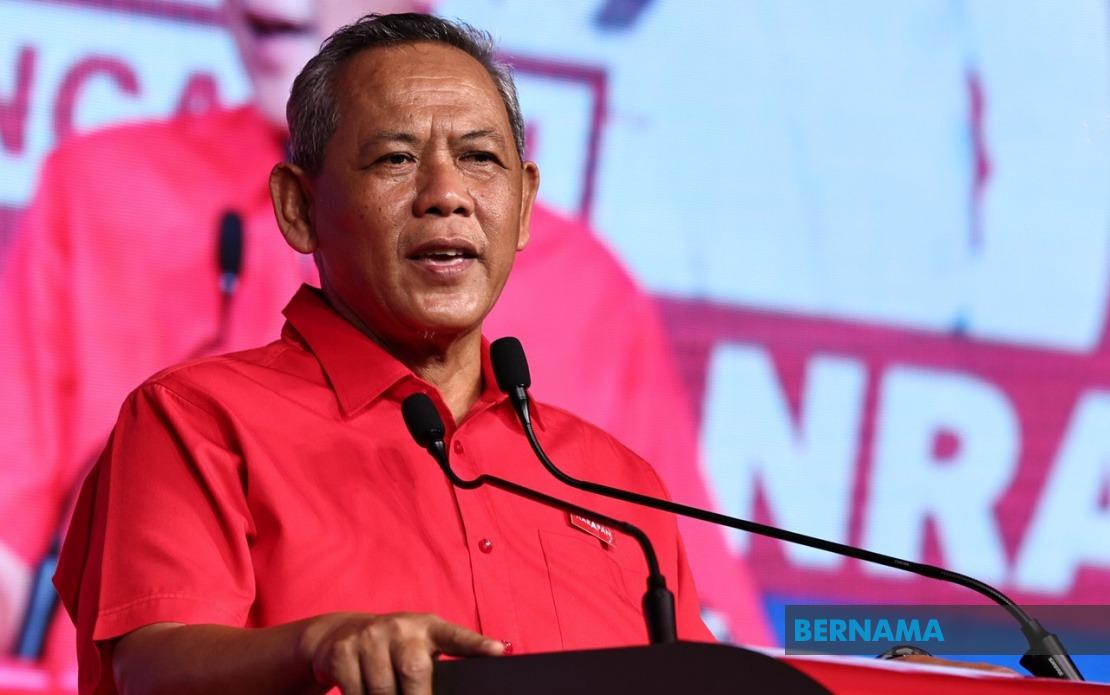
Negeri Sembilan Menteri Besar Datuk Seri Aminuddin Harun has pushed back against suggestions that his decision to switch constituencies and contest the Linggi state seat in the upcoming Negeri Sembilan state election amounts to a strategic retreat from his long-held Sikamat seat. Speaking through a Facebook statement on July 16, the Pakatan Harapan leader characterised the move as a deliberate and autonomous decision rather than an evasive manoeuvre, underscoring his commitment to expanding his representation within the state assembly.
The Negeri Sembilan PH chairman articulated his vision of bringing the same work ethic and community-focused approach that defined his tenure in Sikamat to the Linggi constituency. His public pronouncement comes as he prepares to face an electoral challenge against incumbent Linggi assemblyman Datuk Mohd Faizal Ramli of Barisan Nasional, with nominations scheduled for Saturday and polling set for August 1. For Malaysian observers of Negeri Sembilan politics, the shift reflects broader tactical manoeuvres within opposition coalitions as they reposition candidates ahead of state-level contests.
Aminuddin's narrative about his Sikamat journey carries particular resonance within local political discourse. He recounted the foundational years when his political operation functioned from modest premises—a modest office situated above a shophouse—with minimal financial resources while his party languished in opposition. This account of bootstrapped grassroots organising contrasts sharply with the more substantial resources typically available to ruling coalition politicians, and it frames his subsequent rise to Menteri Besar as a vindication of persistent community engagement over institutional advantage.
The transition from Sikamat represents a significant symbolic moment in Negeri Sembilan's political landscape. Over four consecutive electoral cycles, Aminuddin had developed extensive personal networks and institutional presence within his original constituency. His decision to relocate his electoral base suggests confidence in both his personal political standing and the strength of his successor arrangements. By transferring the Sikamat seat to Nor Azman Mohamad, the PH leadership has executed what appears to be a calculated succession strategy, betting that organisational continuity and name recognition can sustain support even as the incumbent transitions elsewhere.
For regional political analysts, Aminuddin's move illuminates the complex calculus that high-profile opposition figures navigate when repositioning themselves ahead of elections. The choice to contest a different seat, rather than defend an established stronghold, typically suggests either confidence in winning a new constituency or strategic advantage derived from shifting demographics or local political alignments. In Aminuddin's case, the move from Sikamat to Linggi implies either that PH strategists perceive Linggi as newly competitive or that consolidating leadership presence in a different area serves broader state-level objectives.
The Sikamat narrative that Aminuddin articulated in his statement carries implicit messaging to voters in both constituencies. To Sikamat residents, the framing emphasises continuity, gratitude, and the promise that Nor Azman will maintain the developmental trajectory established over his four terms. To Linggi constituents, the messaging projects an incoming leader bringing established experience and proven administrative capacity. This dual-audience appeal reflects sophisticated political communication, acknowledging the emotional investment that constituencies develop toward long-serving representatives while simultaneously building momentum for expansion.
Aminuddin's background in Sikamat during the opposition years deserves particular attention for Malaysian readers evaluating claims of opposition competence and fiscal management. His description of fundraising activities and community programmes conducted under resource constraints presents a counter-narrative to ruling coalition assertions about opposition incapacity. The emphasis on self-reliance and grassroots mobilisation resonates within opposition political culture and provides a foundation for his credibility claims as Menteri Besar overseeing state resources and development priorities.
The electoral timeline presents a compressed campaign period that will test both Aminuddin's name recognition in Linggi and the robustness of PH's broader state machinery. With nominations occurring immediately and polling scheduled within sixteen days, candidates lack extended periods for voter persuasion. For Aminuddin specifically, this compressed schedule means his personal profile and established political brand must carry substantially more weight than would be required in a longer campaign. His tenure as Menteri Besar provides institutional gravitas that party-level campaigning alone cannot generate.
Nor Azman's transition into the Sikamat seat introduces an important continuity question for regional observers studying opposition party succession. Transitions from veteran representatives to newer politicians frequently produce electoral turbulence, particularly when the departing figure has accumulated substantial personal loyalty. PH's selection of Nor Azman presumably reflects confidence in his local standing and connections, yet the absence of four terms of name recognition that Aminuddin accumulated creates vulnerability that BN challengers will likely attempt to exploit through messaging about untested leadership and potential service disruptions.
The broader context of opposition repositioning ahead of Negeri Sembilan's state election reveals how Malaysian political parties approach electoral strategy when leadership transitions occur. By shifting Aminuddin to a competitive seat rather than retiring him to state-level administration, PH demonstrates confidence in his personal electoral appeal and commitment to expanding representation in a state where opposition-ruling coalition competition remains closely contested. The decision also reflects decisions about resource allocation, with high-profile leaders directed toward marginal constituencies where their presence might swing narrow outcomes.
Looking toward August 1 polling, Aminuddin's assertion that his move represents personal choice rather than strategic avoidance will face practical validation through electoral results. Should he emerge victorious in Linggi while Nor Azman retains Sikamat, the narrative that PH successfully executed planned succession and leadership expansion gains credibility. Conversely, any disruption in either constituency would invite renewed scrutiny about whether the transition strategy underestimated the personalistic dimensions of Malaysian electoral behaviour, where established representative relationships often constrain party-level reorganisation efforts.
For Southeast Asian observers monitoring Malaysian opposition dynamics, Aminuddin's positioning illustrates how established figures within competitive state-level politics must balance personal advancement with party cohesion imperatives. His Menteri Besar status represents an opposition success story within Malaysia's federal structure, yet the personal investment he developed within Sikamat created political capital that cannot be effortlessly transferred. His public statement defending the transition as voluntary choice attempts to neutralise both internal party concerns about abandoning long-held terrain and external opposition messaging that might characterise the move as tactical weakness.

