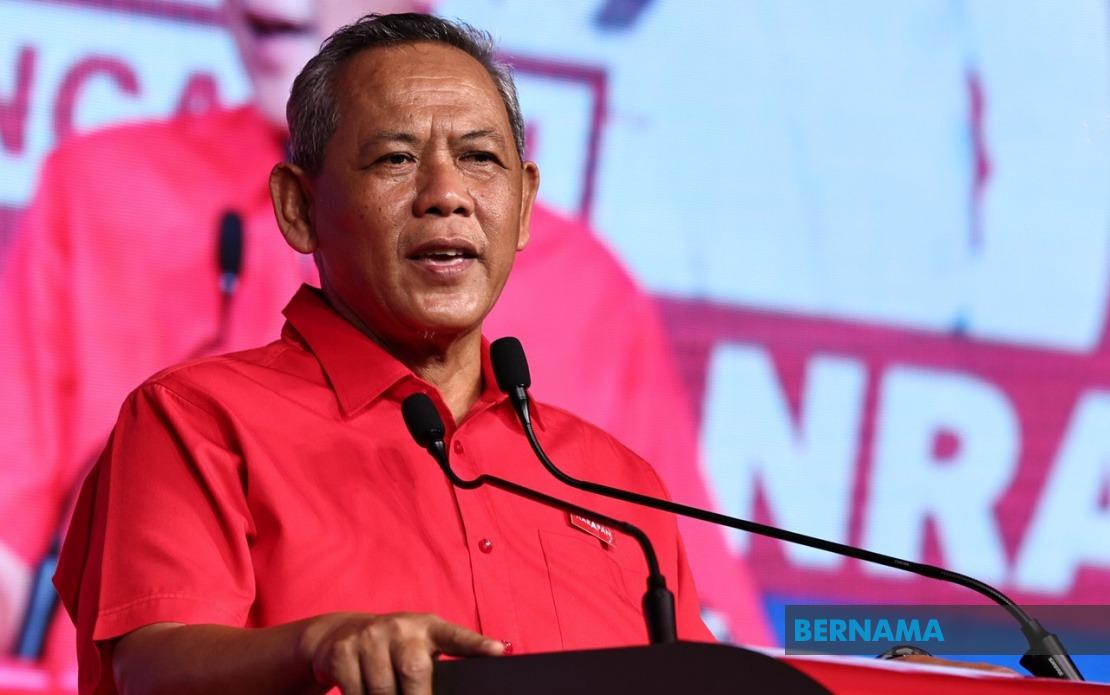
Negeri Sembilan Menteri Besar Datuk Seri Aminuddin Harun has appealed to voters in the Linggi constituency to assess the government's substantive response to the area's chronic flooding problem rather than allow the issue to become fodder for electoral politics. Speaking after Friday prayers in Seremban on July 17, Aminuddin, who is standing as the Pakatan Harapan candidate for the Linggi state seat, emphasised that two flood mitigation projects have already been greenlit and are in active implementation stages through collaboration between state and federal authorities. He argued that such infrastructure solutions require patience and proper execution rather than quick fixes, and that the coalition deserves credit for taking decisive action on what residents have endured for years.
The appeal comes as the flood situation in Linggi has gained traction on social media, with various claims circulating about the frequency and severity of inundation during periods of heavy rainfall in the Seremban area. Rather than dismiss these concerns, Aminuddin acknowledged the legitimacy of the problem while framing the government's response as evidence of serious intent. The two approved projects represent a meaningful commitment to long-term infrastructure development, he suggested, contrasting this approach with what he characterised as opportunistic political posturing that exploits public grievances without offering tangible solutions. For Malaysian voters accustomed to promises that evaporate after elections, the emphasis on projects already under way rather than merely proposed represents a tactical shift toward demonstrable action.
Aminuddin's comments reveal deeper tensions within Negeri Sembilan's political landscape as the state prepares for its 16th legislative election. The timing is significant: with nomination day set for July 18 and polling scheduled for August 1, flood management has emerged as a litmus test of government competence. By framing the issue as one requiring technical expertise and infrastructure investment rather than political rhetoric, the Menteri Besar appears to be inoculating his coalition against opposition accusations of neglect. This strategy acknowledges that swing voters in constituencies like Linggi are increasingly sophisticated in evaluating governmental performance, judging parties less on promises and more on visible results.
The Negeri Sembilan Pakatan Harapan chairman positioned the coalition's electoral platform squarely on its track record of governance and ongoing development initiatives across the state. This emphasis on proven administration reflects a broader regional trend, particularly relevant to Malaysian politics where voter patience with unfulfilled pledges has worn thin. Rather than engaging in a point-by-point rebuttal of opposition strategies, Aminuddin chose to place faith in voter discernment and the collective judgment of Negeri Sembilan residents. This approach suggests confidence in the coalition's institutional performance while implicitly questioning the maturity of opponents' electoral tactics.
For residents of Linggi, the announcement of two active flood mitigation projects provides concrete evidence that their grievances have not fallen on deaf ears. The collaborative framework involving both state and federal governments underscores a multi-layered response to what is acknowledged as a persistent challenge. In many Malaysian constituencies, such infrastructure projects would remain hypothetical or indefinitely delayed; the fact that these initiatives are already being implemented signals a different operational tempo. However, the Menteri Besar's cautionary note that such projects require time suggests awareness that visible improvements may not materialise before voting day, creating a temporal gap between promise and tangible benefit.
The emergence of flood management as an electoral issue in Linggi reflects broader environmental pressures facing Malaysia's developed and semi-developed areas. The Seremban region, as a major urban and administrative hub in Negeri Sembilan, faces the compound effects of urbanisation, drainage capacity constraints, and increasingly intense rainfall patterns. Flood mitigation in such contexts requires not just reactive emergency management but proactive infrastructure redesign. The approval and implementation of two separate projects suggests recognition of this complexity, though questions may linger about whether these interventions address root causes or merely manage symptoms.
Aminuddin's call for voters to judge the government on substantive action rather than political exploitation carries implicit criticism of opposition tactics, even as he studiously avoids naming specific rival strategies. This rhetorical restraint is itself significant, suggesting that the Pakatan Harapan campaign in Negeri Sembilan intends to occupy the moral high ground by refusing to engage in the kind of negative campaigning that might alienate moderate voters. The approach aligns with broader positioning of the coalition as the mature, development-focused alternative to opposition parties that, in this framing, trade in grievance rather than solutions.
The electoral calendar adds urgency to these flood mitigation efforts. With nomination day on July 18, early voting on July 28, and polling day on August 1, the window for campaign messaging is compressed. In this compressed timeframe, Aminuddin's emphasis on already-approved and implemented projects—as opposed to promised future action—aims to provide tangible reassurance to voters concerned about Linggi's vulnerability to flooding. The specificity of having two projects in active implementation, rather than announcing new initiatives during the campaign, underscores a message that the government has been working on the problem for months or longer.
The broader context of Negeri Sembilan's political evolution informs this campaign dynamic. As a state with considerable urban development and middle-class voter engagement, Negeri Sembilan electorates increasingly evaluate parties on infrastructure, environmental management, and administrative efficiency rather than purely on party loyalty or ethnic representation. The flood issue in Linggi becomes emblematic of whether governments deliver on basic service provision—arguably the foundation of electoral legitimacy in contemporary Malaysian politics. Aminuddin's framing of the two flood projects as proof of such delivery positions the state administration as worthy of continuation.
Looking ahead, the real test of Aminuddin's appeal will manifest on August 1. Should the coalition retain the Linggi seat and improve its performance in the 16th state election overall, the strategy of emphasizing substantive action over political exploitation will have been vindicated. Conversely, if opposition parties make gains despite the announced flood mitigation projects, questions will arise about whether infrastructural commitments can compete with other voter concerns or whether the opposition successfully mobilised dissatisfaction despite government action. Either outcome will offer insights into how Malaysian voters weigh concrete development against other political considerations in an increasingly complex electoral environment.

