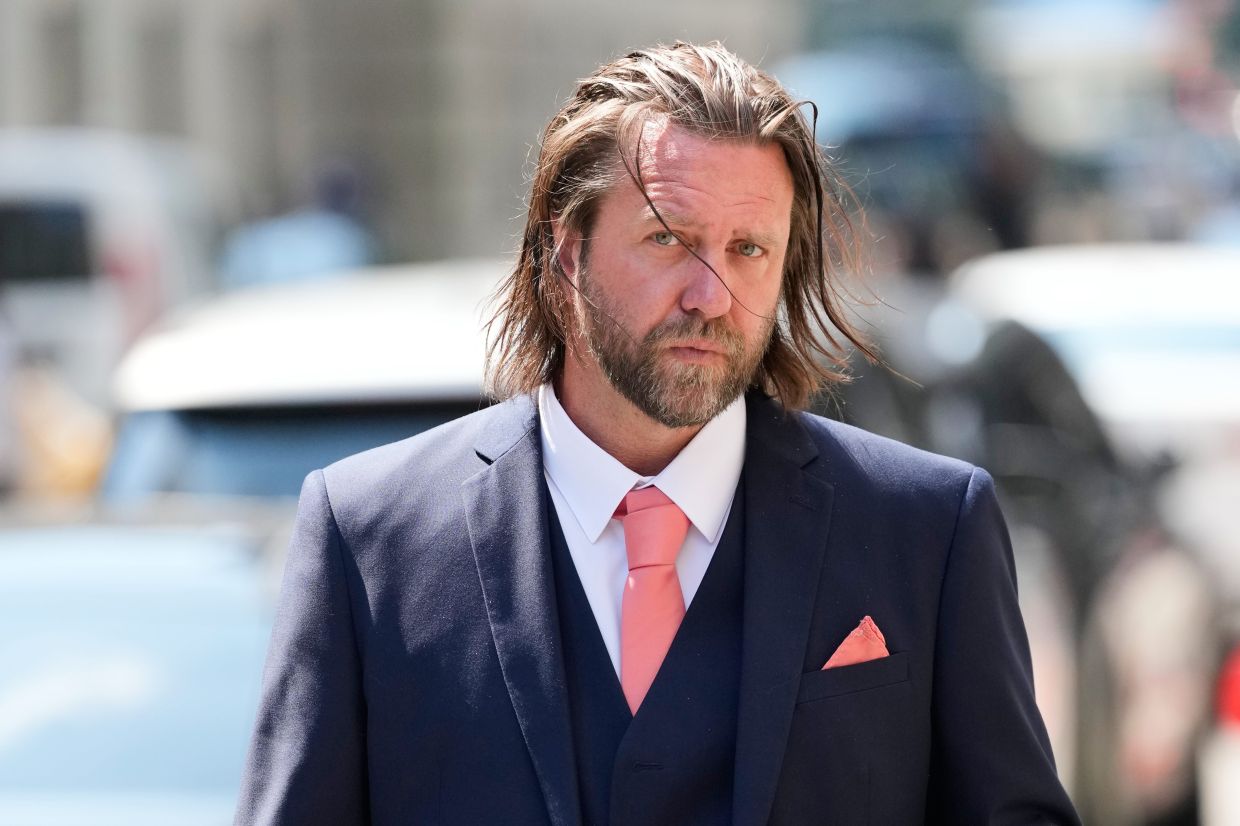
An American film director has been handed a prison sentence following his conviction for one of the entertainment industry's more brazen fraud cases: Carl Rinsch misappropriated US$11 million that Netflix entrusted to him in 2020 to develop an ambitious science fiction television series. The case underscores the risks streaming platforms face when funding projects through individual creatives and highlights how quickly financial discipline can collapse under pressure—a cautionary tale for media companies worldwide, including those operating across Southeast Asia who increasingly commission international productions.
Rinsch's scheme involved a dramatic departure from his stated intentions. Rather than channelling the substantial investment into production infrastructure, scriptwriting, visual effects, and cast recruitment as contractually obligated, the 48-year-old director redirected the capital into highly speculative financial instruments including volatile stock options and cryptocurrency positions. Simultaneously, he embarked on an extravagant personal spending spree that laid bare a fundamental breach of trust. According to prosecutors, his purchases included bespoke luxury fashion, high-end furniture pieces, a striking red Ferrari sports car, and an astonishing collection of five Rolls-Royce vehicles—acquisitions that paint a portrait of unchecked excess divorced from any legitimate production necessity.
Jay Clayton, the US Attorney for the Southern District of New York, crystallised the case's essence in his official statement: "Instead of using the money to make the show, Rinsch made risky bets on highly speculative stock options and cryptocurrency, and spent millions of dollars on luxury goods for himself." This characterisation captures not merely theft but a fundamental inversion of fiduciary responsibility. Rinsch had been granted access to resources specifically earmarked for creative endeavour and public entertainment; instead, he weaponised that access for personal enrichment through mechanisms that bore no connection to legitimate filmmaking activity.
Beyond the prison sentence now imposed upon him, Rinsch faces additional consequences that reflect the gravity of his transgression. He has been ordered to forfeit the entirety of the US$11 million he misappropriated—a financial reckoning that, combined with incarceration, substantially dismantles any personal benefit he derived from the fraud. For Netflix and the broader streaming ecosystem, the case represents a costly lesson in verification mechanisms and ongoing project oversight protocols. The incident demonstrates why major content commissioning requires robust architecture around fund disbursement, milestone verification, and transparent accounting.
The director's legal team mounted a defensive strategy centred on mitigation and psychological exculpation. His lawyers appealed to the presiding judge for leniency, arguing that the financial misconduct had occurred within a context of extraordinary professional pressure and personal turmoil. Specifically, they characterised the misappropriation as occurring during what they described as an "incredibly contentious divorce"—suggesting that Rinsch's personal circumstances had destabilised his judgment and ethical orientation. This defence, while ultimately unsuccessful, reflects a broader tension in American jurisprudence between holding individuals accountable for deliberate financial crimes and recognising that human behaviour operates within complex contextual matrices.
The underlying project itself reveals ambitions consistent with prestige television production. The Netflix series that Rinsch was contracted to develop carried an initially planned title and focused on a speculative narrative of considerable scope: the story centred on a scientist who engineers a group of extraordinarily powerful clones, subsequently exiled to a walled enclosure within a Brazilian city. Within this self-contained society, the clones develop technological capabilities that exceed those of surrounding populations, eventually generating conflict with conventional humans and amongst themselves. Such a narrative framework suggests substantial production requirements including visual effects work, international location coordination, and scientific consulting—precisely the domain where the US$11 million should have been directed.
Rinsch's directorial trajectory had established him within the film industry before this catastrophic lapse. His entry into feature filmmaking occurred through a previous directorial project that gained recognition, positioning him as a talent worthy of Netflix's substantial investment. This prior success likely informed the streaming platform's decision to entrust him with a multimillion-dollar production budget—a calculation that proved catastrophically misplaced. The incident illustrates how established creative credentials do not necessarily correlate with financial trustworthiness or continued ethical commitment.
Notably, the case generated character witness testimony that complicates any simplistic moral condemnation. Keanu Reeves, an actor connected to Rinsch professionally, submitted correspondence to the court requesting "leniency and mercy" for the imprisoned director. Reeves characterised Rinsch as an "exceptional artist" while acknowledging his susceptibility to patterns of "self-sabotage." This characterisation suggests an individual whose creative talents diverged sharply from his capacity for responsible financial stewardship—a dissociation that resulted in massive institutional harm and personal legal jeopardy.
For Malaysian and broader Southeast Asian stakeholders in the media and entertainment sectors, this case carries several implications. As regional streaming platforms and production companies increasingly commission international content creators, the Rinsch case demonstrates essential due diligence requirements. Production finance mechanisms must include structured disbursement schedules tied to verifiable milestones rather than lump-sum transfers. Insurance products and bonding arrangements can protect investors against individual creative professional misconduct. Furthermore, the case illustrates why transparent accounting frameworks and regular financial audits of production spending constitute not bureaucratic overhead but essential safeguards.
The Netflix fraud case also reflects broader patterns within the entertainment industry regarding financial accountability. Streaming services operate at the frontier of content production, commissioning works from creators across multiple jurisdictions and cultural contexts. When substantial capital is deployed, governance frameworks must be sufficiently robust to prevent the kind of systematic diversion that Rinsch undertook. The case will likely influence how Netflix and its competitors structure future production financing, potentially introducing greater contractual specificity around fund usage and accelerated audit procedures that protect investor capital while maintaining creative autonomy.
Ultimately, Carl Rinsch's sentencing represents a convergence of individual culpability and institutional vulnerability. His decision to prioritise personal enrichment over contractual obligation resulted in a prison term and financial forfeiture. Yet the underlying case also implicates systemic questions about how creative industries can maintain sufficient trust relationships with talented individuals while simultaneously protecting against the kind of financial predation that occurred here. As entertainment production becomes increasingly globalised and complex, these governance questions will demand continued attention from platforms, insurers, regulators, and creative professionals throughout the world.

