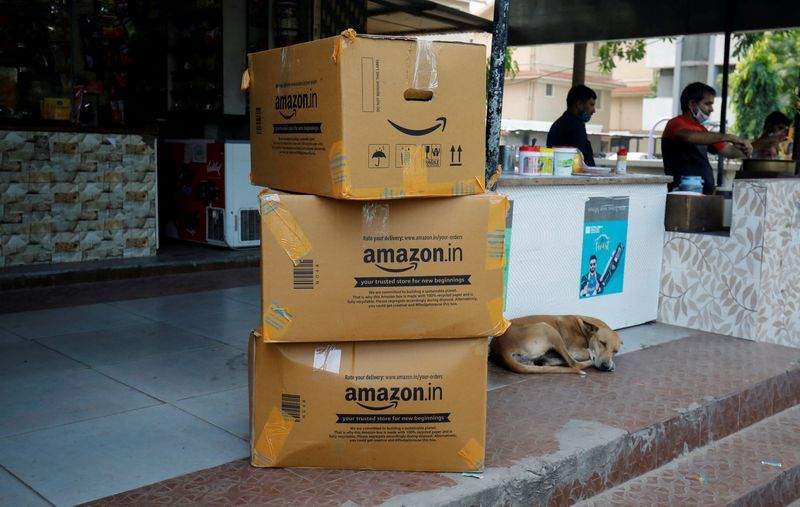
Amazon has declared its intention to pursue "appropriate action" against M&M Logistics Solutions, one of its major delivery partners operating in India, following the conclusion of a police investigation into a warehouse fire that claimed two lives in the northern state of Uttarakhand on June 5. The e-commerce giant's commitment comes as the company faces mounting scrutiny over labour conditions and safety standards across its operations in South Asia's second-largest economy. The pledge represents a response to widespread criticism from workers' unions and civil society groups demanding stronger accountability measures within Amazon's supply chain infrastructure.
The incident at M&M Logistics Solutions has exposed significant gaps in workplace safety compliance that extend beyond the immediate tragedy. According to official documentation reviewed by authorities, the facility where the fire erupted lacked fundamental safety infrastructure, including a valid fire safety certificate, functioning fire alarm systems, smoke detection equipment, and an adequately designed emergency exit route. These deficiencies underscore systemic vulnerabilities in how third-party logistics providers operate under the e-commerce platform's network, particularly in delivering packages across northern India where rapid expansion has sometimes outpaced safety oversight.
Beyond its public statement, Amazon has launched an independent internal investigation into the circumstances surrounding the fire, according to sources familiar with the matter. The company's parallel investigation track suggests an attempt to gather its own findings while authorities conduct their legal examination. This dual-track approach reflects the complexity of Amazon's position as a multinational corporation operating within India's regulatory framework while managing thousands of third-party vendors spread across multiple states. However, questions remain about how internal investigations compare in rigour and transparency to official inquiries.
M&M Logistics Solutions operates an extensive network of 45 Amazon delivery centres spanning 21 cities across northern India, making it a critical component of Amazon's last-mile delivery infrastructure in the region. The scale of this partnership highlights the degree to which Amazon depends on third-party logistics providers to fulfil its massive order volumes. Any suspension or termination of M&M Logistics would create immediate operational challenges for Amazon's delivery capabilities, potentially affecting service quality for millions of customers across the region while the company identifies alternative logistics partners.
Amazon's supplier code of conduct explicitly prohibits working environments deemed unsafe for workers, specifically citing uncontrolled fire hazards as violations warranting disciplinary action. The code establishes suspension and termination as potential consequences for vendors failing to maintain safety standards. Yet critics argue that while these policies exist on paper, enforcement has historically been inconsistent and reactive rather than proactive. The gap between stated policies and ground-level implementation remains a persistent challenge for Amazon's vendor management system across India.
This incident arrives amid a broader pattern of labour-related controversies affecting Amazon's Indian operations. In 2024, the National Human Rights Commission initiated scrutiny of Amazon's warehouses near New Delhi following allegations of labour law violations during an intense heatwave. Workers reportedly faced hazardous conditions during extreme heat, raising questions about whether the company adequately prioritised employee wellbeing during weather emergencies. Subsequently, India's state government initiated legal proceedings against Amazon under labour law statutes, signalling government willingness to hold the company accountable for workplace violations.
The Amazon India Workers Union has responded to the June fire by demanding a judicial inquiry conducted by an independent judge into the deaths, characterising the incident as symptomatic of "grave failure of workplace safety and protection of human dignity." This call for an independent investigation suggests unions lack confidence that internal corporate investigations or standard police procedures will produce outcomes sufficient to prevent future incidents. The union's intervention reflects growing worker activism within Amazon's Indian operations, challenging the company to demonstrate genuine commitment to safety beyond rhetorical commitments.
Amazon's repeated assertion that worker safety represents its "top priority" contrasts sharply with the documented safety failures preceding the fatal fire. For Malaysian readers and Southeast Asian observers monitoring corporate accountability in the region, this discrepancy raises important questions about how multinational corporations translate global policies into actual workplace conditions. As e-commerce operations expand rapidly throughout Southeast Asia, including Malaysia, the patterns emerging in India's Amazon supply chain offer cautionary lessons about the potential consequences of prioritising operational growth over systematic safety investments.
The investigation's conclusion and Amazon's subsequent response will carry significant implications for labour standards across India's e-commerce sector. Competitors monitoring Amazon's actions may adjust their own vendor management protocols based on whether the company pursues substantive reforms or implements minimal penalties. For Malaysia and other regional economies developing their own e-commerce infrastructures, the outcome of this case could influence how governments and workers' organisations approach regulation of third-party delivery networks, particularly regarding liability and accountability mechanisms.
Moving forward, stakeholders will scrutinise whether Amazon's "appropriate action" translates into structural reforms addressing systemic vulnerabilities within its vendor ecosystem or merely symbolic measures designed to defuse immediate controversy. The company's response will test whether corporate policy frameworks can meaningfully protect workers when financial incentives favour rapid expansion over comprehensive safety audits. As Amazon continues expanding throughout South and Southeast Asia, this moment represents a critical juncture where regulatory expectations and corporate accountability standards are being redefined.

