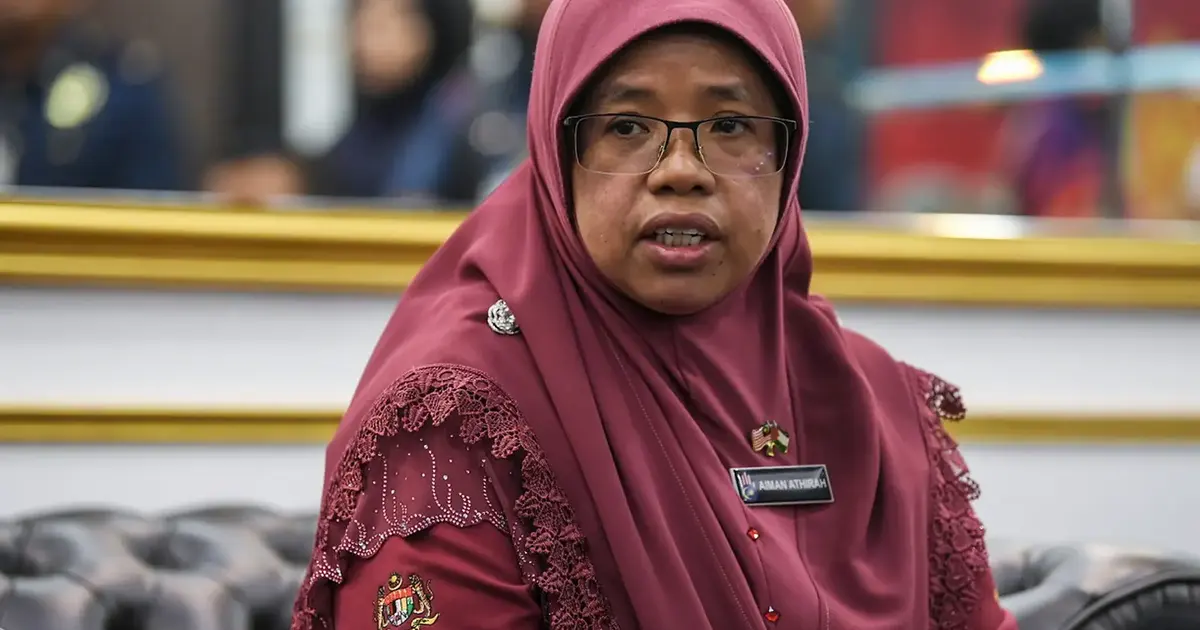
The political temperature in Malaysia's coalition landscape has risen after an Amanah politician issued a direct challenge to PAS president Hadi Awang, demanding either concrete proof of his allegations against DAP or swift legal action. Aiman Athirah Sabu's bold move reflects deepening frustrations within the opposition about what she characterises as unsubstantiated claims weaponising religious sentiment.
Hadi Awang has repeatedly levelled accusations that DAP harbours anti-Islam sentiments and poses a threat to the country's Muslim majority and constitutional framework. These claims have become a recurring theme in PAS rhetoric, particularly as the party seeks to consolidate its position as Islam's principal defender in Malaysian politics. However, Aiman Athirah has signalled that such assertions, made without supporting documentation or legal backing, undermine constructive political discourse and exploit religious anxieties for partisan advantage.
The timing of this confrontation matters significantly for Malaysian politics. The opposition coalition has struggled to present a unified front against the government, with ideological tensions between secular-leaning DAP and faith-focused PAS creating fault lines. By challenging Hadi to substantiate his claims through either evidence or courts, Aiman Athirah appears to be calling for greater accountability in political communication and setting boundaries around religious rhetoric used in public debate.
Legally speaking, Malaysia's defamation laws provide mechanisms for parties harmed by false allegations to seek redress. If Hadi truly believes DAP opposes Islam in ways that damage his party's reputation or community standing, court proceedings would offer an avenue to establish this claim through evidence and cross-examination. The absence of legal action, from this perspective, might suggest the accusations rest on political positioning rather than demonstrable wrongdoing.
PAS and DAP have maintained an awkward partnership within the opposition, united by shared opposition to the current government yet divided by fundamentally different worldviews regarding governance, religion's role in state affairs, and constitutional interpretation. DAP's secular orientation and advocacy for an inclusive Malaysian identity have long clashed with PAS's Islamist framework emphasising Islam's central place in national life. These philosophical differences are not new, but how they are articulated carries consequences for inter-party relations and public perception of opposition viability.
Aiman Athirah's challenge also reflects broader concerns about the erosion of civil political discourse. When significant claims about party ideology or intentions circulate without substantiation, they can calcify into accepted truth through repetition, regardless of factual foundation. Her demand for accountability suggests a desire to restore evidentiary standards to political argument, preventing religious language from becoming a tool for making unverifiable assertions immune from scrutiny.
The DAP, as a primarily Chinese-majority party with secular credentials, remains a persistent target for critics questioning its commitment to Islam's constitutional position. These critiques often reference DAP positions on matters such as hudud law implementation, alcohol licensing, or religious freedom protections, interpreting support for secular governance as hostility toward Islam. The party has consistently countered that supporting secular governance does not equate to opposing Islam or Muslim citizens' rights, but such nuances often disappear in political rhetoric.
For Southeast Asian observers, Malaysia's inability to compartmentalise legitimate ideological disagreement from accusations of existential threat speaks to polarisation challenges affecting the region. When religious identity becomes a primary axis of political competition, and when parties deploy religious concern as a cudgel against opponents, the space for pragmatic cooperation and policy-focused debate narrows considerably. Opposition coalitions require such space to function effectively as alternatives to incumbent governments.
The PAS leadership's response to this challenge will be revealing. Should Hadi decline to provide evidence or pursue legal channels, it might reinforce perceptions that the allegations serve rhetorical rather than substantive purposes. Alternatively, if PAS attempts to marshal documented instances of DAP statements or positions it views as problematic, such evidence would at least ground the debate in specifics rather than generalisations about party ideology.
Aiman Athirah's intervention also signals that not all opposition figures are willing to tolerate unexamined accusations without pushback. This willingness to challenge fellow coalition partners on evidentiary grounds, while potentially disruptive in the short term, might ultimately strengthen opposition discourse by establishing expectations for factual support and precise language when discussing contentious matters.
The broader implication extends to Malaysian democracy itself. Political competition functions more healthily when claims can be tested, evidence can be examined, and legal remedies exist for demonstrable harm. By inviting Hadi to utilise these mechanisms rather than rely on assertion, Aiman Athirah has articulated a challenge not merely to PAS positioning but to standards governing how Malaysian politicians engage in high-stakes debates about Islam, identity, and constitutional values.

