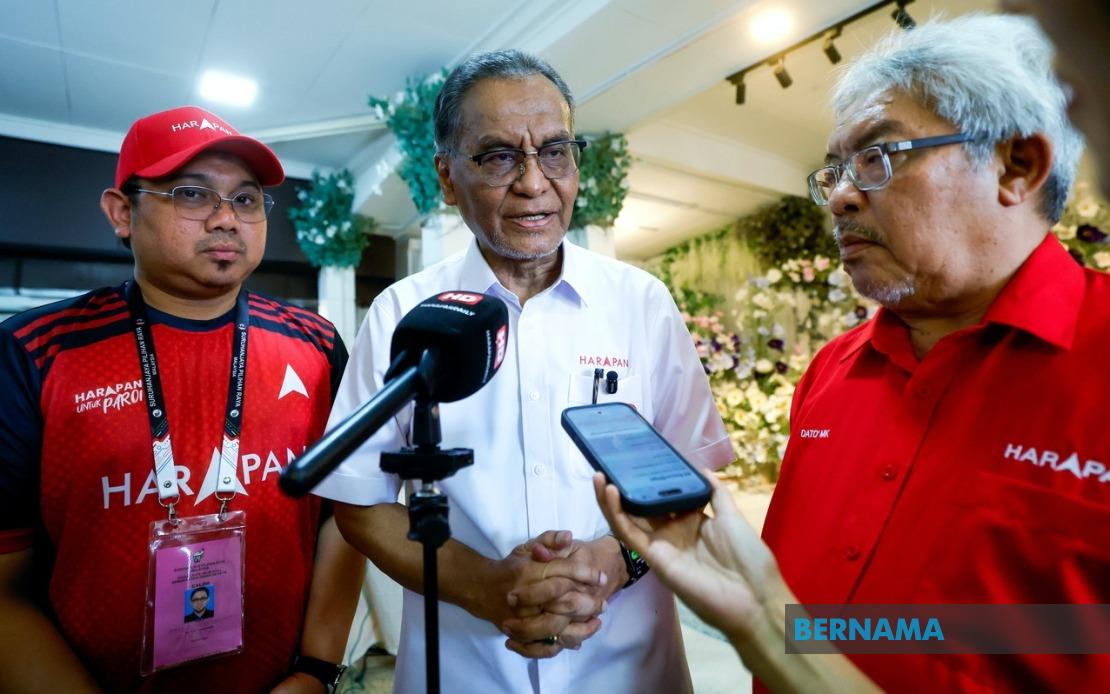
Negeri Sembilan's upcoming state election will see Parti Amanah Negara placing considerable emphasis on the Pakatan Harapan coalition government's governance record and its commitment to constituent-focused politics. Nine Amanah candidates are contesting across the state in what represents a strategic positioning by the party to leverage the state administration's accomplishments as it seeks to consolidate support ahead of polling day on August 1.
According to Amanah vice-president Datuk Seri Dr Dzulkefly Ahmad, the coalition's campaign machinery has been constructed around demonstrating tangible results from the PH-led state government's tenure. Rather than relying on rhetoric or populist appeals, the party is banking on what it describes as a service-oriented political approach that resonates with voters through demonstrated competence. This positioning reflects a broader strategic calculation within the opposition coalition that governance credibility and problem-solving capacity represent stronger electoral assets than aggressive campaigning tactics.
The seat allocation across Pakatan Harapan's three component parties reflects the coalition's internal power dynamics in the state. Amanah's nine seats form part of a total PH slate of 36 candidates, with Parti Keadilan Rakyat contesting 16 seats and the Democratic Action Party fielding 11 candidates. This distribution suggests that Amanah has consolidated its position within the coalition's state machinery while remaining the junior partner to PKR's stronger presence. The allocation itself carries implications for how effectively PH can mobilise organisational resources across different constituencies.
Dzulkefly's emphasis on candidate quality and community credentials addresses a persistent vulnerability in Malaysian electoral politics—the perception that political candidates lack genuine connection to local communities or substantive experience in addressing constituent needs. By highlighting candidates with established track records of service, Amanah appears to be attempting to differentiate itself in an increasingly crowded political marketplace where voters have grown more sceptical of unproven candidates. This approach suggests recognition that electoral outcomes increasingly depend on local-level credibility rather than national political narratives.
The campaign strategy outlined incorporates multiple engagement channels designed to foster direct voter contact. House-to-house visitation, small-group discussions, and social media outreach are presented as mechanisms for identifying grassroots concerns and facilitating responsive government action. This multi-layered approach acknowledges that different voter demographics engage with political messaging through different channels, and that effective campaigning requires presence across multiple platforms rather than concentration on traditional mass media.
The Paroi state constituency exemplifies the scale of challenge facing candidates in urban and semi-urban areas. With more than 65,000 registered voters and a total population approaching 140,000, the constituency encompasses sufficient demographic diversity to require nuanced policy responses across multiple issues. Ahmad Shahir Mohd Shah, the PH-Amanah candidate for Paroi, has identified small trader empowerment as a priority, proposing streamlined licensing procedures and infrastructure improvements through collaboration with local authorities. This focus on petty entrepreneurship reflects the economic circumstances of a significant voter segment often neglected by both government and opposition in favour of larger business interests.
The nine Amanah candidates contesting across Negeri Sembilan span both incumbent and challenger positions. Datuk Bakri Sawir defends the Klawang seat, while other candidates including Yaacob Mahmood, Zarrina Abu Zarin, Mohd Hanis Alimin, Mohd Zailan Mohd Munawar, Muhammad Allif Ibrahim, Nasir Raman, and Abd Latif A. Tambi contest seats in Serting, Lenggeng, Senaling, Johol, Kota, Bagan Pinang, and Gemencheh respectively. This geographic spread demonstrates Amanah's determination to compete across the state's diverse constituencies rather than concentrating resources in strongholds.
The electoral landscape facing the coalition reflects recent voting patterns. In the 15th Negeri Sembilan state election held in 2023, Pakatan Harapan secured 17 seats, establishing its position as the dominant force in state politics. Barisan Nasional's 14 seats positioned the traditional coalition as credible opposition, while Perikatan Nasional's five seats indicated residual support for the newer political formation. These results suggest that while PH holds advantage, the political environment remains competitive and that complacency could prove costly.
The election timeline established by the Election Commission provides candidates with a defined campaign period. Early voting is scheduled for July 28, with general polling occurring on August 1. This compressed timeframe requires campaign machinery to operate with considerable efficiency, particularly for a coalition managing coordination across multiple parties and numerous constituencies. The tight scheduling also influences campaign strategy, pushing parties toward rapid voter contact and focused messaging rather than extended deliberation.
For Pakatan Harapan at the state level, the Negeri Sembilan election represents an opportunity to consolidate control and validate its governance approach. A successful outcome would reinforce the coalition's claim to competent administration and potentially provide momentum heading into future electoral contests. Conversely, any significant loss of ground could be interpreted as voter dissatisfaction with state-level performance and might encourage Barisan Nasional or Perikatan Nasional to intensify their challenge to PH's dominance. The stakes thus extend beyond Negeri Sembilan's state assembly, carrying implications for coalition politics across Malaysia.
For Malaysian voters broadly, the election offers a test of whether state governments genuinely prioritise constituent service and whether administrations can translate governance achievements into sustained electoral support. Negeri Sembilan's experience in this cycle will inform understanding of how electoral behaviour is evolving across Malaysia and whether voters increasingly reward administrative competence over other political factors. The emphasis placed by Amanah and PH on track record and service delivery suggests that the coalition believes this shift has already occurred—a calculation that the August 1 election will help validate or refute.

