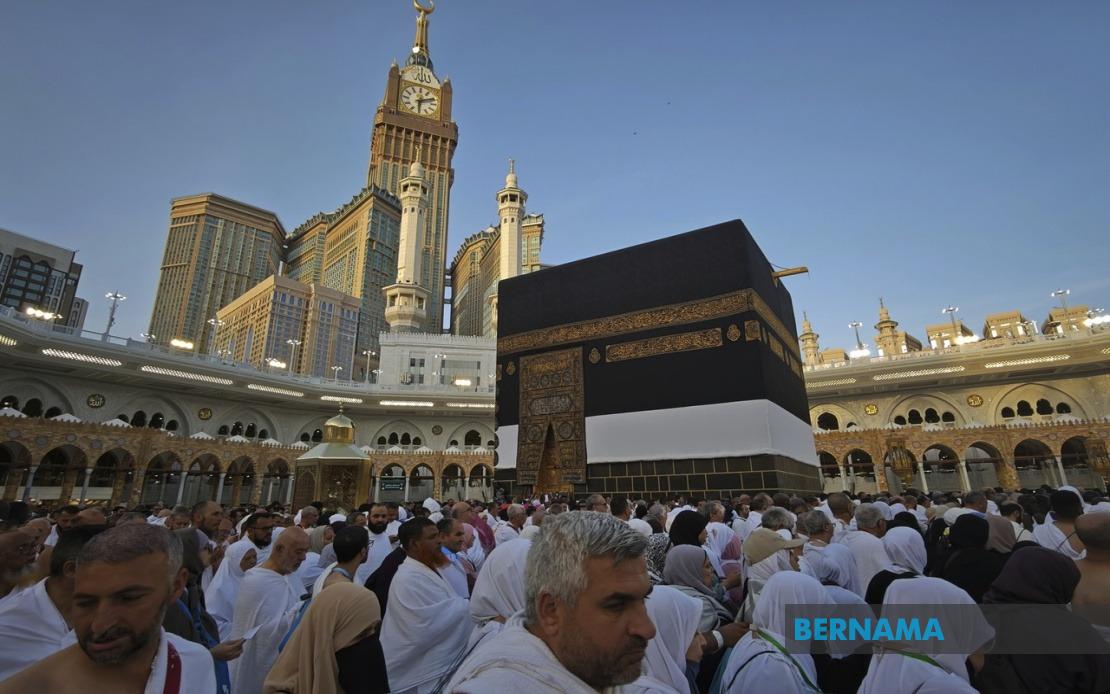
Malaysia's Consulate General in Jeddah has firmly rebutted claims circulating across social media platforms suggesting that Malaysian haj pilgrims were still present in Saudi Arabia following completion of the 1447H/2026 pilgrimage season. The diplomatic mission issued an official statement on Sunday categorically denying the assertions and providing reassurance to the Malaysian public about the successful conclusion of this year's haj operations.
The consulate stated unequivocally that every Malaysian haj pilgrim participating in the 1447H/2026 season had safely completed their return journey home, with all departures occurring in accordance with the carefully structured schedule established by the Pilgrims Fund Board, commonly referred to as Tabung Haji. This timeline management represents months of coordinated planning involving both Malaysian government agencies and Saudi Arabian authorities to ensure orderly repatriation of the approximately 30,000 Malaysian pilgrims who undertook the spiritual journey this year.
The emergence of these unverified social media reports highlights growing concerns about misinformation spreading through digital platforms, particularly regarding matters touching on religious observance and government services. In an increasingly connected world where information travels instantaneously across borders, the ability to distinguish authoritative announcements from unsubstantiated claims has become crucial for public understanding. The consulate's swift response underscores the Malaysian government's commitment to maintaining transparency and preventing unnecessary anxiety among families of returning pilgrims.
Tabung Haji, the statutory body responsible for managing haj logistics and financing for Malaysian Muslims, operates under a rigorous framework designed to accommodate the nation's allocation of pilgrims within Saudi Arabia's annual capacity constraints. The board coordinates with the Saudi Ministry of Hajj and Umrah, medical facilities, transport operators, and accommodation providers to orchestrate one of the world's largest annual religious migrations. The successful completion of this year's operations reflects months of behind-the-scenes coordination and contingency planning by dedicated personnel working across multiple agencies.
The consulate's appeal for the public to rely exclusively on official channels rather than unverified social media content reflects a broader challenge facing authorities in Southeast Asia and globally. In Malaysia, where approximately 90 percent of the population has access to internet and smartphones, social media serves as both a vital communication tool and a potential vector for rumour and misinformation. The rapid amplification of claims through messaging apps and social networks can generate genuine concern, particularly among extended families awaiting confirmation of their relatives' safe return.
This situation underscores the importance of media literacy and critical evaluation of sources, particularly for matters involving government services and public safety. During sensitive periods such as haj season, when families naturally experience heightened emotional investment in their pilgrims' wellbeing, the spread of unverified claims can cause unnecessary stress and anxiety. The consulate's public statement serves partly as a corrective measure, redirecting public attention toward authoritative sources while implicitly encouraging greater scepticism toward sensationalised social media posts.
For Malaysian readers, the assurance from Jeddah carries particular significance given the cultural and religious centrality of the haj pilgrimage within Malaysian Islamic life. The successful return of all pilgrims represents not merely a logistical achievement but confirmation that Malaysia's capacity to support its Muslim citizens in fulfilling one of the Five Pillars of Islam remains robust. The experience also reflects Malaysia's diplomatic relationships with Saudi Arabia and its standing within the Organisation of Islamic Cooperation framework.
The decision to issue an official denial rather than remain silent reflects evolving government communication strategies across Southeast Asia. Rather than allowing misinformation to persist in the digital sphere, authorities increasingly recognise that prompt, clear, and authoritative responses help contain the spread of false narratives. This proactive approach proves particularly important for time-sensitive matters where delay in correction can allow false claims to establish themselves in public consciousness.
Looking forward, this incident may prompt Malaysian authorities to consider enhanced communication protocols during future haj seasons, potentially including real-time updates through official channels and pre-emptive information campaigns. The Pilgrims Fund Board might explore deploying dedicated social media teams during peak periods to provide families with regular status updates, thereby reducing the information vacuum that misinformation tends to fill. Such measures could serve multiple objectives simultaneously: reassuring families, combating false claims, and demonstrating responsive governance.
The consulate's warning against spreading unverified information carries implicit encouragement for social media users to exercise greater responsibility when encountering and sharing claims regarding government services. In an ecosystem where individual users function as content distributors, collective decision-making about what deserves amplification significantly influences the information landscape. The diplomatic mission's appeal thus functions as both a factual correction and a broader call for enhanced digital citizenship practices within Malaysian online communities.

