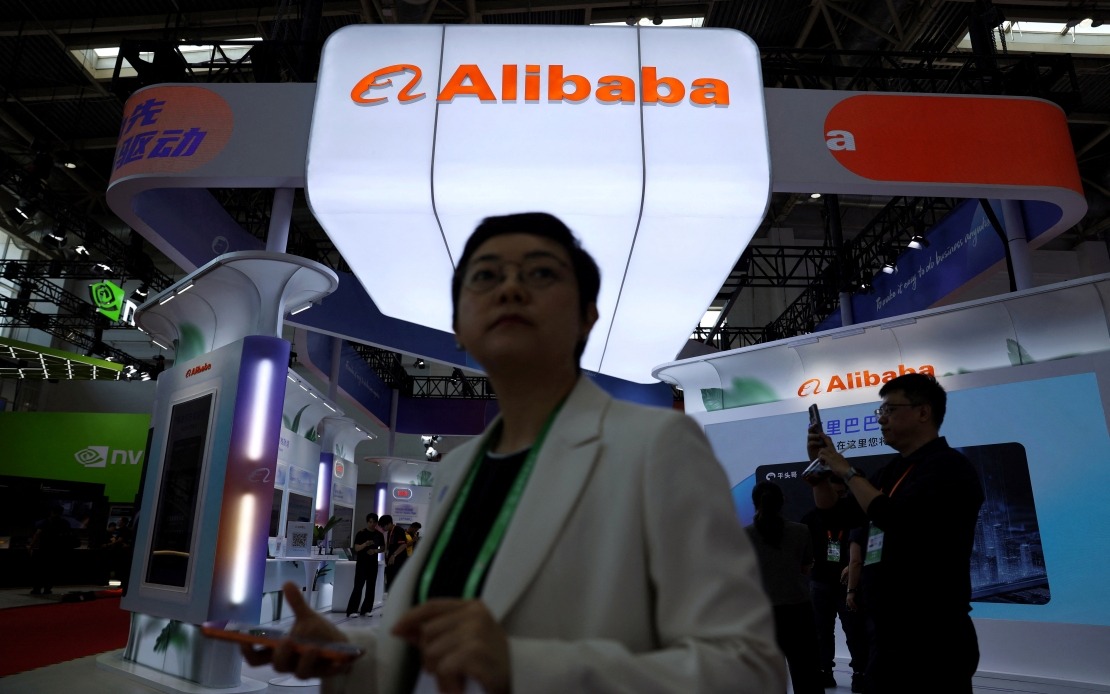
Chinese e-commerce and technology conglomerate Alibaba has taken the unprecedented step of suing the United States Department of Defense over its recent designation as a company linked to China's military-industrial complex. The lawsuit, filed in federal court and disclosed publicly on Tuesday, represents a direct confrontation between one of Asia's largest technology firms and American defence policy authorities. This legal challenge comes as Beijing and Washington continue navigating complex trade and technology tensions that have increasingly ensnared major Chinese corporations in cross-Pacific regulatory disputes.
The Pentagon designation, announced in early June, placed Alibaba among 188 entities identified as possessing ties to China's defence sector. The list also included other prominent technology and automotive companies such as Tencent and BYD, effectively subjecting these firms to enhanced scrutiny and potential restrictions under US law. For Alibaba, which generates substantial revenue from international operations and relies heavily on American technology partnerships and supply chains, the military designation carries significant commercial consequences beyond reputational damage.
Alibaba's legal filing articulates a forceful rebuttal to the Pentagon's characterisation, asserting that the determination against the company "has no basis in fact or law." The company emphasises that its corporate governance structure features an independent board of directors entirely free from military affiliations, establishing what it argues is clear separation between commercial operations and any defence-related activities. This argument attempts to establish a fundamental distinction between the company's institutional independence and the Pentagon's presumption of military linkage.
The technological giant further grounds its defence on the actual nature and scope of its business activities. Alibaba maintains that its product portfolio and service offerings address exclusively civilian market sectors: retail commerce, supply chain and logistics, and enterprise information technology infrastructure. These are among the world's largest digital economy segments, serving millions of businesses and consumers across Asia and beyond. The company's argument posits that the sheer scale and civilian orientation of these operations render a military designation logically implausible.
Central to Alibaba's legal strategy is documentation of its contractual and compliance frameworks. The company asserts that its internal policies explicitly restrict and prohibit any military applications of its platforms, services, or technologies. Additionally, Alibaba emphasises that it holds no military certifications or licences that would conventionally indicate defence-sector involvement. These contractual restrictions and absence of formal military credentials form a second evidentiary layer supporting the company's contention that Pentagon authorities have fundamentally mischaracterised its business model.
For Malaysian and Southeast Asian business communities, Alibaba's lawsuit carries important implications. The company operates extensively throughout the region, with substantial investments in cloud computing infrastructure, financial technology platforms, and e-commerce networks that integrate Malaysian and regional economies into broader Asian digital ecosystems. The Pentagon designation creates uncertainty around these relationships and potentially complicates commercial arrangements that regional firms have constructed with the Chinese technology giant.
The designation also reflects broader American policy approaches toward Chinese technology companies, particularly those with scale and international reach. US authorities have progressively scrutinised major Chinese firms across multiple sectors—telecommunications, semiconductors, artificial intelligence—creating an environment where Chinese companies face regulatory pressure from Washington even in domains where explicit defence connections appear tenuous. Alibaba's lawsuit thus becomes emblematic of ongoing friction between American security interests and the globalised nature of contemporary technology companies.
The timing of Alibaba's legal challenge coincides with sustained efforts by Chinese firms to resist or challenge American regulatory designations through various channels. Some companies have pursued diplomatic avenues, while others have sought to establish alternative supply chains and markets less dependent on American technology and commerce. Alibaba's decision to litigate in American federal courts reflects confidence in the company's legal position and perhaps the belief that American judicial processes might prove more receptive to its arguments than executive branch policymaking.
From a regulatory perspective, the case raises substantive questions about how American defence authorities assess connections to China's military apparatus. The Pentagon's methodology for identifying firms as military-linked remains somewhat opaque, creating challenges for companies seeking to understand or contest designations. Alibaba's lawsuit may compel greater transparency and more rigorous evidentiary standards for such determinations, potentially benefiting other Chinese companies similarly classified.
The financial implications extend across multiple dimensions. Military designations can trigger investment restrictions, compliance complications, and reduced access to American technology and services. For a company like Alibaba with global operations and American institutional investors, these consequences represent meaningful economic burdens. The litigation therefore carries stakes extending beyond legal principle to tangible competitive and commercial outcomes.
Southeast Asian governments have generally maintained pragmatic positions regarding Chinese technology investment despite American concerns. However, Alibaba's lawsuit and the broader security environment surrounding Chinese firms create complexity for regional policymakers balancing technological development needs against American diplomatic pressure. Malaysian authorities and regional peers will likely monitor this case's trajectory as they navigate their own technology governance frameworks.
Looking ahead, the outcome of Alibaba's litigation could influence how Chinese technology companies challenge American designations and potentially reset expectations around evidentiary standards for military-linked determinations. Whether American courts prove receptive to Alibaba's arguments remains uncertain, but the very act of judicial contestation signals that Chinese firms are increasingly willing to defend themselves through American legal channels rather than accepting executive determinations passively. This shift itself reflects evolving dynamics in technology competition and regulatory conflict between Washington and Beijing.