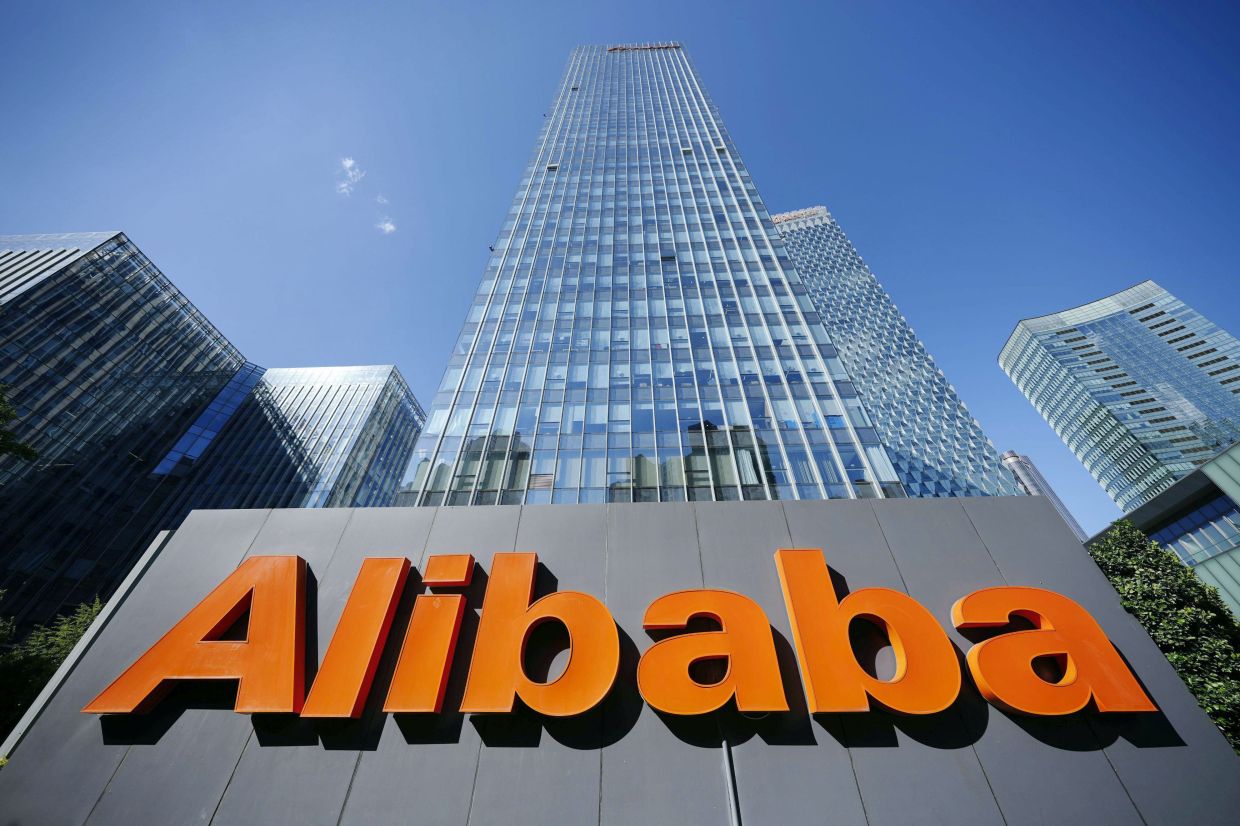
Alibaba Group Holding, the Chinese technology and e-commerce behemoth based in Hangzhou, has escalated its dispute with the United States by filing a lawsuit against the Department of Defence in a San Jose, California district court. The move represents a direct legal challenge to what the company describes as an arbitrary and unconstitutional blacklisting that threatens its business interests and constitutional rights. Through its legal filing on Tuesday, Alibaba is demanding removal from a designation that could fundamentally reshape its ability to operate within American financial and commercial ecosystems.
The Pentagon added Alibaba to its list of "Chinese military companies" on June 9, alongside prominent firms including electric vehicle manufacturers BYD and Nio, search giant Baidu, robotics company Unitree Robotics, and networking equipment maker TP-Link. This designation came under Section 1260H of the National Defence Authorisation Act, a provision that allows the Pentagon to formally identify companies it believes support China's military apparatus. The timing and scope of the designation reflect Washington's intensifying focus on technological competition with China, encompassing sectors ranging from artificial intelligence and biotechnology to solar energy and advanced robotics—domains where Beijing and Washington are locked in strategic rivalry.
While the Pentagon's listing does not automatically impose sanctions, it represents a powerful mechanism for constraining Chinese companies' access to American capital markets and opportunities to win government contracts. For Alibaba, which maintains significant global operations and strategic investments, such restrictions could create substantial operational headwinds. The company has substantial reasons to fight the designation aggressively, as its removal from the list has direct implications for shareholder value, international partnerships, and its ability to pursue acquisitions or financing in the United States.
In its legal filing, Alibaba asserts that the Pentagon violated its constitutional right to due process and free speech protections under the First Amendment. The company flatly rejected the Pentagon's underlying rationale for the designation, particularly the assertion that Alibaba maintains indirect affiliations with China's State-owned Assets Supervision and Administration Commission, or SASAC. Alibaba also disputed claims that it qualifies as a "military-civil fusion contributor" based on alleged connections to the Ministry of Industry and Information Technology, contending that its interactions with this ministry are merely routine regulatory compliance obligations faced by all technology companies operating in China.
Alibaba's legal strategy emphasises the procedural failings it attributes to the Pentagon's decision-making process. The company points out that it engaged constructively with Pentagon officials during a January meeting to discuss the potential designation and submitted a comprehensive written response in March. Despite this engagement, the Pentagon proceeded with the listing in June, suggesting to Alibaba that the decision was predetermined and not genuinely informed by the company's response. This argument carries weight in American administrative law, where the absence of meaningful engagement with affected parties can constitute grounds for overturning regulatory decisions.
The legal challenge occurs within a rapidly escalating trade and technology conflict between Washington and Beijing. On Monday, China's Ministry of Commerce announced countermeasures targeting ten American companies, including defence contractors and technology firms such as Aveox, Red Cat Holdings, Teal Drones, IMSAR, and Ball Aerospace & Technologies. These additions to China's own export control list signal Beijing's willingness to retaliate against what it views as discriminatory American actions. Simultaneously, the Ministry of Finance restricted 46 American companies from participating in Chinese government procurement, a broader action targeting major defence and technology firms including Lockheed Martin, Raytheon Missiles & Defense, and General Dynamics.
Alibaba's lawsuit is therefore not an isolated legal dispute but rather a prominent manifestation of the deteriorating relationship between American and Chinese technology sectors. The company's assertion that it "is not a Chinese military company nor part of any military-civil fusion strategy" reflects a broader Chinese narrative that Washington is misusing national security justifications to constrain Chinese commercial competitiveness. This framing resonates with Beijing's official position, as articulated by the Chinese embassy in Washington, which has criticised American national security definitions as overly expansive and discriminatory.
The dispute touches on fundamental questions about how governments define and prove military connections in an era of extensive state involvement in strategic technology sectors. China's model of development emphasises government coordination across military and civilian technology innovation in ways that differ substantially from American patterns, making determinations of "military affiliation" inherently contested. Alibaba's legal position essentially argues that routine government engagement, common to all major Chinese firms, should not suffice as evidence of military support or cooperation.
For Malaysian and Southeast Asian stakeholders, Alibaba's legal battle carries significant implications. Many regional companies maintain relationships with both Alibaba and American technology and defence contractors, creating potential complications if tensions between the two powers intensify. Malaysian enterprises may face increasing pressure to choose sides or navigate complex compliance requirements as American restrictions on Chinese companies expand. The outcome of Alibaba's lawsuit could establish important precedents regarding how aggressively Washington will pursue designations against major Chinese technology firms and what legal defences prove effective against such actions.
The Pentagon's silence on ongoing litigation suggests the department views this as a serious challenge worth taking seriously through formal legal processes. The outcome remains uncertain, as American courts occasionally overturn or modify administrative decisions when procedural or constitutional defects are identified. However, the political climate around China policy in Washington makes judicial reversal of the Pentagon's designation unlikely unless Alibaba can demonstrate clear legal violations rather than mere policy disagreements.
Alibaba's ownership of the South China Morning Post, a respected English-language publication, provides the company with a platform for framing its dispute with American authorities in terms accessible to international audiences. This media asset amplifies the company's ability to shape narratives around the fairness and appropriateness of American sanctions against Chinese technology firms. As regulatory tensions between Washington and Beijing continue escalating, similar lawsuits and countermeasures will likely proliferate, creating an increasingly fragmented global technology landscape with profound consequences for multinational operations throughout Asia and beyond.

