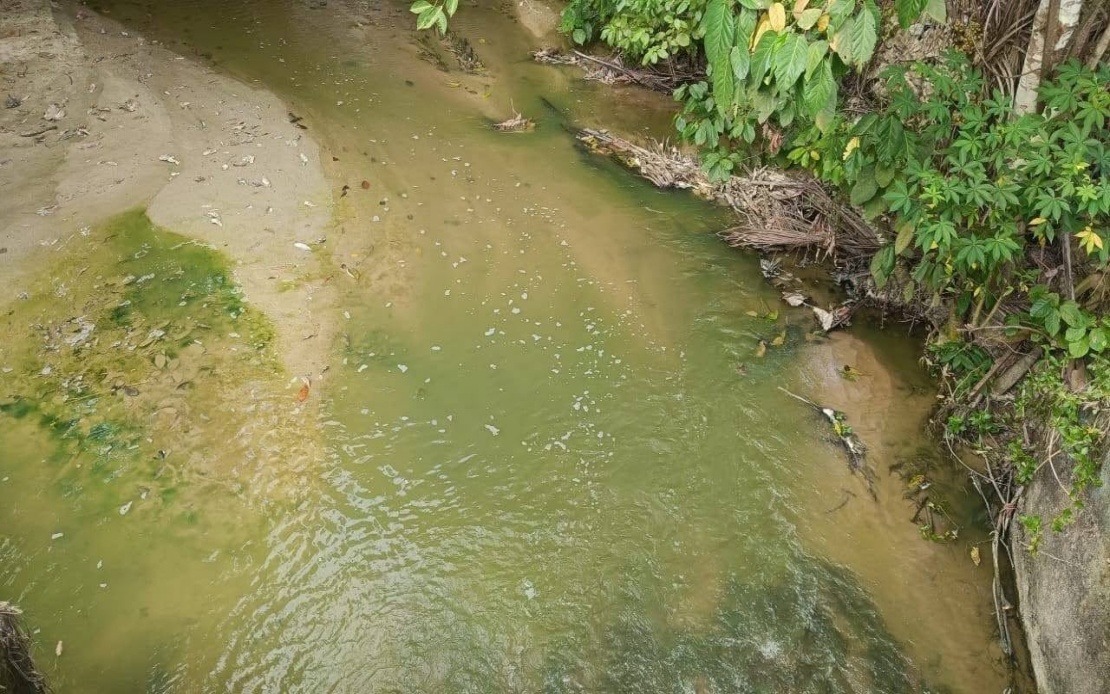
The murky green waters that recently appeared in the Pertang River in Mukim Pertang, Jelebu, have sparked concern among residents, but authorities say the discolouration is a natural phenomenon tied to fish farming operations rather than environmental pollution. The Negeri Sembilan Department of Fisheries issued clarification on Monday following viral social media posts suggesting industrial discharge or hazardous contamination, with the department's director Kasim Tawe confirming that extended periods of hot, dry weather combined with insufficient rainfall have created ideal conditions for algal expansion in the fish breeding ponds that feed into the waterway.
The area in question comprises a sprawling aquaculture complex spanning approximately 29.54 hectares across former mining ponds now dedicated to commercial fish cultivation. The facility focuses on breeding three primary species: baung, red tilapia, and Lee Koh fish, which collectively represent a significant component of the district's fishing industry. The concentration of these operations in close proximity means that conditions within the ponds directly influence the adjoining river system, making the seasonal dynamics of pond management critical to water quality in the broader area.
According to Kasim, algae development in controlled aquaculture environments carries both advantages and drawbacks depending on proliferation rates and the specific species involved. When managed appropriately, green algae functions as a beneficial component of pond ecosystems, generating oxygen through photosynthesis and furnishing natural nutrition for farmed fish. Additionally, the algal layer serves as a protective barrier against intense solar radiation, reducing physiological stress on fish during extreme heat. These properties make moderate algae presence desirable from a production standpoint, explaining why many fish farmers tolerate and even encourage certain algal growth as part of standard husbandry.
However, when algal populations exceed manageable thresholds, the consequences for aquatic life become decidedly negative. Excessive growth can precipitate sharp declines in dissolved oxygen concentrations, particularly during nighttime hours when photosynthetic oxygen production ceases while respiration continues. This phenomenon has triggered fish kills in poorly managed ponds across Southeast Asia and beyond. Beyond oxygen depletion, uncontrolled blooms destabilise water chemistry, causing rapid pH fluctuations that can damage fish gill tissues and impair their capacity to absorb oxygen even when ambient levels remain adequate. Dense algae also clogs gill structures with organic matter, compounding respiratory distress.
Recognising these risks, the department has initiated proactive monitoring protocols across the Pertang River system and associated fish-breeding facilities. This surveillance framework represents a pragmatic approach to environmental stewardship in an area where aquaculture constitutes a significant economic activity. The Jelebu District Fisheries Office, collaborating with local law enforcement through the Pertang Police Station, maintains regular patrols and water quality assessments to track conditions and intervene if situations deteriorate.
To mitigate algal overgrowth, Kasim outlined a suite of management strategies that fish breeders can implement immediately. Water circulation devices such as paddle wheels prove particularly effective during nocturnal hours when stagnation exacerbates oxygen depletion. Gradual partial water exchanges refresh the pond environment without shocking resident fish populations. Reducing feed supplementation naturally lowers nutrient concentrations that fuel algal growth. Installing shade netting over portions of ponds diminishes light penetration without eliminating it entirely, constraining photosynthetic rates. Application of probiotic bacterial cultures can establish microbial communities that compete with algae for nutrients. In extreme cases, deliberately reducing fish stock density decreases overall metabolic demand and waste accumulation.
The episode underscores the tension between agricultural development and environmental monitoring in Malaysia's smaller towns and rural districts. Aquaculture represents legitimate livelihood activity for many farming families and contributes meaningfully to food security and export revenue. Simultaneously, concentrated fish farming operations generate ecological impacts that necessitate active management and transparent communication with surrounding communities. When water discolouration occurs, public alarm naturally follows, particularly in an era where environmental scandals and industrial misconduct receive intense media scrutiny.
The viral WhatsApp message that triggered initial concern highlights how rapidly unverified information circulates through social media, often outpacing official agency responses. In this instance, the Department of Fisheries moved quickly to investigate and release findings, demonstrating institutional responsiveness. The distinction between pollution from uncontrolled discharge and natural biological processes—while scientifically clear to specialists—may not be immediately obvious to lay observers, underscoring the importance of early and transparent official communication.
For residents in the Jelebu area, the key takeaway is that current monitoring confirms no acute hazard, though the department's continued vigilance remains essential. Fish farmers operating in the region should heed the prescribed management protocols to prevent deterioration. More broadly, this incident illustrates how climate variability—specifically the combination of intense heat and reduced rainfall—can stress even well-established agricultural systems, requiring adaptive management approaches that balance productivity with environmental stewardship in an increasingly unpredictable climate.

