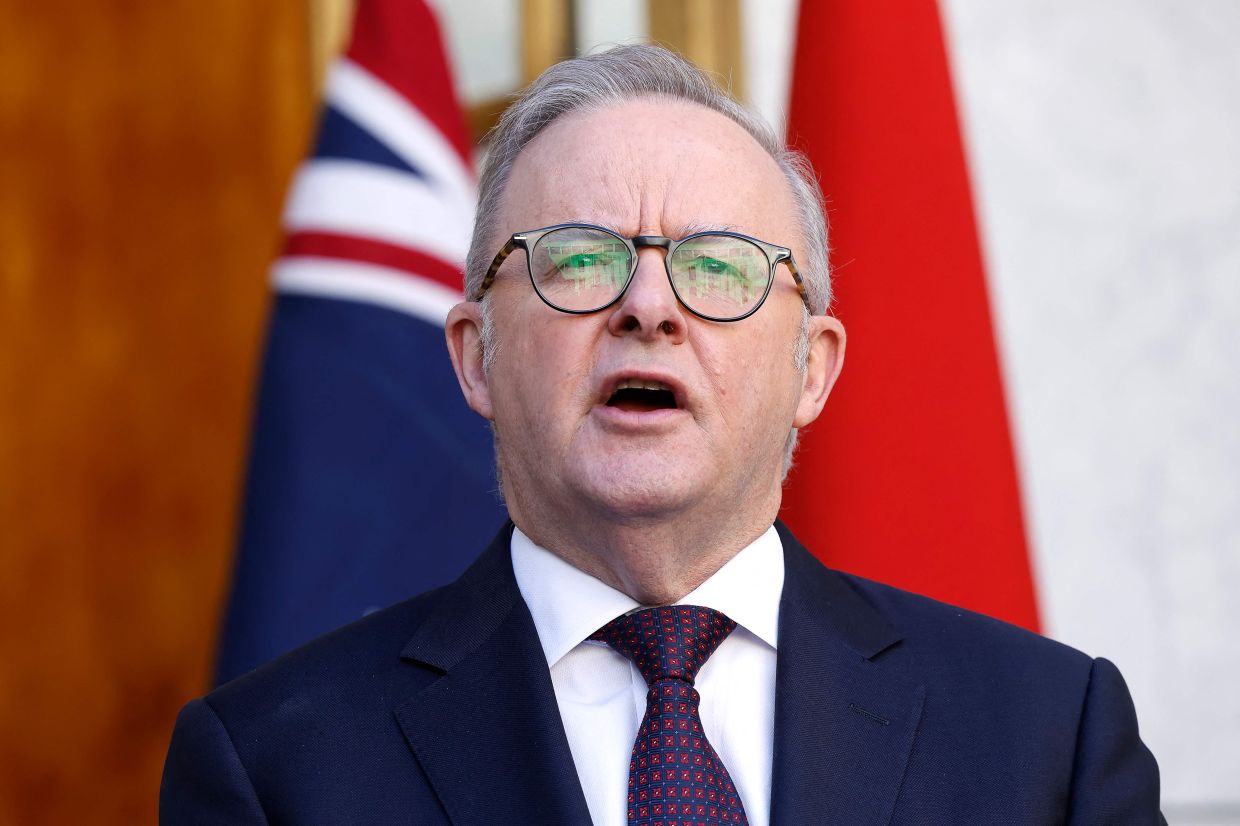
Australian Prime Minister Anthony Albanese has rejected demands that he apologise for crude remarks made about a gift from Japanese Prime Minister Sanae Takaichi, insisting the comments were misunderstood rather than intentionally offensive. The controversy erupted this week when a podcast clip surfaced containing banter between Albanese and host Nikki Osborne recorded during an interview at his official residence, in which the Australian leader made light of a premium Japanese melon presented by Takaichi during her May visit to Australia.
The incident represents the second public relations stumble for Albanese in recent weeks following separate fallout over crude comments he made about Australian pop singer Kylie Minogue during the same podcast conversation. That earlier controversy prompted the Prime Minister to offer a public apology, acknowledging that his language had been inappropriate. However, when confronted in parliament on Tuesday about the Japanese Prime Minister remarks, Albanese adopted a more combative posture, rejecting what he characterised as a misrepresentation of his intentions.
During the podcast discussion, Albanese described the melon as an unusual or unexpected gift, a characterisation that prompted the host to ask whether Takaichi had managed to smuggle the fruit through Australian customs without incident. The Prime Minister's response, delivered with apparent levity, referenced receiving "a couple of melons," at which point the host made a reference to actress Pamela Anderson. The exchange was clearly meant to be humorous banter, though the joke hinged on crude double entendre that proved offensive to political opponents and commentators who viewed it as disrespectful to the visiting Japanese leader.
The timing of the gaffe carries particular significance for Australia's relationship with Japan at a moment when bilateral ties have grown increasingly important to regional security and economic cooperation. Takaichi's visit to Australia in May was an official state occasion representing high-level diplomatic engagement between the two nations. Japanese premium melons are indeed luxury commodities that command substantial prices in domestic markets, with some specimens selling for considerably more than AUS$270 according to Japan's former ambassador to Australia. The gift therefore carried symbolic weight as a gesture of respect and goodwill, making the subsequent mockery appear particularly tone-deaf.
Australia's opposition has seized on the incident as evidence of poor judgment and lack of respect for international diplomatic niceties. The opposition leader has explicitly called on Albanese to offer a formal apology, characterising the behaviour as insulting to both Takaichi personally and to the Japanese nation more broadly. The demand gained traction among members of parliament and within media commentary, creating sustained political pressure on the government to respond more contritely. Yet rather than yielding to these calls, Albanese chose to stand firm, a decision that risks prolonging the controversy and attracting further scrutiny of his public conduct.
Foreign Minister Penny Wong has attempted to contain the damage by arguing that Albanese's remarks were innocent and that those criticising him have deliberately misinterpreted his words. She framed the controversy as a matter of political opportunism by the opposition, suggesting that the outcry represented a cynical effort to manufacture outrage rather than a genuine expression of concern about diplomatic relations. Wong emphasised that the Prime Minister regards Takaichi as a friend and that Australia values its partnership with Japan, positioning the government's stance as one of reasonableness while portraying opponents as engaging in bad-faith criticism.
For Malaysian observers and regional readers, the incident illuminates broader questions about standards of public conduct and the expectations placed on leaders in the Asia-Pacific region. The matter touches on cultural sensitivities around gift-giving, which carries deep significance in Japanese and broader East Asian contexts. The casual dismissal of a thoughtfully selected gift from a visiting head of government stands in stark contrast to the solemnity typically expected in high-level diplomatic interactions. Moreover, the incident reflects ongoing discussions about whether senior politicians in Western democracies maintain sufficient awareness of or respect for the customs and values of their counterparts in Asia.
The controversy also underscores the risks posed by informal podcast interviews conducted at official residences, where leaders may feel emboldened to engage in unscripted banter without fully considering how their remarks might be received or interpreted. The boundary between private conversation and public utterance has become increasingly blurred in an age of widespread audio and video recording, yet senior government figures have a particular obligation to maintain decorum even in ostensibly informal settings. Albanese's initial willingness to engage in crude humour during such a forum, followed by his subsequent refusal to acknowledge misjudgement, suggests either a lack of appreciation for diplomatic protocol or a calculated decision to prioritise political messaging over relationship management.
The incident carries implications that extend beyond bilateral Australia-Japan relations, potentially affecting broader perceptions of Australian leadership style within the region. As Australia seeks to deepen engagement with partners throughout Southeast Asia and the Indo-Pacific, incidents of this nature can undermine efforts to present a respectful and culturally sensitive diplomatic approach. The contrast between Albanese's willingness to apologise for the Kylie Minogue comments and his refusal to do so for remarks about the Japanese Prime Minister may be seen as inconsistently applying standards depending on perceived political risk, further complicating the narrative around his judgment.
Looking ahead, the manner in which this controversy is ultimately resolved will send signals about whether Australian leadership prioritises maintaining harmony with regional partners or whether it views public criticism from allies as something to be resisted regardless of merit. The refusal to apologise, coupled with Foreign Minister Wong's defensive framing of the issue, suggests an administration confident that the controversy will eventually fade from public attention. However, such incidents have a way of resurfacing during moments of diplomatic negotiation or cooperation, serving as subtle reminders of past slights that can influence the tenor of bilateral relationships in ways that extend far beyond the original incident.

