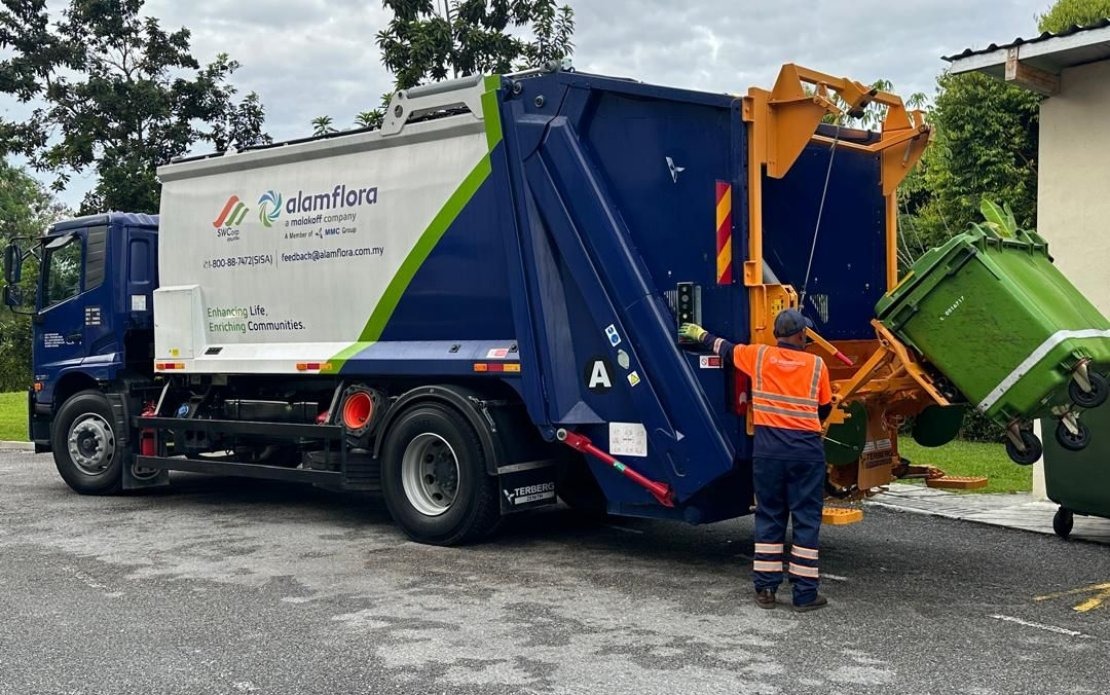
Kuala Lumpur's largest waste management operator, Alam Flora, has declared its readiness to work alongside authorities investigating a serious incident involving one of its refuse collection vehicles that crashed into a condominium perimeter wall in the upscale Pantai Hillpark neighbourhood. The collision, which occurred early yesterday along Jalan Pantai Murni 1, has sparked concern among residents about public safety and the operational standards of vehicles regularly traversing residential areas across the capital.
The company released a formal statement today underscoring its commitment to a thorough examination of the incident, with the vehicle now scheduled for detailed technical assessment at an authorised inspection facility. This move reflects standard industry protocol when mechanical failure is suspected, and represents a crucial step in establishing whether equipment maintenance or design defects contributed to the accident. The scrutiny is particularly significant given that compactor lorries operate under strict regulatory frameworks due to their size, weight, and the inherent risks they pose in congested urban environments.
According to initial reports, the garbage lorry experienced complete brake failure before veering out of control and striking the residential compound's external wall. The early-morning timing of the incident—when traffic on residential streets is typically lighter—likely prevented more severe consequences, though the damage to private property and the shock experienced by residents underscore the dangers posed by malfunctioning heavy vehicles. Investigators from the Kuala Lumpur Traffic Police have already initiated formal procedures, with the driver submitting a detailed account of events at the Traffic Police Station.
Authorities conducted a breathalyser examination on the driver as part of standard accident investigation protocols, confirming that impairment played no role in the collision. This finding is noteworthy as it quickly eliminates one potential cause, allowing investigators to focus on mechanical and maintenance-related factors. The incident is now being formally examined under Section 43(1) of the Road Transport Act 1987, a provision that addresses motor vehicle accidents and operational violations, placing the matter within Malaysia's established legal framework for such occurrences.
Alam Flora has reiterated that worker safety, contractor welfare, and public protection constitute the cornerstone of its operational philosophy. This emphasis on safety culture is particularly relevant in Malaysia's waste management sector, where labour-intensive operations and frequent vehicle movements create numerous potential hazards. The company's public acknowledgment of these priorities reflects broader industry trends toward greater accountability and transparent communication with stakeholders, though such statements also face scrutiny regarding whether they translate into concrete operational improvements.
The vehicle's forthcoming examination at the Computerised Vehicle Inspection Centre (Puspakom) will employ sophisticated diagnostic equipment to reconstruct the mechanical state of the lorry at the time of the accident. Such assessments typically examine brake systems, hydraulic lines, mechanical linkages, and electronic safety components, generating detailed technical reports that can definitively establish whether maintenance failures or design flaws precipitated the collision. The results will likely inform both civil liability determinations and any regulatory action the authorities deem appropriate.
For Malaysian residents in areas serviced by Alam Flora and competing waste collection operators, incidents like this prompt uncomfortable questions about vehicle maintenance standards across the sector. Heavy compactor lorries operate virtually every day in residential neighbourhoods, often during early morning hours when residents are most vulnerable. The technical demands of maintaining these complex machines—particularly their braking systems, which endure extraordinary stress during daily compaction and collection cycles—require rigorous adherence to maintenance schedules and qualified technical expertise.
The incident also reflects broader infrastructure challenges within Malaysia's waste management framework. As urban populations expand and residential densities increase, the compatibility between heavy vehicle operations and residential environments becomes increasingly problematic. Cities throughout Southeast Asia face similar pressures, balancing the operational necessity of robust waste collection services against public safety and quality-of-life considerations. The resolution of this particular investigation may influence how regulatory bodies approach vehicle safety standards and inspection protocols going forward.
Alam Flora's stated commitment to thorough investigation and corrective action will be tested by the findings from Puspakom and subsequent determinations by traffic authorities. The company faces potential operational, financial, and reputational consequences depending on whether mechanical negligence contributed to the accident. For Malaysian consumers and taxpayers who depend on reliable waste management services, the outcome carries implications beyond the immediate incident, touching on broader questions of corporate accountability and safety culture within essential service providers operating throughout urban Malaysia.

