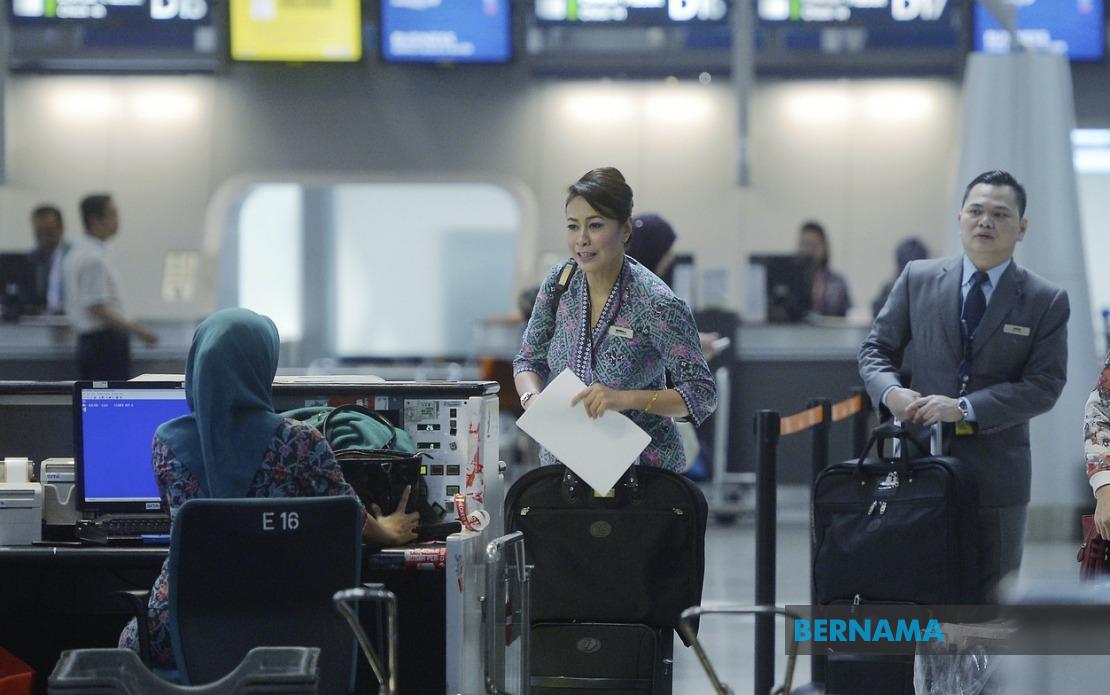
Malaysia's Border Control and Protection Agency (AKPS) has committed to strengthening security screening procedures for pilots and aviation personnel across the country's airports, according to director-general Datuk Seri Mohd Shuhaily Mohd Zain. The announcement came after a high-level meeting convened by the Transport Ministry involving key stakeholders including the Royal Malaysia Police and Malaysia Aviation Group, underscoring the seriousness with which authorities are treating a recent incident that exposed potential vulnerabilities in existing security protocols.
The catalyst for this security review stems from the July 29 arrest of a 39-year-old Malaysian pilot at Jakarta's Soekarno-Hatta International Airport. Indonesia's Director-General of Customs and Excise, Djaka Budi Utama, confirmed that the suspect was apprehended shortly after landing from a Malaysia-bound international passenger flight originating from Kuala Lumpur. Authorities alleged that he attempted to import approximately 25 kilogrammes of ecstasy valued at around Rp60 billion into Indonesia, with the controlled substances reportedly discovered concealed within his checked luggage.
What makes this incident particularly troubling for Malaysian aviation authorities is the fact that the pilot successfully cleared all mandatory security screening procedures at Kuala Lumpur International Airport (KLIA) before his July 28 departure. During routine baggage scanning operations, detection equipment failed to generate any suspicious imagery regarding either his personal items or luggage, allowing him to pass through standard screening protocols without intervention. This gap in detection capability has prompted urgent questions about the effectiveness of current screening methodologies and equipment calibration across Malaysian airports.
Mohd Shuhaily acknowledged that AKPS is actively seeking detailed feedback from the Royal Malaysia Police to conduct a comprehensive review of how the suspect managed to circumvent established safety measures. The agency recognises that understanding the specific vulnerabilities exploited in this case is essential for implementing meaningful improvements. The admission that authorities are still awaiting information to fully analyse the security breach suggests that the investigation remains ongoing and may yield valuable intelligence for system redesign.
The meeting chaired by Transport Ministry secretary-general Datuk Seri Jana Santhiran Muniayan represented a coordinated response from Malaysia's aviation sector leadership. Malaysia Aviation Group's participation demonstrated that commercial operators are equally invested in preventing future incidents that could jeopardise the reputation and operational integrity of the industry. The fact that MAG representatives acknowledged taking the matter "very, very seriously" signals that aviation companies themselves may implement supplementary internal security measures beyond regulatory requirements.
Authorities have indicated that all existing security procedures will be systematically enhanced in the near term, with particular emphasis on aviation personnel. The proposed measures will extend beyond pilots to encompass flight crew members and airport staff, reflecting recognition that comprehensive security depends on screening multiple categories of personnel who have access to secured areas and aircraft. This broadened approach acknowledges that security weaknesses can be exploited through various positions within the aviation workforce.
The enhancement of screening procedures for aviation professionals carries significant implications for Malaysian airports and airlines. More rigorous vetting may introduce additional processing time at security checkpoints, potentially affecting operational efficiency during peak travel periods. However, authorities appear to have determined that such inconvenience is an acceptable trade-off for substantially reducing the risk of contraband smuggling through aviation channels. The decision reflects a priority shift toward security integrity over operational convenience.
For Malaysia's international aviation standing, this proactive response demonstrates commitment to upholding security standards consistent with international civil aviation expectations. Indonesia's successful interdiction of the smuggling attempt might have created diplomatic sensitivities, but Malaysia's rapid institutional response signals to regional and international partners that the country takes security breaches seriously and implements corrective measures promptly. This responsiveness helps maintain confidence in Malaysian aviation infrastructure among allied nations and aviation authorities.
The incident underscores broader challenges facing airport security systems across Southeast Asia. Aviation professionals occupy privileged positions with access to areas and procedures beyond public scrutiny, creating potential vulnerabilities to exploitation by trafficking networks. The sophisticated concealment methods and apparent knowledge of security detection thresholds suggest organised involvement rather than opportunistic smuggling. Enhanced screening procedures may therefore need to incorporate behavioural analysis and intelligence-sharing protocols alongside technical detection improvements.
Looking forward, the AKPS commitment to procedural enhancement will likely involve equipment upgrades, staff training intensification, and potentially new regulatory requirements for aviation personnel clearance. International best practices suggest that comprehensive background checks, psychological assessments, and periodic re-screening of licensed aviation professionals can substantially reduce insider threats. Malaysian authorities may also examine whether intelligence-sharing agreements with regional counterparts could provide early warning signals about personnel involved in trafficking activities.
The timing of this security review also provides opportunity for Malaysian aviation authorities to assess broader airport security frameworks beyond pilot and crew screening. Cargo handling procedures, ground staff vetting, and supply chain security represent additional potential vulnerabilities that sophisticated smuggling operations might target. A comprehensive security audit could identify interconnected weaknesses that multiple screening enhancements working in concert could address more effectively than isolated measures.
For the aviation industry and travelling public, these procedural enhancements represent investment in long-term safety and security sustainability. While the Indonesian arrest of a Malaysian pilot creates temporary reputational concern, the transparent official response and commitment to systematic improvement demonstrate institutional capacity to learn from security incidents and implement preventive measures. Sustained implementation of enhanced screening procedures, supported by adequate resourcing and personnel training, should significantly reduce the likelihood of similar incidents while maintaining the efficient operations essential to Malaysia's role as a regional aviation hub.

