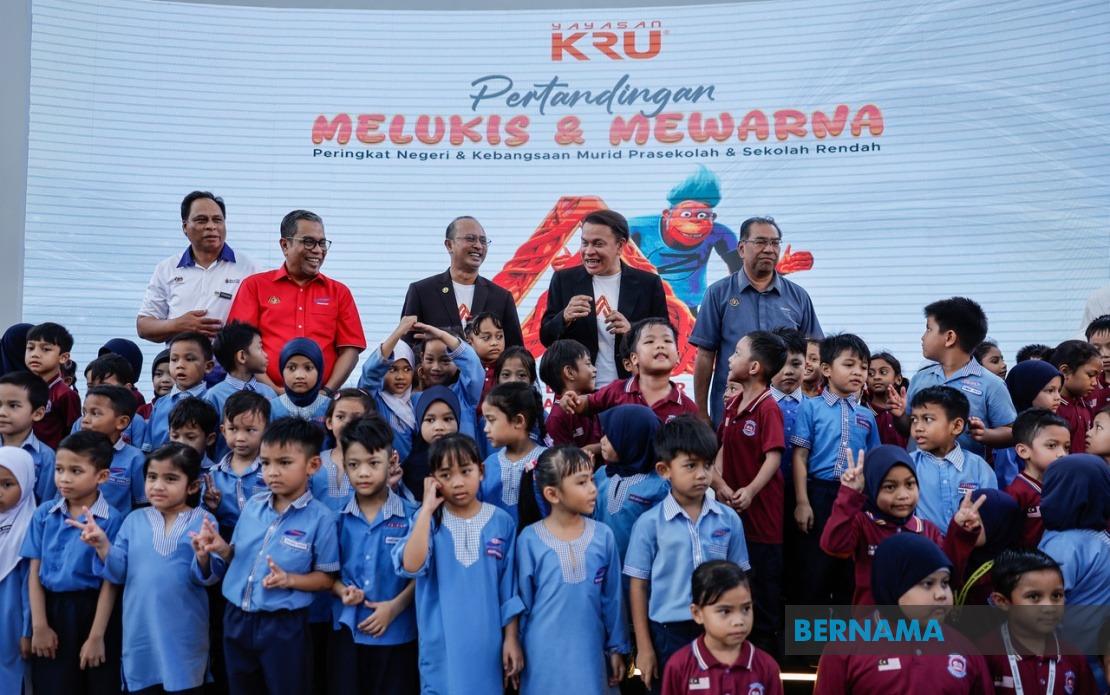
The 2026 Kreatif Aspirasi Reka (AKAR) Awards programme has achieved a significant milestone by establishing a new Malaysia Book of Records entry for the largest participation by preschool children in a single nationwide colouring competition. Organised by Yayasan KRU in collaboration with multiple government agencies, the initiative drew participation from over 153,000 children attending KEMAS and Unity kindergartens across Malaysia, demonstrating substantial reach into early childhood education networks.
The scale of this achievement reflects broader efforts to mainstream creative engagement in Malaysia's preschool sector at a critical developmental stage. By securing participation across kindergarten networks operating under government support structures, the programme tapped into existing institutional frameworks that prioritise early childhood development. The simultaneous nationwide execution required considerable coordination across different states, ensuring equitable access to competition opportunities regardless of geographic location. This logistical accomplishment underscores the growing capacity of Malaysian educational institutions to mobilise resources for large-scale national initiatives targeting young learners.
Beyond the participatory numbers, the AKAR 2026 programme integrated an environmental conservation dimension through its "I Love Orangutans" campaign, weaving sustainability messaging into creative activities directed at formative-age children. This pedagogical approach reflects international best practices in early childhood education, which increasingly recognise the role of arts-based learning in cultivating environmental awareness. By connecting artistic expression with wildlife conservation themes, the competition positioned creative participation as a vehicle for instilling pro-environmental values during the foundational years when educational messaging tends to have lasting impact.
Yayasan KRU Board of Trustees president Datuk Norman Abdul Halim characterised the initiative as advancing dual objectives: nurturing creative capacity while promoting environmental consciousness. His framing highlighted how the competition moved beyond traditional achievement metrics to encompass holistic child development outcomes. The integration of both artistic and conservation elements within a single framework demonstrated an understanding that contemporary educational initiatives must address multiple competencies simultaneously—a recognition increasingly central to modern curriculum design across Southeast Asia.
The financial structure of the programme allocated approximately RM100,000 in prize money distributed across state and national competition tiers. Rather than dispersing winnings as direct cash payments, the organisers directed prize money into winners' National Education Savings Scheme (SSPN) accounts, a strategic decision that transformed individual recognition into long-term educational investment. State-level competition winners who advanced to the national finals in Putrajaya on August 29 competed for a top prize of RM3,000. This tiered approach created multiple achievement pathways and sustained engagement across different competitive levels, encouraging participation from preschools across varying urban and rural contexts.
The programme's governance structure involved substantial institutional participation spanning the Education Ministry (MOE), the Community Development Department (KEMAS), the Department of National Unity and National Integration (JPNIN), and the National Higher Education Fund Corporation (PTPTN). This multi-agency approach reflected the competitive reality facing Malaysian policymakers in attempting to coordinate initiatives across fragmented educational bureaucracies. The involvement of JPNIN alongside traditional education departments suggested deliberate efforts to frame early childhood creativity and environmental awareness as matters of national integration—positioning unified national values around environmental stewardship and creative expression.
KEMAS director-general Datuk Mohd Hanafiah Man's remarks positioned creative capability as an essential workforce competency within the context of inter-generational economic competition. His emphasis on developing "a competitive generation" through creativity reflected recognition that future employment landscapes will increasingly prioritise cognitive and creative flexibility. This framing connected early childhood artistic engagement to long-term economic productivity, a rhetorical move that has gained prominence in Southeast Asian education policy as countries compete for knowledge economy positioning within global supply chains.
The participation of PTPTN in supporting this initiative represented an interesting strategic alignment between higher education financing and preschool creative development. PTPTN's involvement suggested recognition that educational interventions at the earliest stages affect long-term learning trajectories and eventual higher education participation. By connecting institutional visibility to early childhood initiatives, the corporation positioned itself within broader narrative frameworks about lifelong learning and educational equity.
For Malaysian readers and policymakers, the AKAR 2026 achievement demonstrated several important trends in domestic education policy. The record-breaking participation numbers validated the appetite among preschool institutions and families for structured creative programming. The programme's success in mobilising 153,000 participants through existing kindergarten networks suggested that pathways exist for scaling additional educational initiatives by leveraging established institutional infrastructure rather than building parallel systems. The emphasis on environmental conservation messaging reflected growing integration of sustainability objectives into mainstream educational programming—a response to both international pressure and domestic recognition of environmental challenges affecting the region.
The Malaysia Book of Records designation carried broader symbolic significance, converting a participatory achievement into certified national recognition. This formalisation elevated the programme's profile beyond a single year's initiative, potentially establishing precedent for future iterations and similar competitions. The record-setting status provided tangible validation for government agencies and non-profit organisations invested in demonstrating the viability of large-scale educational programmes targeting early childhood cohorts.
Looking forward, the AKAR 2026 model offers replicable elements for policymakers across Southeast Asia considering how to scale creative educational programming while embedding thematic learning objectives around environmental conservation and social values. The programme demonstrated that preschool participation rates of this magnitude are achievable through institutional partnerships, creative programme design, and financial incentives directed toward long-term educational savings rather than immediate consumption. As regional governments prioritise early childhood development within broader human capital strategies, the architecture and outcomes of initiatives like AKAR 2026 will likely inform subsequent policy decisions regarding how to structure creative engagement within formal and semi-formal educational systems.

