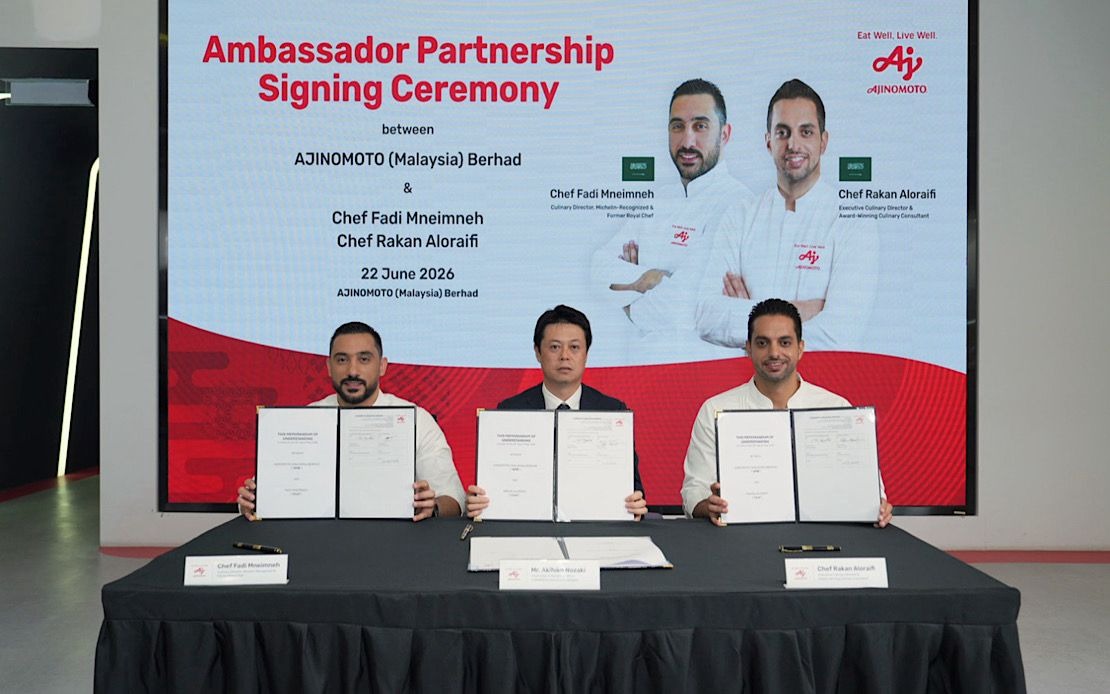
Ajinomoto (Malaysia) Berhad is accelerating its regional footprint by forging a strategic alliance with two of Saudi Arabia's most respected culinary personalities, Chef Fadi Mneimneh and Chef Rakan Aloraifi. The partnership capitalises on surging consumer appetite for premium halal food solutions throughout the Middle East, a market segment experiencing rapid growth as Islamic dietary requirements increasingly intersect with global food trends and upmarket dining experiences.
The collaboration represents a deliberate shift towards ingredient-focused marketing in one of Asia's most lucrative food supply chains. By engaging high-profile chefs as brand ambassadors, Ajinomoto Malaysia is positioning itself not merely as a commodity supplier but as a partner in culinary innovation. Chef Fadi brings credentials as a Michelin-starred director with royal household experience, while Chef Rakan commands respect as an award-winning executive consultant shaping contemporary Middle Eastern gastronomy. Together, they carry the cultural authority necessary to introduce Japanese umami principles to audiences traditionally anchored in Arab culinary traditions.
The centrepiece of the initiative involved an exclusive factory visit to Ajinomoto Malaysia's Bandar Enstek production facility in Negeri Sembilan, where the visiting chefs examined manufacturing protocols, halal certification systems, and product specifications. This transparency-focused approach addresses a critical concern within Middle Eastern food import markets: rigorous verification of supply chain integrity and religious compliance. By opening its operations to external scrutiny from respected regional figures, the company builds credibility among Saudi procurement officers and hospitality decision-makers who prioritise supplier trustworthiness.
During their tour, both chefs participated in live culinary demonstrations showcasing how umami-based products enhance traditional Middle Eastern dishes. These sessions illustrated a sophisticated marketing proposition: that umami—the savoury depth derived from glutamates and nucleotides—strengthens rather than dilutes authentic regional flavours. By framing umami as a complementary rather than replacement ingredient, Ajinomoto sidesteps cultural resistance to foreign food additives. The demonstrations created tangible, sensory evidence that Japanese culinary science and Arab gastronomic heritage can coexist productively.
The initiative extends beyond immediate Saudi Arabia exposure. A distributor representative from Brunei attended the sessions, signalling Ajinomoto Malaysia's intention to develop interconnected Southeast Asian and Gulf network effects. This cross-regional presence allows knowledge and business intelligence to flow multidirectionally, enabling the company to identify market entry strategies applicable across Muslim-majority economies sharing similar regulatory frameworks and consumer preferences.
Ajinomoto Malaysia's timing aligns with structural shifts within Middle Eastern food service sectors. The region's hospitality industry is consolidating around premium offerings targeting wealthy domestic and expatriate populations willing to pay substantive premiums for authenticated quality and culinary storytelling. Hotels, restaurants, and catering operations increasingly seek ingredient partners who understand both technical specifications and narrative branding—positioning suppliers as collaborators in culinary excellence rather than mere input providers.
The company's positioning as a Malaysian manufacturer also carries diplomatic undertones. As a halal-certified facility operating within a Muslim-majority nation, Ajinomoto Malaysia embodies the intersection of Islamic dietary law, manufacturing excellence, and regional economic cooperation. This institutional legitimacy carries weight among Gulf purchasing committees that view halal certification as extending beyond religious compliance to encompass broader standards governance and ethical sourcing.
Looking forward, Ajinomoto has committed to expanded engagement at planned HORECA (Hotel, Restaurant and Café) exhibitions tentatively scheduled for October 2026 in Riyadh and Jeddah. These trade events will position Chef Fadi and Chef Rakan as lead demonstrators, reaching professional procurement officers, executive chefs, and hospitality decision-makers. The sequencing is strategic: initial relationship-building through private factory visits creates foundation trust, while subsequent public platform appearances amplify reach among commercial buyers responsible for enterprise-scale purchasing decisions.
The partnership illustrates how Malaysian food manufacturers can leverage regional celebrity and scientific credibility to penetrate premium market segments. Rather than competing on cost against generic commodity suppliers, Ajinomoto Malaysia constructs narratives around culinary innovation, halal excellence, and manufacturing transparency. For other Malaysian food exporters targeting Middle Eastern markets, the model demonstrates how celebrity endorsement from credible local figures—particularly those with technical rather than purely entertainment-based authority—can substantially reduce adoption barriers and command pricing premiums.
From a regional trade perspective, this collaboration strengthens Malaysia's positioning as a halal innovation hub. As Gulf nations increasingly prioritise food security and supply chain diversification beyond traditional suppliers, Malaysian manufacturers with demonstrated quality standards and strategic relationship networks gain competitive advantage. Ajinomoto Malaysia's approach suggests that Middle Eastern expansion requires not merely product quality but investment in relationship architecture—cultivating influencers, building institutional trust through transparency, and creating platforms for sustained dialogue between supply-side technical experts and demand-side decision-makers.
The underlying dynamic reflects broader market maturation within Islamic food sectors. As halal certification becomes standardised rather than exceptional, suppliers must differentiate through additional dimensions: culinary innovation, manufacturing sophistication, sustainability credentials, and cultural engagement. Ajinomoto Malaysia's partnership strategy addresses this evolution by anchoring product promotion within authentic culinary discourse rather than abstract regulatory compliance narratives.

