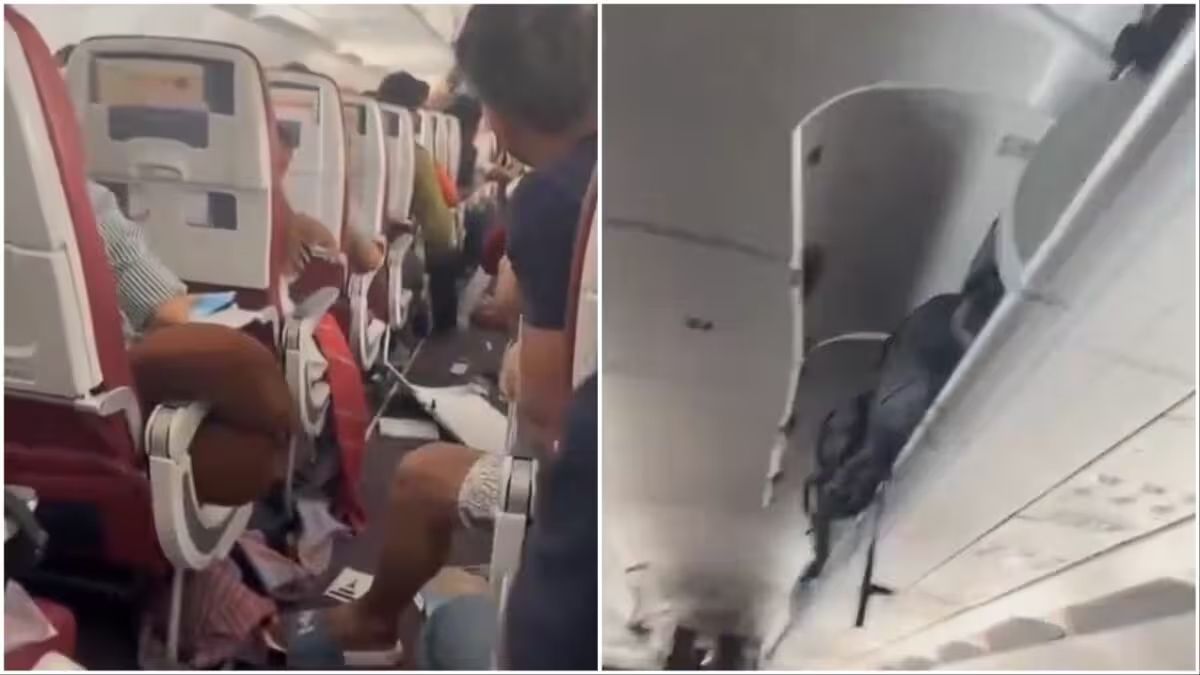
Airbus is mobilising a team of technical specialists to New Delhi to support Indian authorities investigating a dramatic mid-air incident involving an Air India A320 that plummeted approximately 300 metres while flying from Phuket to New Delhi on August 4. The aircraft carrier said both the jet manufacturer and Indian civil aviation regulators are actively engaged in determining the cause of the sudden loss of altitude, which left 17 passengers and crew members injured during what witnesses have described as a terrifying ordeal.
The probe has taken on added urgency following preliminary reports that the chief pilot tested positive in an initial psychoactive substance screening, though final confirmatory results remain pending. This development has prompted India's civil aviation authorities to ground both pilots involved in the incident while investigations continue. An Airbus spokesperson confirmed on Monday that the manufacturer is providing full technical assistance to Indian investigating authorities and remains committed to supporting the airline throughout the process.
The A320 was carrying 137 passengers and eight crew members when the incident occurred at cruising altitude. After the sudden descent, the flight stabilised and proceeded safely to land in New Delhi, where eight passengers and four cabin crew members required hospital treatment. The incident has been formally classified as a Serious Incident by India's Aircraft Accident Investigation Bureau, signalling the severity with which authorities are treating the event and indicating that multiple contributing factors may be under examination.
Indian media outlets have extensively reported that the aircraft experienced several technical anomalies immediately preceding the altitude loss, though neither Air India, the investigating authorities, nor Airbus have released official confirmation of these claims. This information vacuum has left substantial questions unanswered for both aviation safety experts and the travelling public concerned about aircraft reliability. Air India has stated it cannot comment on specific findings or observations related to the ongoing investigation, a standard position adopted by carriers during active probes.
The incident represents a significant challenge for Air India at a particularly vulnerable moment in the airline's operational history. The carrier has faced mounting difficulties executing a comprehensive turnaround strategy, compounded by disruptions stemming from the Middle East regional crisis that has disrupted aviation patterns across the subcontinent and wider Asia-Pacific region. These operational pressures come against a backdrop of recovering from reputational damage that extends well beyond typical airline setbacks.
The airline's credibility suffered severely in June 2025 when Air India Flight 171, a Boeing 787 Dreamliner bound for London, crashed immediately after departure from Ahmedabad. The catastrophic accident claimed 241 of the 242 people aboard the aircraft, alongside 19 people on the ground, representing one of the deadliest aviation incidents in recent Indian aviation history. That disaster fundamentally undermined confidence in the carrier and prompted urgent reassessment of its safety protocols and operational standards.
Recognising the gravity of these challenges, Air India announced last week the appointment of Tewolde Gebremariam, the former chief executive of Ethiopian Airlines, to lead the carrier as its new chief executive. His appointment signals the airline's commitment to comprehensive structural reform and operational excellence, drawing on extensive international aviation experience to stabilise operations and rebuild institutional credibility with passengers and regulatory bodies.
The current investigation into the Phuket-New Delhi flight occurs within this context of institutional pressure and safety scrutiny. For Malaysian and broader Southeast Asian aviation stakeholders, the incident underscores the critical importance of rigorous safety protocols across regional carriers. The psychoactive substance screening element introduces additional complexity, suggesting that human factors and crew conduct standards form part of the investigative focus alongside potential technical or systems failures.
Airbus's direct involvement in the technical investigation reflects standard procedures when aircraft manufacturers must determine whether design, manufacturing, or maintenance factors contributed to incidents. The manufacturer's presence in New Delhi and participation in the probe will likely extend over weeks as engineers examine flight data recorders, maintenance records, and aircraft systems. This cooperative approach between regulators, manufacturers, and operators represents best practice in aviation safety culture, though it also prolongs uncertainty for Air India regarding operational and reputational outcomes.
The grounding of both pilots during the investigation, while standard procedure, creates immediate operational challenges for the airline already managing reduced capacity and scheduling disruptions. Determining the precise sequence of events and causation factors will be essential not only for Air India's credibility but for the broader aviation industry's understanding of potential systemic vulnerabilities in similar aircraft operating across the region.
For Malaysian travellers and aviation professionals, this incident serves as a reminder of the sophisticated safety frameworks governing international aviation, even when incidents occur. The involvement of multiple investigating agencies, manufacturers, and technical experts demonstrates the multilayered scrutiny applied to serious incidents, though the investigation timeline may extend considerably before public findings are released.

