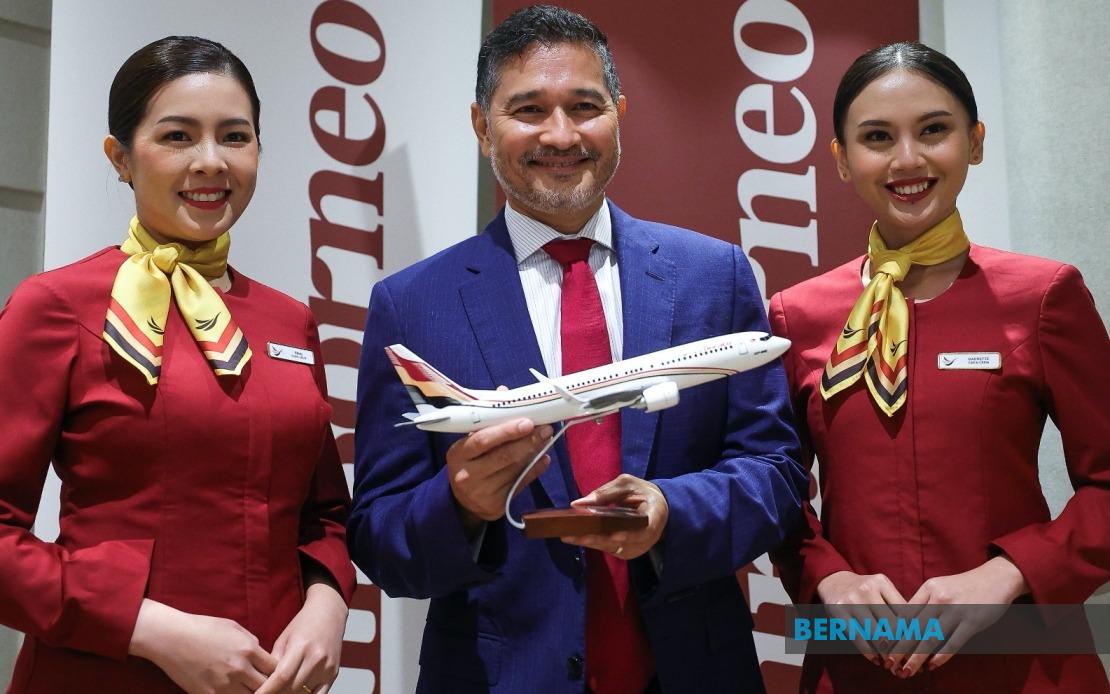
AirBorneo, Sarawak's state-owned carrier, has announced it will hold its one-way Economy Class fare at RM375 all-in between Kuala Lumpur and Kuching for the entire year, a decision aimed at tempering volatile pricing pressures and offering more predictable travel costs to passengers, especially Sarawakians commuting to or from Peninsular Malaysia. The airline's chief executive officer, Megat Ardian Wira Mohd Aminuddin, unveiled the strategy during a media gathering in Kuching on July 8, framing the fixed-price commitment as part of a broader initiative to address longstanding complaints about elevated fares on the Sarawak–mainland route.
The RM375 figure emerged from a rigorous analytical exercise spanning six months of market data, during which AirBorneo scrutinised historical pricing, seasonal fluctuations, and competitive offerings from rival carriers serving the same corridor. Megat Ardian Wira emphasised that the airline had deliberately incorporated periods of fuel price instability into its modelling, ensuring that the chosen rate could absorb such shocks without requiring constant adjustment. The carrier also conducted side-by-side comparisons with competing airlines to validate that its pricing sat within an acceptable and competitive range, rather than representing either an outlier or a loss-leader strategy.
A critical distinction the AirBorneo chief made relates to transparency in ticket pricing. He noted that competing carriers frequently advertise lower headline fares that, upon checkout, balloon once ancillary charges—baggage fees, seat selection premiums, fuel surcharges, and airport taxes—are applied. AirBorneo's RM375 and RM736 Business Class offerings are presented as fully inclusive figures, incorporating all airport taxes and fuel surcharges, thereby eliminating surprise charges that frustrate Malaysian travellers accustomed to opaque pricing practices. This transparency angle could resonate with cost-conscious passengers and represent a competitive advantage in a market where hidden fees routinely trigger social media backlash.
The opening of scheduled services to Kuala Lumpur constitutes a significant milestone for AirBorneo, which has traditionally focused on regional and domestic Sarawak routes. The carrier will operate twice daily between Kuching International Airport and Kuala Lumpur International Airport's Terminal 1, establishing what the airline intends as a linchpin service for its broader expansion ambitions. For Malaysian business travellers, government officials, and leisure tourists, the addition of a second major carrier on a route historically dominated by Malaysia Airlines and occasionally supplemented by budget carriers offers welcome choice and potential downward competitive pressure on fares across the board.
Beyond immediate commercial objectives, AirBorneo's fare-locking strategy carries geopolitical and sporting significance. The airline has publicly expressed its aspiration to become the official carrier for the 2027 Southeast Asian Games, which Sarawak will co-host alongside Sabah. Securing that designation would elevate the carrier's profile across ASEAN, generate substantial charter revenues, and position it as the primary logistics provider for athlete movements, official delegations, and supporter travel. To strengthen its candidacy, AirBorneo has outlined plans to launch scheduled services to two or three additional ASEAN destinations by early 2025, thereby expanding its regional network footprint and demonstrating capability to handle the complex logistics demands of a multi-nation sporting event.
The 2027 SEA Games co-hosting responsibility places Sarawak in the international sporting spotlight and creates a rare opportunity to showcase the state's tourism infrastructure, business environment, and connectivity. AirBorneo's steady-state pricing on the KL–Kuching route removes a significant barrier to visitor accessibility from Peninsular Malaysia, the regional population centre and primary source of domestic tourism revenue. By guaranteeing that travellers need not budget for price volatility when booking months in advance, the airline removes friction from the decision-making process and potentially encourages longer advance bookings, which benefit the carrier through improved load forecasting and revenue management.
From a Southeast Asian perspective, AirBorneo's announcement reflects a broader trend among regional airlines toward greater pricing stability and transparency, partly driven by consumer advocacy and competitive pressure in increasingly congested short-haul markets. The commitment also underscores Sarawak's determination to leverage air connectivity as an economic development tool, recognising that accessible, predictable airfares are prerequisites for tourism growth, business travel expansion, and inter-regional integration. Malaysia's federal government has similarly prioritised regional air links, and AirBorneo's moves align with national objectives to deepen Peninsular–Sarawak ties and strengthen the country's competitive position in regional aviation.
The RM375 fare level, while fixed, must be contextualised within the broader trajectory of Malaysian domestic aviation pricing. Historically, Sarawak–Peninsular routes have commanded a premium relative to other long-haul domestic segments, reflecting higher operating costs and longer flight times. AirBorneo's rate represents an attempt to calibrate pricing to market realities without triggering the kind of public outcry that has periodically erupted when Malaysian carriers have raised fares substantially. Whether RM375 proves sustainable over a full year amid potential fuel volatility and macroeconomic headwinds remains to be seen, but the airline's willingness to absorb short-term margin compression to gain market share and brand loyalty suggests confidence in its operational efficiency.
The airline's media roundtable format for announcing the fare strategy also merits attention as an example of proactive stakeholder communication. By explaining the analytical methodology underpinning the RM375 decision and contextualising it within competitive benchmarking, AirBorneo sought to preempt criticism that might otherwise attach to the launch of a new service. This transparency approach, if sustained, could foster stronger relationships with business media, travel industry associations, and the travelling public, elements that collectively shape airline reputation and demand.
Looking ahead, the success of AirBorneo's Kuala Lumpur venture will hinge on consistent execution, reliable on-time performance, and customer service standards that justify the pricing strategy. The carrier enters a market in which established players possess brand recognition, loyalty programmes, and integrated route networks. To differentiate itself and retain passengers beyond the initial novelty period, AirBorneo must deliver not merely competitive fares but also a compelling passenger experience. The airline's commitment to annual fare stability suggests it is playing a medium-to-long-term game rather than pursuing short-term revenue maximisation, a strategic posture appropriate for a state-owned enterprise with development objectives extending beyond quarterly profit targets.

