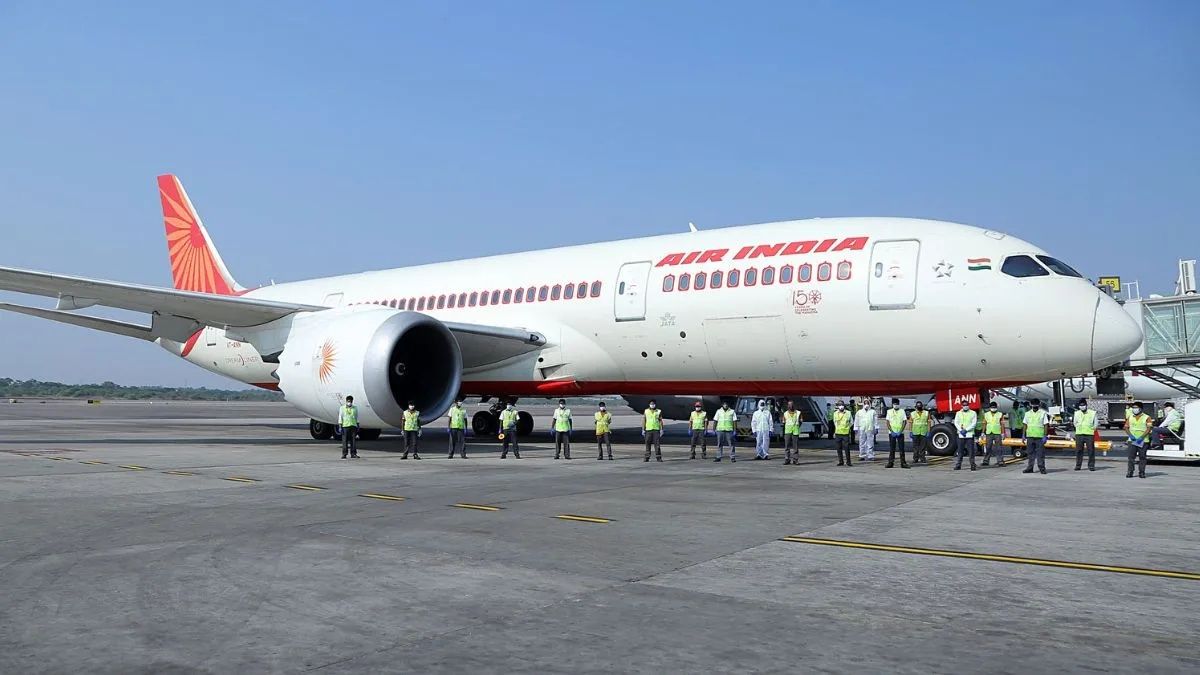
An Air India flight operating between Delhi and Amritsar inadvertently crossed into Pakistani airspace on Monday evening following a malfunction in its onboard navigation equipment, according to confirmation from official sources on Wednesday. The Airbus A321, designated as Flight AI-463, managed to return to Indian territory without incident after receiving an alert from Pakistani air traffic authorities, though the journey ultimately involved an unexpected detour back to the national capital before reaching its final destination in the early hours of Tuesday morning.
The aircraft departed from Delhi's Indira Gandhi International Airport at 9.18pm on Monday, beginning what should have been a routine one-hour flight northward to Amritsar. Within minutes of takeoff, however, the plane's navigation systems experienced a technical malfunction that disrupted normal course guidance, causing the aircraft to deviate from its intended flight path. The deviation gradually pushed the aircraft westward, gradually crossing the International Border that separates Indian and Pakistani airspace in the Punjab region.
Pakistani air traffic control personnel detected the unauthorised entry into their airspace and immediately initiated contact with the flight crew to alert them to the breach. The pilots, upon receiving notification from Pakistani authorities, quickly recognised the severity of the situation and took corrective action. According to a senior airport official speaking on condition of anonymity, the crew swiftly corrected their course and guided the aircraft back across the border into Indian airspace, preventing any further violation of Pakistani territory. The incident highlights the critical importance of real-time coordination between neighbouring countries' air traffic management systems, even amid broader diplomatic tensions.
The technical difficulties did not end once the aircraft returned to Indian airspace, however. As the Airbus A321 approached Sri Guru Ram Dass Jee International Airport in Amritsar around 10.30pm, air traffic controllers discovered that the regional airport was experiencing significant congestion. Heavy traffic volume meant that no landing slots were immediately available for the incoming aircraft. Faced with operational constraints and the absence of a suitable window for safe landing, controllers made the decision to direct the flight back towards Delhi rather than risk a holding pattern over a congested airspace.
The aircraft executed a return flight to Delhi, where it landed safely and underwent a comprehensive technical inspection to address the navigation system failure. Engineers and maintenance personnel assessed the extent of the malfunction and conducted necessary repairs to restore the navigation equipment to full operational status. The inspection and remedial work consumed several hours, extending the overall timeline of the flight's journey significantly.
Once the aircraft had received the appropriate operational clearances and technical sign-off following its inspection, Air India authorised the flight to depart Delhi once more for its intended Amritsar destination. The aircraft finally touched down at Sri Guru Ram Dass Jee International Airport at approximately 2.20am on Tuesday morning, nearly four hours behind its originally scheduled arrival time. Passengers aboard experienced an unusually extended journey, though airline personnel ensured that safety protocols were maintained throughout the incident.
Neither Air India nor India's Directorate General of Civil Aviation has yet released a formal public statement detailing the precise nature of the navigation system failure that triggered the incident. The airline has maintained a largely silent stance on the technical specifics, while aviation authorities continue their preliminary assessments. Such reticence is not uncommon in the immediate aftermath of operational incidents, as investigators typically prefer to complete initial findings before publicly discussing technical matters that could be misunderstood or misinterpreted.
Aviation authorities have initiated a routine investigation to establish the exact circumstances that led to the aircraft's route deviation and the subsequent complications. The investigation will likely examine maintenance records, flight data recorders, and communication logs to determine whether the navigation failure stemmed from equipment malfunction, software error, or maintenance-related issues. Such investigations are standard protocol following any significant deviation from planned flight paths, particularly when international airspace violations occur.
The incident reflects broader concerns about aviation safety in the South Asian region, where geopolitical sensitivities surrounding airspace add layers of complexity to normal flight operations. The swift and professional response from both Indian and Pakistani air traffic controllers prevented what could have become a more serious situation, demonstrating that operational safety considerations can transcend political differences. The coordination between the two nations' air traffic management systems, despite historical tensions, underscores the shared commitment to aviation safety across borders.
This latest incident joins a pattern of occasional airspace incursions in the subcontinent. Just one month prior, a Pakistan International Airlines flight briefly entered Indian airspace due to adverse weather conditions before being guided back to its proper route by Indian air traffic controllers. These recurring incidents, though generally resolved without serious consequence, highlight the inherent challenges of managing airspace in a densely populated region with complex political boundaries and challenging weather patterns that can affect navigation accuracy.
For Malaysian and Southeast Asian aviation stakeholders, the incident serves as a reminder of the operational challenges that can arise from navigation system failures, even on modern aircraft. The regional aviation community remains focused on equipment reliability and maintenance standards as critical components of safety management. The incident also underscores the importance of robust coordination protocols between neighbouring countries' air traffic control authorities, a principle equally relevant to Southeast Asian airspace management where multiple national jurisdictions converge.