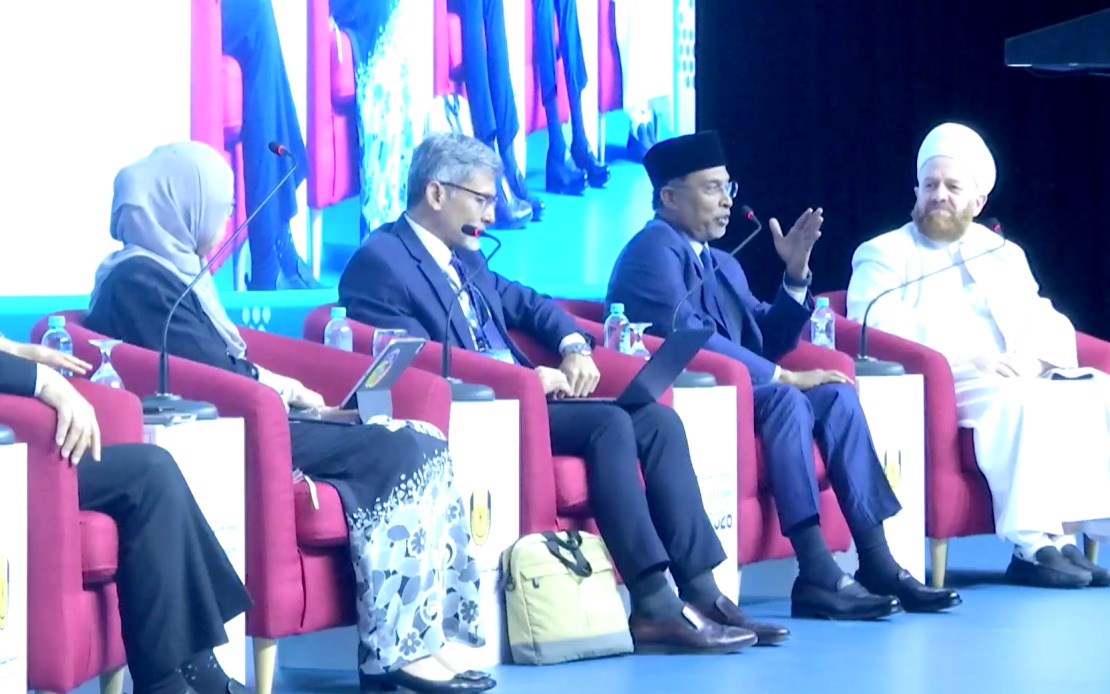
Higher Education Minister Datuk Seri Dr Zambry Abd Kadir has underscored the imperative of embedding artificial intelligence and cutting-edge technologies throughout Malaysia's university system as a cornerstone strategy for developing the skilled workforce and knowledge resources the nation requires to weather an unpredictable global landscape. Speaking during a panel discussion at the 8th World Conference on Islamic Thought and Civilisation in Ipoh, Zambry articulated a vision where technological sophistication and human development advance in tandem, creating graduates prepared for the complexities of an AI-driven world.
The Ministry of Higher Education has responded to this challenge by charting a comprehensive 10-year strategic roadmap spanning 2026 to 2035. This framework represents a deliberate effort to harmonise three critical dimensions: the pace of technological innovation, the cultivation of a workforce equipped with relevant capabilities, and the preservation and enhancement of moral and ethical standards within academic environments. The blueprint reflects growing recognition among policymakers that technological advancement divorced from values creates grave societal risks.
As disciplines including artificial intelligence, quantum computing, and planetary health sciences accelerate their development and application, Zambry stressed that Malaysia's higher education sector cannot treat ethics and moral instruction as peripheral concerns. Rather, these dimensions must be woven systematically into course design, curriculum architecture, and institutional culture. This integrated approach acknowledges that technical mastery alone cannot prepare students to navigate the ethical dilemmas and societal impacts that emerging technologies generate. The challenge lies in embedding values education not as a separate module but as an organic component of how students learn their chosen disciplines.
Zambry articulated a central tension at the heart of modern education: artificial intelligence excels at furnishing rapid, accurate answers and delivering efficient solutions to defined problems. Yet algorithms and computational systems cannot instill character, integrity, or the capacity for moral reasoning. These human qualities emerge through deliberate educational processes that cultivate reflection, critical analysis, and engagement with complex ethical scenarios. This distinction highlights why technological competence, whilst necessary, remains insufficient as an educational endpoint.
Recognising this gap, the minister championed a fundamental reimagining of how Malaysian universities structure their academic offerings. The traditional emphasis on Science, Technology, Engineering and Mathematics—the STEM framework—has evolved into STEAM, incorporating the arts and liberal studies. This evolution reflects international best practice and addresses longstanding criticism that exclusively technical curricula produce graduates proficient in narrow domains but potentially lacking the broader perspective, communication abilities, and humanistic understanding necessary for leadership and innovation.
Zambry cited Universiti Teknologi Petronas as an exemplar, highlighting how integrated engineering programmes require students to undertake coursework extending beyond their major field. Such exposure to humanities, social sciences, and liberal arts disciplines shapes personality development and character formation alongside technical instruction. Students emerge with both engineering expertise and enhanced capacity for critical thinking—the ability to question assumptions, evaluate evidence, and grapple with competing values and perspectives.
The minister's framing places humanity deliberately at the centre of the 10-year blueprint rather than treating human development as an afterthought to technological integration. This philosophical positioning reflects deeper questions about education's ultimate purpose. Is university primarily a credentialing mechanism that sorts students into economic niches, or does it carry responsibility for developing conscientious, thoughtful citizens capable of contributing to society beyond their professional domain? Zambry's statement suggests Malaysia's higher education leadership has chosen to embrace the latter, more expansive vision.
The timing of this emphasis carries particular significance for the Southeast Asian region. As artificial intelligence deployment accelerates across industries and public services, questions about governance, bias, transparency, and accountability become increasingly urgent. Nations that produce graduates equipped only with technical AI capabilities but lacking ethical frameworks and values-based decision-making capacity risk enabling technologies that concentrate power, perpetuate discrimination, or undermine social cohesion. Conversely, a generation of Malaysian professionals grounded in both technical competence and moral reasoning could shape more responsible AI development and deployment.
For Malaysian universities, translating this vision into institutional practice presents concrete challenges. Curriculum redesign requires coordination across faculties and careful sequencing to ensure coherence rather than fragmentation. Faculty recruitment and professional development must emphasise educators' ability to integrate ethics and values alongside technical content. Assessment mechanisms need revision to evaluate students' moral reasoning and character development, not merely technical knowledge. Institutional cultures must shift to reward interdisciplinary collaboration and value-laden inquiry rather than preserving disciplinary silos.
The 10-year timeframe signals that this transformation will not occur overnight. Universities require sustained investment, policy support, and space to experiment with new pedagogical approaches. The framework's extended horizon acknowledges that building genuinely transformative educational systems demands patience and iterative refinement. It also suggests that Malaysia's higher education leadership recognises this agenda's strategic importance to national competitiveness and social stability.
For students currently in Malaysian classrooms, Zambry's articulation of this vision carries implications extending far beyond university walls. A cohort educated to integrate technical skill with ethical discernment, critical thinking with moral conviction, will navigate careers and leadership responsibilities differently than graduates shaped solely by traditional STEM curricula. They may approach business decisions, policy development, and community engagement with greater awareness of complexity, stakeholder impact, and long-term consequences.
The international dimension also merits consideration. As Malaysia positions itself within regional and global knowledge networks, universities that successfully marry technological excellence with robust values education may attract talent, partnerships, and resources. Employers worldwide increasingly seek graduates demonstrating not just technical prowess but ethical judgment and capacity for responsible innovation. Malaysian institutions pioneering this integration could establish competitive advantage.
Zambry's emphasis on balancing AI advancement with moral and ethical integration represents more than rhetorical flourish. It signals a deliberate policy direction that should shape funding priorities, curriculum development, faculty hiring, and institutional accountability mechanisms across Malaysia's higher education landscape. Whether this vision translates into systemic change will determine whether the nation successfully cultivates the intellectually sophisticated, ethically grounded leadership its complex future demands.

