Silicon Valley's approach to hiring is undergoing a seismic shift. Rather than expanding teams to meet growth ambitions, technology startups are deploying artificial intelligence coding assistants to compress the workforce needed to ship products. The result is a leaner, more productive operation – but one that is systematically shutting the door on the entry-level positions that have traditionally launched programming careers.
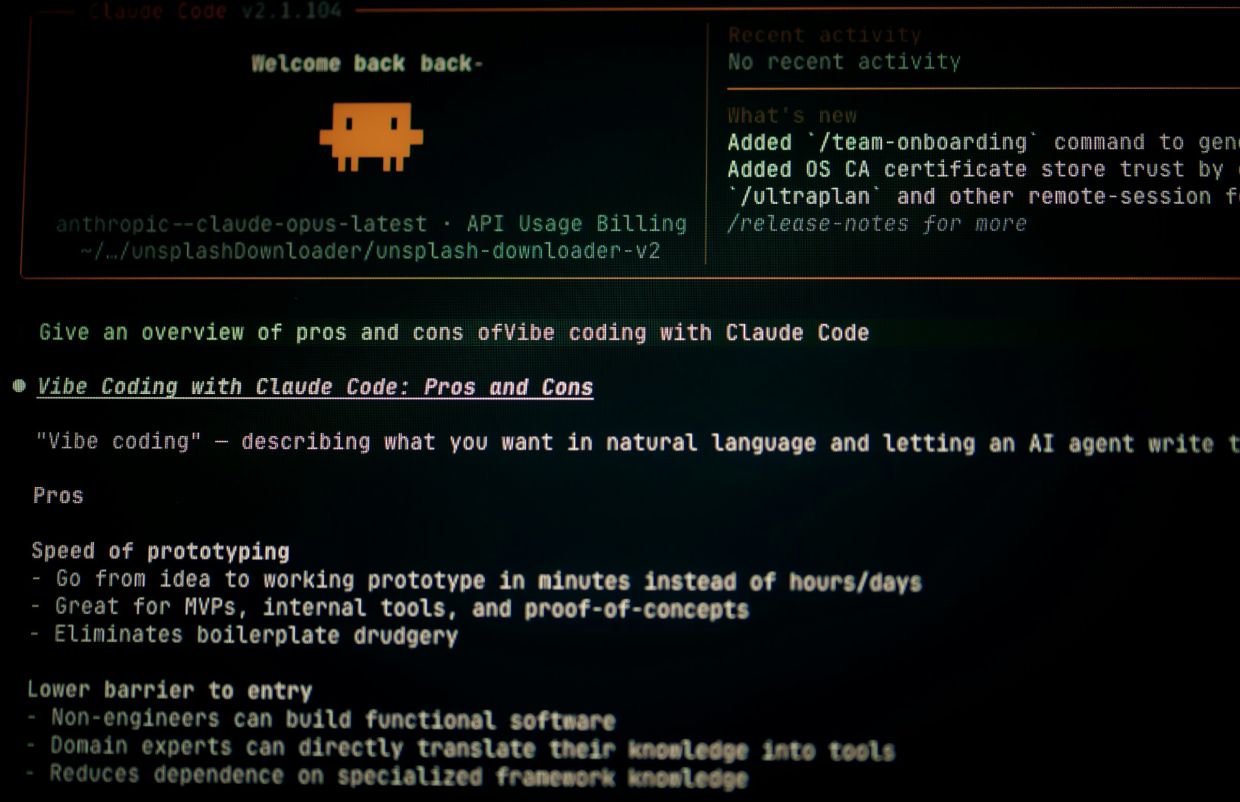
The mechanics of this transformation centre on a new generation of AI tools that fundamentally reimagine what software developers do. Platforms like Anthropic's Claude Code and OpenAI's Codex have moved beyond simple autocomplete features. Instead of typing out individual lines of code, developers now function more as orchestrators, providing natural language instructions to AI systems that write, test, and debug entire modules of functionality. A developer equipped with these tools can accomplish in hours what once required weeks of meticulous, line-by-line coding – or, in previous eras, whole teams working in parallel.
The adoption rate is staggering. According to data from Y Combinator's Winter 2025 batch, fully a quarter of participating startups built their core products using code that was 95 per cent generated by artificial intelligence. This represents not merely a technological preference but a fundamental shift in how companies construct their competitive advantage. Jared Friedman, Managing Partner at Y Combinator, released these figures as evidence that the AI-native startup has moved from theoretical possibility to practical reality.
For individual companies, the mathematics are compelling. Giftory, a startup whose founder has publicly discussed the strategy, maintains roughly 30 employees yet achieves engineering productivity that would historically have required teams twice that size. The company subscribes to premium AI coding services costing approximately US$200 (RM816) monthly – an investment that pales beside the average annual developer salary of US$100,000 (RM408,130). This calculation alone makes the old model of offshoring engineering work to lower-cost regions economically irrational. Why establish distant teams and manage timezone complications when a modest AI subscription multiplies the output of your existing senior engineers?
Other founders report similar thinking. Haitham Mengad, co-founder of Stems Labs, deliberately chose to deepen the capabilities of his existing talent pool rather than expand headcount. Lindsay Euller, vice president of customer success at the software company Espresa, stated that her team's deployment of AI coding tools is generating millions of dollars in annual savings. The financial case for leaner teams has become so persuasive that Euller predicts a future where managers requesting budget for additional hires will face an immediate counter-question: how have you optimized artificial intelligence integration first?
Yet beneath these efficiency gains lies a troubling dynamic that is remaking the tech labour market. Research from Stanford Digital Economy Lab, drawing on payroll data encompassing millions of American workers, found that employment among 22- to 25-year-olds in occupations most vulnerable to AI – particularly software development – declined by nearly 20 per cent from its peak in late 2022. This is not a marginal adjustment but a significant contraction in entry-level opportunity.
Harvard researchers analysing resume and job posting data across 62 million American workers and 285,000 firms uncovered a more precise pattern. Companies that have adopted generative artificial intelligence have reduced junior employment by approximately nine per cent relative to peers that have not incorporated such tools – a divergence measured over just six quarters. Simultaneously, hiring of senior developers at these same companies has continued climbing. The market is unmistakably sorting itself into two tiers: experienced architects who leverage AI to amplify their capabilities, and a shrinking pool of entry points for newcomers.
The hiring hesitation is palpable across the sector. Ian Amit, CEO of cybersecurity startup Gomboc AI, describes a landscape where companies conduct extensive recruitment processes yet frequently decline to extend offers. Hiring managers appear caught between traditional growth impulses and the emerging conviction that artificial intelligence can substitute for junior labour. The result is a freeze on entry-level positions even as senior roles remain open.
This dynamic has not gone unchallenged within the industry itself. Matt Garman, CEO of Amazon Web Services, has publicly criticized the strategy of replacing junior developers with artificial intelligence as misguided, warning that technology companies risk amputating their own future by denying emerging developers the apprenticeship opportunities that created today's leaders. His warnings appear prescient: computer science enrolment across the University of California system has contracted by six per cent, and roughly two-thirds of computing degree programs nationwide report declining participation rates, according to the Computing Research Association.
Yet the economic incentives pulling startups toward leaner operations appear too powerful to resist. The startup lifecycle, characterized by pressure to demonstrate rapid growth and achieve efficient unit economics, creates relentless pressure to substitute capital (in the form of AI subscriptions) for labour. Every hiring decision becomes a question of whether additional personnel can genuinely outpace what existing engineers can accomplish with AI augmentation.
The implications for Southeast Asia and Malaysia warrant particular attention. As the region positions itself as an emerging technology hub, the global precedent set in Silicon Valley may constrain the traditional pathway by which developing economies have built technical talent. Malaysia's efforts to develop a software engineering sector have historically relied on entry-level talent gaining experience before advancing to senior roles. If the global industry narrative shifts decisively toward small teams of senior engineers using AI tools, opportunities for junior developers – whether in Malaysia or globally – will continue evaporating.
For now, the economic logic shows no sign of reversing. Startups will continue compressing teams, substituting artificial intelligence for junior labour, and asking whether each new hire can genuinely add value beyond what their existing architects can accomplish with enhanced tooling. The question of whether this maximizes long-term innovation or merely optimizes short-term efficiency metrics remains unresolved – but the market is not waiting for the answer.

