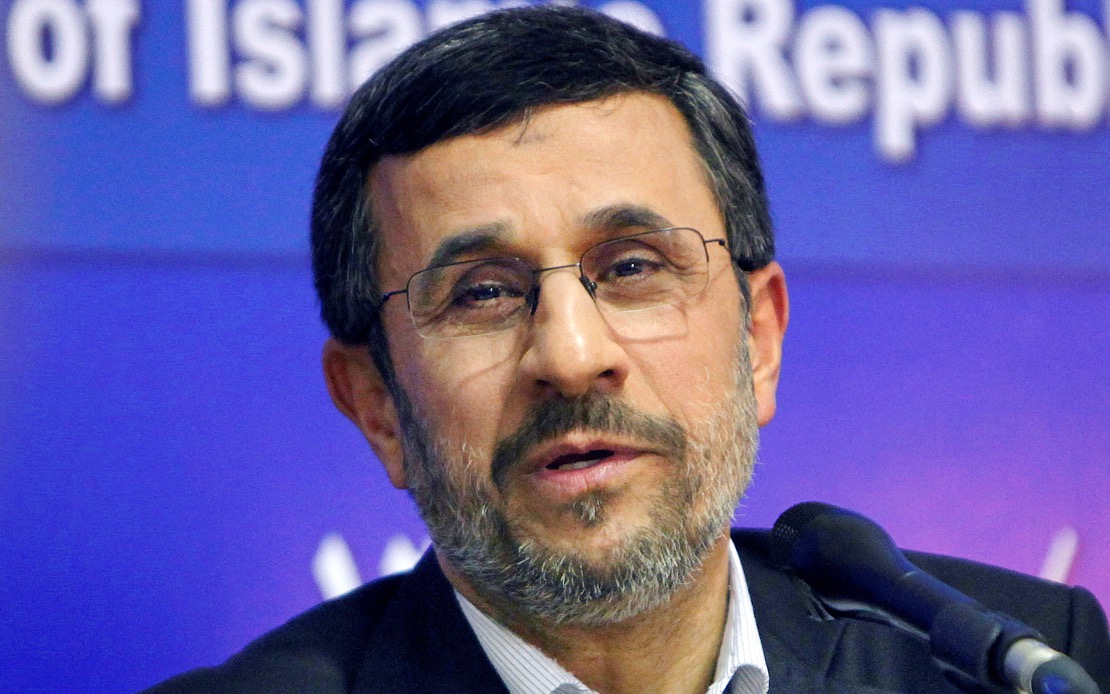
Former Iranian President Mahmoud Ahmadinejad has issued a forceful denial of allegations published by The New York Times suggesting that Israel's intelligence service attempted to recruit him as part of a regime-change operation. Speaking through his office, Ahmadinejad characterized the entire body of reporting as "completely false" and accused the American newspaper of deliberately publishing falsehoods designed to sow discord within Iran and manipulate global opinion.
The controversy centres on a detailed New York Times investigation published on Monday that painted a picture of an ambitious Israeli intelligence operation spanning several years. According to the report, operatives from Mossad, Israel's foreign intelligence service, had sought to establish contact with Ahmadinejad, viewing him as a potential instrument for transforming Iran's political system. The newspaper alleged that this recruitment effort formed part of a wider campaign by Israeli officials to engineer regime change in Tehran following initial military operations against senior Iranian leadership.
According to the Times account, the alleged Mossad operation included financial inducements for the former president, with American officials quoted in the report stating that Israel had secretly provided funding for his housing and travel expenses. The newspaper further claimed that Israeli operatives had met with Ahmadinejad on multiple occasions outside Iran, specifically mentioning meetings during his time in Budapest, Hungary, where such clandestine contact would presumably be less conspicuous to Iranian security services.
The most dramatic element of the Times reporting involves an airstrike on February 28 that allegedly targeted Ahmadinejad's residential compound. The newspaper's account suggests that Israeli forces struck a building occupied by his security detail and damaged his armoured vehicle. Following this strike, the report alleges, a black Peugeot vehicle arrived at the location and transported Ahmadinejad to a secret safe house within Iran, with four senior Iranian officials claiming that Mossad operatives were driving the vehicle.
Ahmadinejad's office statement rejected not only the substance of these allegations but also the separate claim that he currently lives under house arrest. Officials characterized this assertion as fabricated fodder designed to lend credibility to what they described as the newspaper's "absurd" broader narrative. The denial appears calculated to address what could be damaging implications: that the former president was vulnerable enough to be turned by foreign intelligence services and that he remains sufficiently restricted in his movements to justify international concern about his welfare.
The timing of Ahmadinejad's response carries significance given recent developments in Iranian politics. Last week, the former president made a notable public appearance at the funeral of Iran's Supreme Leader Ali Khamenei, marking his emergence into view following the commencement of what the Times describes as "the US-Israeli conflict with Iran." This public reappearance contrasts sharply with the allegations of house arrest, potentially undermining the Times' narrative while simultaneously providing Ahmadinejad an opportunity to demonstrate continued standing within Iranian political circles.
For regional observers, the allegations raise substantive questions about the scope and ambitions of Israeli intelligence operations in Iran. If accurate, the reported effort would represent a significant investment of resources aimed not simply at gathering intelligence or conducting targeted operations, but rather at attempting to identify and cultivate alternative leadership for the Islamic Republic. Such activities would align with longstanding Israeli security doctrine emphasizing weakening of adversarial states through internal manipulation alongside conventional military measures.
The New York Times account positions these alleged recruitment efforts within a broader context of intensifying US-Israeli pressure on Iran. The newspaper suggests that the operation reached a critical juncture in late February, coinciding with what it characterizes as "the opening days of the US-Israeli conflict with Iran," implying that the February 28 airstrike and alleged rescue operation occurred during an escalatory period when Israeli strategic priorities shifted from intelligence gathering toward direct intervention in Iranian internal politics.
Ahmadinejad's categorical rejection of these claims serves multiple domestic purposes within Iran's complex political landscape. His statement emphasizes national dignity and rejects foreign interference, framing the Times reporting as part of a broader Western-led information campaign aimed at destabilizing the Islamic Republic. The emphasis on the newspaper's alleged intent to "fuel internal divisions in Iran" suggests that Iranian officials perceive these revelations as strategically targeting Iran's political cohesion at a sensitive moment.
For Southeast Asian policymakers and observers, this episode illustrates the continuing volatility of Iran's relationship with Israel and the United States, with implications for regional security architectures and international alignment. The allegations, whether substantiated or not, demonstrate the level of covert operations apparently being conducted in the Middle East and the willingness of intelligence services to pursue regime-change strategies through non-traditional means.
The gap between the Times reporting and Ahmadinejad's categorical denials leaves substantial uncertainty about what actually occurred. Neither party has provided verifiable documentation of the core claims, and the alleged clandestine nature of the operations makes independent verification extraordinarily difficult. The incident highlights the challenge facing international media and analysts attempting to assess sensitive intelligence matters where direct evidence remains inaccessible to outside observers and interested governments maintain competing interests in shaping the narrative.

