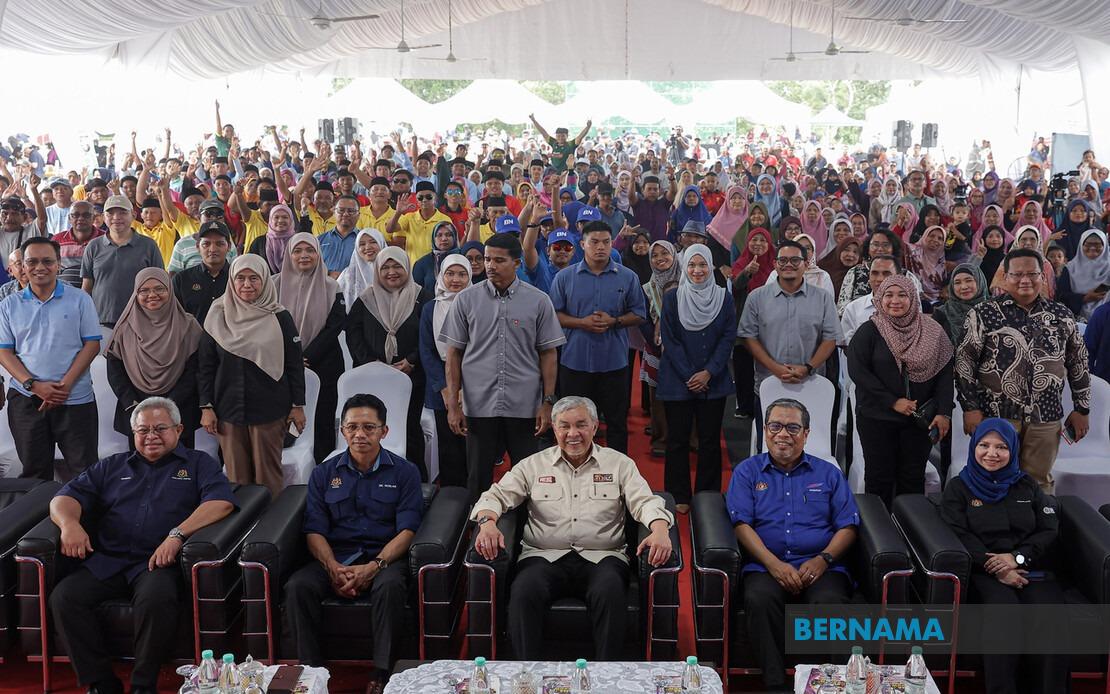
Malaysia's political landscape is entering a phase of unprecedented fluidity, prompting senior coalition leaders to reconsider traditional alliance structures. Barisan Nasional chairman Datuk Seri Dr Ahmad Zahid Hamidi has articulated this emerging consensus, arguing that new strategic alignments have become imperative to sustain political stability as the nation navigates a succession of electoral contests. Speaking at the Gema@KKDW 2026 programme in Palong 8 near Jempol, Ahmad Zahid suggested that the approach to coalition-building must become more adaptive and contextual, rather than adhering to rigid frameworks that may no longer reflect ground realities.
The current BN-Perikatan Nasional understanding represents a pragmatic response to the fragmentation that has characterised Malaysian politics since 2018. Rather than viewing this as a traditional merger or formal coalition architecture, Ahmad Zahid framed it as a tactical arrangement designed to prevent the electoral mathematics from becoming distorted by vote-splitting. Under this framework, the two coalitions have agreed to avoid fielding competing candidates in the same constituencies, thereby consolidating anti-opposition support without requiring deeper ideological alignment or structural integration. This distinction matters considerably for stakeholders monitoring Malaysia's evolving political economy.
The Negeri Sembilan state election, scheduled for polling on August 1 following early voting on July 28, will serve as the testing ground for this new approach. Ahmad Zahid explicitly identified this contest as a benchmark exercise, the results of which will inform whether the BN-PN understanding should be extended to the Melaka state election and ultimately to the next general election. This graduated strategy reflects recognition that what works at the state level may require modification before national implementation, acknowledging regional variations in voter sentiment and coalition viability across Malaysia's diverse demographic and geographic landscape.
What distinguishes this arrangement from earlier attempts at political cooperation is its explicitly limited scope and absence of formal binding commitments. Ahmad Zahid was careful to emphasise that no legally binding agreement exists between Barisan Nasional and Perikatan Nasional, a clarification that carries significant implications for party autonomy and internal party politics. This non-binding nature suggests that both coalitions retain strategic flexibility should electoral outcomes or shifts in party dynamics warrant recalibration. For BN in particular, this approach allows the coalition to signal openness to partnership while preserving its ability to reassess the arrangement if circumstances change unfavourably.
The underlying rationale reflects a sobering assessment of Malaysia's current political arithmetic. Neither BN nor PN commands sufficient independent strength to guarantee consistent electoral dominance across multiple contests simultaneously. The 2022 general election results demonstrated that Malaysia's electorate has become significantly more volatile and unpredictable than in the pre-2018 era. By coordinating seat contests and avoiding unnecessary triangular contests, both coalitions aim to maximise the efficiency of their combined vote shares, translating voter support into legislative representation more effectively than would occur under competitive arrangements.
For Malaysian observers and regional analysts, this development signals a broader shift toward transactional rather than ideological political alignments. The absence of formal institutional architecture means these arrangements remain highly contingent, capable of rapid reconfiguration if the incentive structure changes. This fragility contrasts sharply with the organisational cohesion that historically characterised BN, raising questions about long-term political stability and governance capacity. The emphasis on flexibility, while tactically prudent, may obscure underlying challenges regarding policy consistency and governmental coherence.
The timing of these discussions carries particular significance given the compressed electoral calendar ahead. With state elections in Negeri Sembilan, Melaka, and potentially other states on the horizon before general election machinery begins in earnest, political parties face mounting pressures to clarify their strategic positioning. Ahmad Zahid's acknowledgment that politics operates in a highly dynamic context reflects recognition that rigid commitments made today may prove untenable within months. This assessment appears informed by experience observing rapid coalition shifts across Southeast Asia, where partners demonstrate willingness to pivot dramatically when electoral incentives shift.
The implications for opposition parties warrant consideration as well. The consolidation of BN and PN support through coordinated candidate placement potentially strengthens the governing coalition's position relative to Pakatan Harapan, though the magnitude of this advantage remains subject to local variables and voter preferences. Opposition strategists will likely respond by intensifying efforts to expose divisions within the BN-PN understanding or by mobilising constituencies dissatisfied with the governing coalition's performance on specific policy domains.
Looking toward the general election framework, Ahmad Zahid's comments suggest BN anticipates that different electoral contexts may require different partnership configurations. The possibility of divergent arrangements across state contests before the national election reflects sophisticated recognition that political calculations vary by geography and constituency. This approach requires considerable coordination infrastructure and sophisticated data analytics to execute effectively, revealing how modern Malaysian politics increasingly resembles professional political consulting exercises rather than traditional party machinery operations.
Ultimately, Ahmad Zahid's articulation of flexible strategic alignment reflects Malaysia's transition toward a more competitive and unpredictable political environment. The BN-PN understanding, if successfully implemented in Negeri Sembilan, will provide crucial data regarding whether such tactical arrangements can deliver tangible electoral benefits. The months ahead will determine whether this approach becomes a template for broader political restructuring or remains a temporary expedient suited only to specific circumstances. For Malaysian voters and political constituencies, the implications extend beyond immediate electoral outcomes to fundamental questions about governance quality and policy coherence under increasingly fractionalised political conditions.

