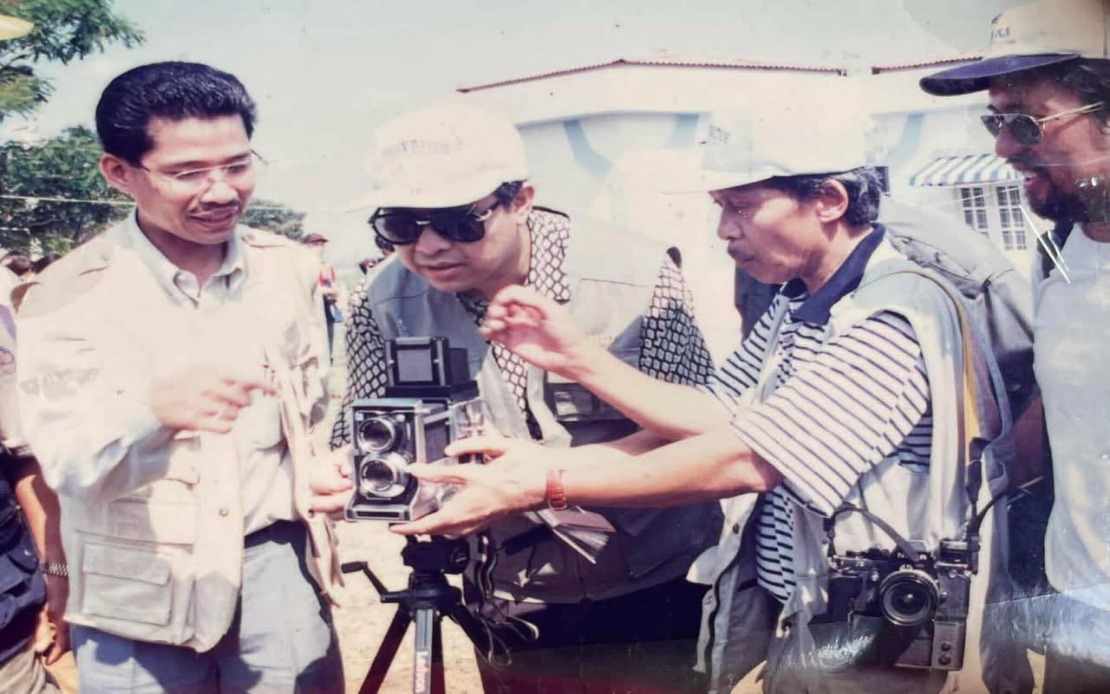
Deputy Prime Minister Datuk Seri Dr Ahmad Zahid Hamidi has extended greetings to the global photography community on World Photography Day 2026, drawing attention to the multifaceted contributions photographers make to society by freezing time and preserving experiences for posterity. His recognition spans the entire spectrum of image-makers, from seasoned professionals who dedicate their careers to the craft through to casual enthusiasts who document family milestones and community events.
The tribute acknowledges a fundamental human impulse: the desire to hold onto meaningful moments. Ahmad Zahid noted that photographs serve multiple purposes in contemporary life, functioning simultaneously as personal keepsakes that trigger nostalgia, decorative pieces that enhance living spaces, and crucially, as documentary evidence that shapes how future generations understand the past. This layered understanding reflects the profound impact visual documentation has extended beyond mere aesthetics into the realm of collective memory and historical consciousness.
Photography's reach encompasses professionals working across diverse sectors—those employed in mainstream and digital media capturing news and current events, specialists documenting corporate functions and personal celebrations, and the informal archivists within families who shoulder responsibility for recording gatherings and milestones. Each category brings distinct skill sets and perspectives, yet all contribute to a shared cultural tapestry. The recognition of family photographers as custodians of memory speaks to how technology has democratised image-making, enabling anyone with a smartphone to participate in visual storytelling that was once reserved for trained practitioners.
The Deputy Prime Minister emphasised the deliberate artistry underlying successful photography, noting that what appears instantaneous often masks considerable labour. Every photograph results from someone's attentive observation, patience in awaiting optimal conditions, and decisive judgment in selecting the precise moment to capture. This process, though occasionally consuming mere seconds, creates artefacts capable of communicating complex narratives across decades. The compression of time and meaning within a single frame represents photography's unique power among communication forms.
Photographs function as irreplaceable historical documents in ways that often become apparent only retrospectively. Images capturing significant events, cultural practices, landscapes undergoing transformation, and human interactions from past eras provide subsequent researchers and citizens with visual evidence that contextualises written records and oral traditions. They reveal details—clothing, architecture, behaviour, environmental conditions—that written descriptions might overlook or interpret differently. As societies evolve, these photographic archives gain increasing value as researchers reconstruct historical narratives and understand how their predecessors lived.
The emotional resonance of personal photography deserves particular attention, as it operates at the intersection of private sentiment and broader cultural practice. A photograph stored in a family album or displayed on a household wall carries meanings specific to those who appear in it and those who view it regularly. Yet simultaneously, accumulated personal photographs form a collective visual chronicle of how ordinary people experienced extraordinary historical periods, offering anthropological insights into daily life during previous decades. This intersection between intimate memory and historical documentation demonstrates photography's capacity to operate meaningfully at multiple scales simultaneously.
Malaysia's growing photography community—encompassing established professionals, emerging artists, and dedicated hobbyists—represents a significant cultural and economic segment often overlooked in policy discussions. The country has produced internationally recognised photographers whose work has garnered awards and exhibitions on the global stage, while simultaneously supporting a robust commercial photography sector serving businesses, events, and media organisations. This ecosystem depends upon both formal training institutions and informal knowledge transmission within creative communities.
The recognition from the nation's second-ranking political leader validates photography's status as a culturally significant and worthy pursuit, rather than treating it as mere entertainment or commercial service. This acknowledgment matters particularly in contexts where traditional hierarchies of cultural value may still prevail, and where pursuing creative careers sometimes faces resistance from those prioritising technical or corporate occupations. Official recognition from senior government figures helps establish photography's legitimacy as a profession and passion worthy of sustained commitment and investment.
World Photography Day itself, celebrated globally on August 19, commemorates the invention of the daguerreotype process in 1837, marking a watershed moment when humans achieved reliable mechanical means of capturing visual reality. This annual observance invites reflection on how fundamentally photography has reshaped human culture, communication, commerce, and consciousness over nearly two centuries. From daguerreotypes through film to contemporary digital imaging, the medium has continuously evolved while maintaining its core capacity to produce powerful evidence of how the world appears.
The invitation for photographers to continue their work—to remain alert to compelling moments and maintain commitment to visual storytelling—carries implicit acknowledgment that societies benefit from having observant, patient individuals documenting their times. Today's photographs become tomorrow's historical record, available for study, inspiration, and understanding. This temporal dimension gives photographers a responsibility extending beyond immediate commercial or personal purposes into a longer historical trajectory where their work may illuminate understanding for future generations.
Ahmad Zahid's message resonates particularly within Southeast Asia, where rapid modernisation, urbanisation, and social change create urgency around documenting disappearing ways of life, heritage sites, traditional practices, and environmental conditions. Photographers working across the region serve crucial roles in preserving visual evidence of cultural diversity, development trajectories, and environmental transformation occurring at unprecedented speed. Their work becomes invaluable for communities seeking to maintain connections to heritage while navigating contemporary change.

