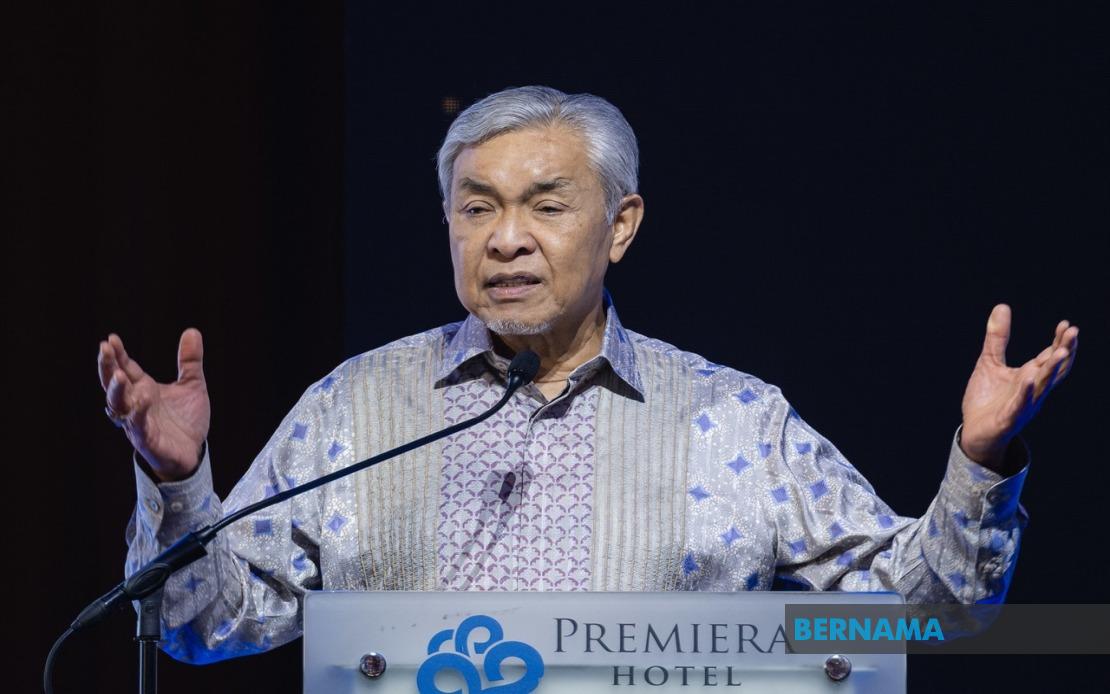
Deputy Prime Minister Datuk Seri Dr Ahmad Zahid Hamidi has indicated that Budget 2027 will be the vehicle for considering infrastructure requests aimed at improving road connectivity in remote parts of Sabah and Sarawak. Speaking after attending the Ministry of Rural and Regional Development's annual service awards ceremony in Kuala Lumpur on Saturday, Ahmad Zahid—who also helms the rural development portfolio—explained that the ministry takes seriously its mandate to extend road networks to isolated communities currently lacking adequate access to urban centres and established settlements.
The announcement comes as part of broader efforts to address infrastructure gaps in East Malaysia, where geographical isolation and dispersed populations have historically complicated development priorities. Ahmad Zahid's remarks reflect growing political attention to regional grievances regarding unequal infrastructure investment, a persistent issue in both Sabah and Sarawak where large tracts of territory remain difficult to access by road. The timing of his statement, linking infrastructure decisions explicitly to the upcoming budget cycle, suggests the government is preparing ground for spending announcements that could carry electoral significance in these demographically important states.
However, the Deputy Prime Minister cautioned that any new road projects would need to navigate the established approval frameworks overseen by the Ministry of Finance and the Public Works Department. This procedural requirement underscores the reality that rural infrastructure decisions, while politically sensitive, remain subject to budgetary constraints and technical assessments. Ahmad Zahid noted further that the Rural and Regional Development Ministry would elaborate on specific proposals only after completing consultations with stakeholders—a process that may extend into late 2026 as budget deliberations accelerate.
Beyond the immediate infrastructure question, Ahmad Zahid articulated a more ambitious vision for rural development that transcends traditional road-building approaches. During his address, he challenged ministry staff to embrace what he termed a "new discipline," emphasising that effective governance requires ruthless evaluation of existing programmes. Initiatives that demonstrably improve rural livelihoods should be expanded; those lagging in implementation deserve acceleration; and projects failing to generate meaningful community benefits must either be reformed or terminated. This framework represents a philosophical shift away from input-focused development—simply building infrastructure—toward outcomes-oriented policy that prioritises economic empowerment.
The Deputy Prime Minister's emphasis on creating income and employment ecosystems rather than merely constructing physical assets reflects evolving thinking within Malaysia's development establishment. Rural roads alone, the logic suggests, are insufficient if they do not anchor broader economic activity. A road connecting a remote settlement to a town serves little purpose if residents lack marketable goods to transport or viable employment at their destination. This thinking aligns with international development discourse highlighting the importance of complementary investments in skills, microfinance, agricultural extension services, and market linkages. For Malaysian policymakers, the implication is that rural budgets must balance infrastructure spending with support for productive activities.
Ahmad Zahid also pivoted toward organisational reform within his ministry, framing public sector modernisation as more than technological transition. The shift from manual to digital processes, while necessary, amounts to surface-level change unless accompanied by deeper transformation in institutional culture. He called upon staff to embrace continuous learning, demonstrate courage in decision-making, and maintain uncompromising standards of integrity and accountability. These remarks suggest frustration with implementation gaps and suggest that the ministry itself requires rejuvenation to deliver on rural development mandates more effectively.
For Sabah and Sarawak specifically, the Budget 2027 signal carries practical and symbolic weight. Both states have historically argued that federal resource allocation shortchanges them relative to Peninsular Malaysia. Infrastructure deficits in remote districts remain a tangible grievance that politicians mobilise during election campaigns. By explicitly linking new road proposals to the next budget cycle, Ahmad Zahid is acknowledging this sentiment while creating a mechanism for translating political pressure into policy consideration. Whether actual allocations materialise will depend on broader fiscal conditions, competing priorities across other sectors, and the respective political influence wielded by Sabah and Sarawak within federal councils.
The practical pathway to inclusion in Budget 2027 requires several steps. Detailed project proposals must be prepared, costed, and assessed against technical standards established by the Public Works Department. The ministry must build consensus among federal and state authorities, as road networks often traverse jurisdictions requiring coordinated effort. Cost-benefit analyses will weigh expected traffic volumes, maintenance commitments, and economic returns. Only after these assessments conclude will Finance Ministry officials integrate approved projects into the broader budget framework. This process, while bureaucratically sound, typically unfolds over months and involves multiple decision points where projects can be deferred or scaled back.
The rhetorical framing of rural development as a priority area carries implications for how Malaysia positions itself regionally. Sabah and Sarawak constitute roughly half the nation's landmass but house only a quarter of its population. Effective governance in these sparsely populated states requires investment patterns that differ markedly from Peninsular urban centres. By emphasising connectivity and economic ecosystem development, Ahmad Zahid is articulating a vision of Southeast Asian development that respects geographic heterogeneity. This contrasts with growth models that concentrate investment in metropolitan corridors, potentially widening regional inequalities and generating political resentment.
Looking forward, the success of Ahmad Zahid's "new discipline" approach will ultimately depend on implementation capacity and political sustainability. Even with the best intentions, development ministries in developing economies often struggle with project execution delays, cost overruns, and maintenance deficits. The Minister's exhortation to abandon ineffective programmes faces institutional resistance, as abandonment threatens staff positions and visible ministry commitments. Sustaining momentum toward outcomes-focused rural development beyond the current political cycle remains uncertain. Nevertheless, his articulation of these principles establishes benchmarks against which stakeholders can measure actual ministry performance.

