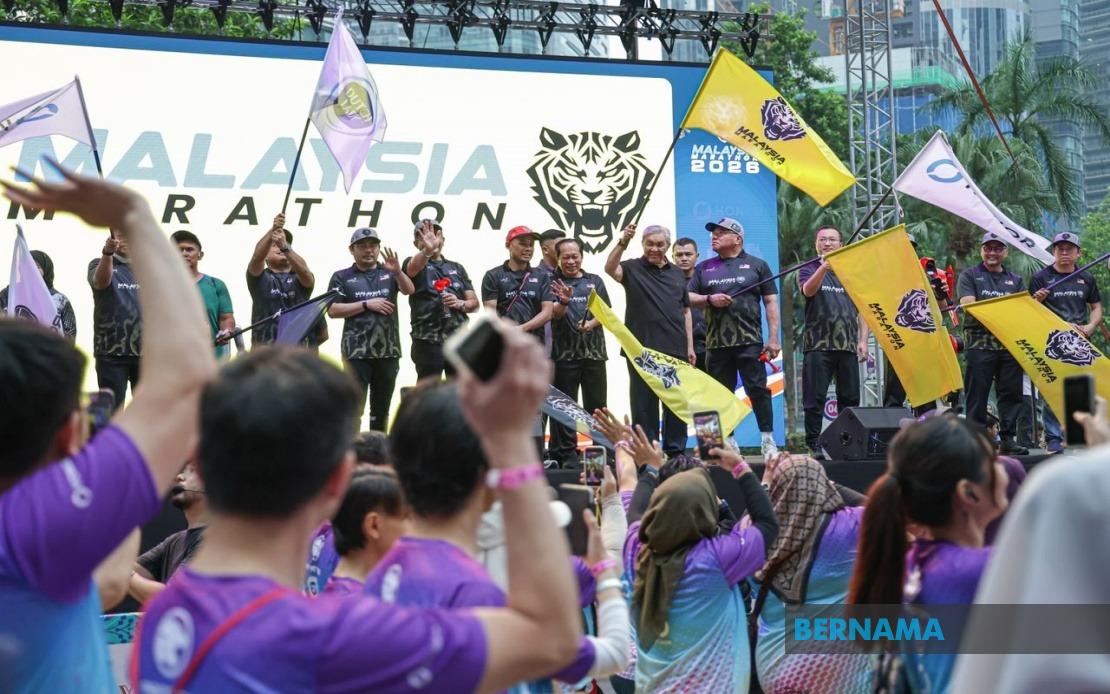
Deputy Prime Minister Datuk Seri Dr Ahmad Zahid Hamidi presided over the commencement of the Malaysia Marathon 2026 on August 30, setting the tone for what organisers are positioning as a significant sporting event in the nation's calendar. The occasion saw 10,000 participants gather at the Kuala Lumpur City Centre grounds for the 5-kilometre fun run, which formed part of a broader celebration timed to coincide with Malaysia's National Day commemorations. The choice of KLCC as the primary venue reflected an effort to bring the marathon experience closer to the urban heart of Kuala Lumpur, transforming a commercial landmark into a gathering point for fitness enthusiasts and casual runners alike.
The pageantry accompanying the flag-off ceremony underscored the government's commitment to positioning sporting events as tools for national unity and celebration. Proceedings commenced with the traditional singing of Negaraku, the national anthem, followed by an evocative performance by the Malaysian Armed Forces band that set a patriotic tone for the day's activities. Tourism, Arts and Culture Minister Datuk Seri Tiong King Sing and Deputy Works Minister Datuk Seri Ahmad Maslan joined Ahmad Zahid in presiding over the event, indicating multi-ministerial involvement in what the government views as a marquee occasion linking sport, culture, and national pride.
One of the most visually striking elements of the programme involved a one-kilometre Malaysian flag parade that drew 1,000 students from Kolej Poly-tech MARA (KPTM) Bangi. This inclusion of student participants served multiple purposes: it provided youth engagement in a national sporting initiative, created an impressive visual spectacle, and reinforced the narrative that Malaysia Marathon 2026 represents an intergenerational endeavour. Such symbolic gestures have become increasingly important in Malaysia's approach to major national events, where organisers seek to weave together sporting competition with cultural expression and educational participation.
The marathon itself represented the inaugural running of what organisers hope will become a signature event on Malaysia's sporting calendar. World Athletics, the global governing body for track and field sports, granted recognition to the event, lending international credibility to its standards and management. This recognition carries practical implications for attracting elite international runners and establishing the marathon as a competitive platform that meets global benchmarks, rather than simply a domestic celebration.
The scale of participation across the various race categories demonstrated substantial public engagement with the initiative. Beyond the 10,000 fun runners at KLCC, the full marathon programme encompassed 25,000 participants distributed across four competitive categories. Minister Tiong had flagged off 2,000 runners attempting the full 42-kilometre marathon distance from Pavilion Kuala Lumpur, while 8,000 competitors tackled the 21-kilometre half-marathon and 5,000 runners participated in the 10-kilometre category. The deliberate staggering of start times, with earlier categories departing in the morning and the fun run concluding the day's activities, allowed the event to maintain momentum and media attention throughout the day.
A significant logistical innovation marked this edition of the marathon: the relocation of the finish line from its traditional location at Dataran Merdeka to the KLCC grounds. This shift carried more than operational implications. Dataran Merdeka has historically served as a symbolic heart of Malaysian civic life and national commemoration, whereas KLCC represents Malaysia's modern, internationally-oriented identity. By consolidating all finish lines at KLCC, organisers created a more cohesive event experience while subtly signalling the nation's evolving character as a dynamic, globally-connected destination.
For Malaysian participants, particularly those from the Kuala Lumpur metropolitan area, the event presented an accessible entry point into competitive running. The inclusion of a 5-kilometre fun run category, separate from the more demanding marathon and half-marathon distances, democratised participation in a way that appeals to recreational runners and families. This tiered approach reflects international best practices in marathon organisation, where mass participation events increasingly cater to multiple fitness levels rather than restricting entry to elite athletes.
The timing of Malaysia Marathon 2026 during National Day month carried deliberate symbolism, positioning sporting excellence as an expression of national aspiration. By integrating athletic competition with patriotic celebration, the government sought to elevate the marathon beyond its status as merely a sporting fixture, transforming it into a vehicle for national identity and cohesion. For Malaysian readers and participants, this framing suggests that government sees major sporting events as having value extending beyond health and fitness benefits into the realm of nation-building and international image projection.
For Southeast Asia more broadly, Malaysia's investment in hosting a World Athletics-recognised marathon indicates a broader regional pattern where middle-income nations are increasingly competing to host international sporting events. Such initiatives serve multiple strategic purposes: they enhance national sporting infrastructure, create opportunities for tourism promotion, and position host nations as capable managers of complex international gatherings. The Malaysia Marathon 2026 thus fits within a wider narrative of sporting ambition across the region, comparable to similar initiatives undertaken by neighbouring countries seeking to elevate their sporting profiles and attract international visitors.

