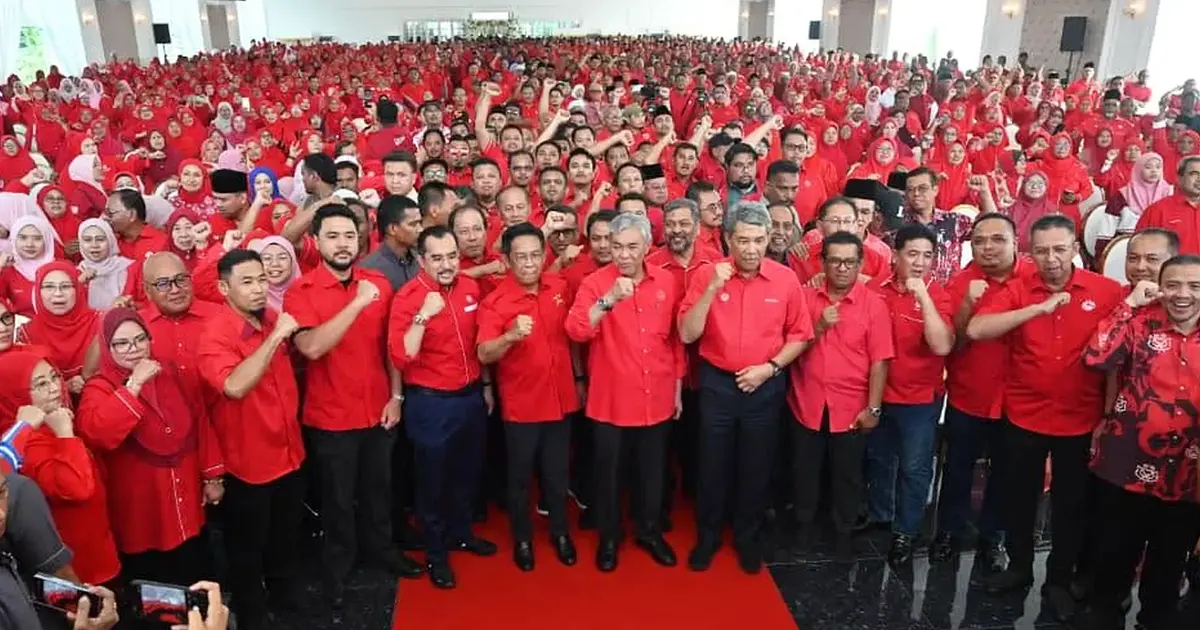
Barisan Nasional chairman Ahmad Zahid Hamidi has stepped back from direct involvement in candidate selection for the Negeri Sembilan state election, instead vesting full authority in the state party machinery. The move represents a strategic shift in how Malaysia's long-governing coalition manages electoral preparations across different levels of government, with decisions on both candidate nominations and seat distributions now firmly in the hands of Negeri Sembilan's BN hierarchy.
The delegation of responsibility comes as BN moves toward critical electoral negotiations that will determine its competitiveness in the state election. By entrusting Tok Mat—the Negeri Sembilan BN chief—with these decisions, Ahmad Zahid appears to be empowering local party leadership to make choices that reflect the specific political dynamics, factional considerations, and organisational strength within the state. This approach mirrors broader governance trends in Malaysian politics where central party leadership increasingly recognises that state-level elections require contextual decision-making sensitive to local groundswell and community relationships.
Negeri Sembilan holds particular significance within BN's national strategy. The state serves as a barometer for coalition performance in smaller, more tightly-knit political communities where personal networks and local allegiances often outweigh national narratives. The appointment of Tok Mat to lead the selection process signals confidence in his ability to navigate these nuances while maintaining party cohesion during what can be a contentious period of internal negotiations over constituencies and candidate viability.
Seat negotiations within BN coalitions historically prove among the most delicate party management exercises in Malaysian politics. Component parties—particularly UMNO, MCA, and MIC—must agree on representation across constituencies, balancing historical performance metrics, demographic changes, and the calibre of available candidates. By delegating to Tok Mat, Ahmad Zahid avoids the appearance of central intervention that might favour one party component over another, instead allowing the state structure to broker these agreements through existing power-sharing arrangements and institutional mechanisms.
The timing of this decision reflects BN's broader preparation for what remains an uncertain electoral landscape. Across Malaysia, state-level contests have become increasingly unpredictable, with voters demonstrating their willingness to shift allegiances based on local governance performance, leadership personality, and issue-specific mobilisation. Negeri Sembilan, while traditionally friendly to BN, cannot be taken for granted given voting patterns observed in recent by-elections and municipal-level contests across the state.
Tok Mat's elevation to oversee these processes carries implicit recognition of his standing within Negeri Sembilan's political ecosystem. As state BN chief, he commands networks across UMNO divisions, relationships with component party leaders, and knowledge of grassroots sentiment that would be unavailable to national-level party machinery. His decisions will likely reflect consultations with divisional chiefs, parliamentary representatives, and assemblyperson networks who maintain direct contact with communities and can assess candidate viability with greater granularity than central party headquarters.
The decentralisation approach also reflects lessons BN leadership has absorbed from previous electoral contests. State elections won or lost often hinge on local factors that national strategy papers cannot fully capture: personality conflicts between candidates, demographic shifts within constituencies, and the effectiveness of individual grassroots organisations. By empowering state-level structures, BN positions itself to respond more nimbly to these variables while maintaining party discipline through existing state-level hierarchies.
For Malaysian political observers, this development underscores the continuing tension within BN between centralised brand management and the practical necessity of accommodating state-level autonomy. Ahmad Zahid's willingness to delegate reflects both confidence in Tok Mat's capabilities and recognition that excessive central control often undermines rather than enhances electoral performance by alienating local powerbrokers whose cooperation remains essential for mobilisation and voter outreach.
The decision also carries implications for component parties within the BN coalition. MCA and MIC will now negotiate their seat allocations and candidate nominations through Tok Mat's office rather than through direct channels with Ahmad Zahid's secretariat. This structure potentially strengthens Tok Mat's position as mediator while requiring component parties to demonstrate their legitimacy and organisational strength at the state level—a framework that arguably encourages genuine coalition partnership rather than merely bureaucratic apportionment.
As Negeri Sembilan moves toward its state election, the coming weeks will reveal whether this decentralised approach yields effective candidate selection that energises BN's grassroots machinery. The ultimate test will arrive on polling day, when voters determine whether Tok Mat's selections and the coalition's strategies have proven sufficient to maintain BN's grip on power in a state that, despite its historical loyalty to the coalition, increasingly reflects Malaysia's broader pattern of electoral unpredictability.

