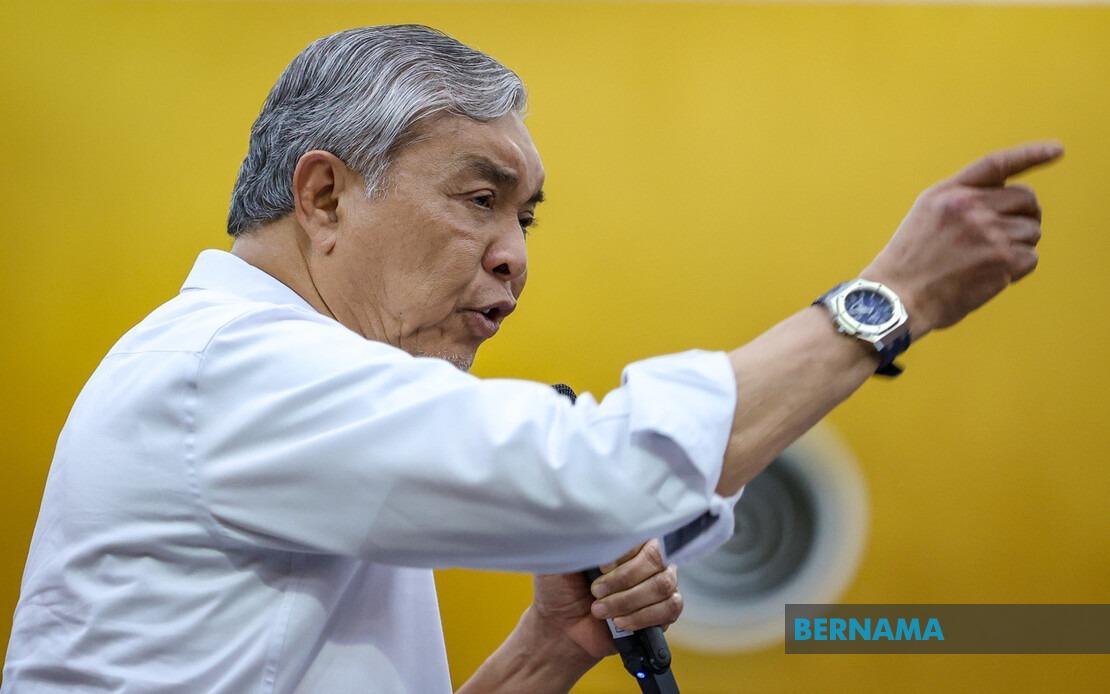
Deputy Prime Minister Datuk Seri Dr Ahmad Zahid Hamidi has unveiled a proposal to equip student leaders with deeper understanding of Malaysia's political system through dedicated educational programmes. Speaking in Johor Bahru, he suggested that Student Representative Councils (MPP) across the nation's institutions of higher learning should participate in comprehensive courses focused on leadership development and political literacy. The initiative, he indicated, reflects concerns about ensuring the country's emerging generation of civic actors possess adequate knowledge of the political landscape and are equipped to navigate the complexities of democratic governance.
The rationale underpinning Ahmad Zahid's proposal centres on cultivating a more politically mature youth cohort. He emphasised that students entering leadership positions within university structures would benefit substantially from structured exposure to Malaysia's political mechanisms, institutional frameworks, and contemporary policy challenges. Such grounding, he suggested, would enable younger leaders to engage more effectively with national discourse and contribute meaningfully to the nation's democratic processes during their careers. The initiative represents a recognition that student councils increasingly function as important channels through which young people experience governance firsthand, making their members potential influencers within university communities and beyond.
Financial backing for the proposed programmes would come from government sources, Ahmad Zahid indicated, provided the proposals received formal approval from the Ministry of Higher Education under the stewardship of Datuk Seri Dr Zambry Abd Kadir. By positioning the courses as government-supported rather than partisan initiatives, the proposal attempts to present political education as a non-aligned public good rather than a mechanism for any particular party's advancement. The mechanism he outlined involves institutions requesting such programmes, with the government then bearing the costs of delivery, thereby removing financial barriers that might otherwise limit participation from smaller or less well-resourced student councils.
The proposed curriculum would expose students to the broader political sphere in Malaysia, moving beyond purely theoretical understanding of democratic principles. Participants would gain familiarity with how political systems operate in practice, the roles of various institutional actors, and the mechanisms through which policy decisions emerge. Ahmad Zahid characterised this practical exposure as essential for developing leadership capabilities suited to contemporary Malaysia. He stressed that the objective extends beyond converting young people into active political party members, instead aiming to produce informed citizens capable of making sound electoral choices and engaging constructively with political developments.
A significant aspect of Ahmad Zahid's framing involves distinguishing between political engagement and political awareness. He explicitly stated that young voters—including the expanding cohort of eighteen-year-old first-time voters following recent electoral reforms—need not pursue active involvement in partisan politics to derive value from such education. Rather, he advocated for what might be termed political literacy as a civic capacity separate from membership or activism within any political organisation. This distinction carries importance given ongoing debates within Malaysia about the appropriate relationship between educational institutions and partisan political activity. By positioning the courses as informational rather than mobilisational, Ahmad Zahid seeks to address potential concerns about instrumentalising university structures for political recruitment.
The deputy prime minister's personal narrative featured prominently in his remarks, with references to his own trajectory from student leader at Universiti Malaya into broader political involvement. His account implicitly argues that such formative exposure need not determine political futures definitively, but rather provides foundational understanding that informs subsequent civic choices. This biographical dimension personalises the argument for political education, suggesting it reflects lessons learned from his own generational experience. However, it also invites questions about whether his proposed programmes might inadvertently encourage students toward political careers or party involvement, notwithstanding his disclaimers.
The centrality of informed voting emerged as another key theme in Ahmad Zahid's advocacy. He contended that young voters possess considerable collective power through electoral participation, with their choices meaningfully shaping not only which parties or candidates achieve office but also influencing the strategic directions political organisations pursue. He characterised vote-casting as an opportunity that carries both significance and responsibility, implicitly critiquing scenarios where young voters either abstain from electoral participation or cast ballots without adequate understanding of political contexts and implications. This framing positions the proposed educational programmes as enhancing democratic legitimacy by grounding electoral choices in political knowledge rather than mere preference or uninformed habit.
The timing of Ahmad Zahid's proposal coincided with Johor's preparation for a state election scheduled for the following Saturday, with fifty-six state legislative seats contested. This proximity raises questions about whether the initiative represented purely principled advocacy for student political education or reflected tactical interest in mobilising younger voters during an active electoral campaign. The announcement's timing within the election calendar might be read as positioning the government as invested in youth civic engagement at a moment when younger voters' participation could meaningfully affect electoral outcomes. Whether this temporal alignment reflected strategic calculation or coincidence remains subject to interpretation.
The proposal intersects with broader Malaysian discussions about universities' roles in shaping students' political consciousness. Universities in Malaysia have historically occupied complex terrain between their educational missions and their relationships with government and political structures. Ahmad Zahid's suggestion that government-funded political education should occur within student council frameworks operates within this established ecosystem while potentially deepening institutional connections between higher education and formal political activity. Student Representative Councils themselves function as quasi-democratic structures within educational institutions, making their leadership development a matter of interest to both educational administrators and politicians seeking to cultivate future civic capacity.
Implementation would require coordination among multiple stakeholders, including student council representatives themselves, university administrations, relevant government ministries, and potentially political organisations interested in curriculum content and delivery methodologies. The question of who designs and delivers such courses becomes consequential—whether they represent genuinely neutral civic education or whether they implicitly favour particular political perspectives or approaches to governance. Ensuring courses maintain educational integrity while serving partisan interests requires careful institutional architecture and oversight mechanisms.
For Malaysian universities and their student bodies, Ahmad Zahid's proposal signals government interest in deepening connections between campus political structures and the national political landscape. Whether viewed as an opportunity to strengthen democratic participation or as a concern about potential partisan influence within educational spaces, the proposal warrants careful examination by student representatives, academic leaders, and other stakeholders invested in higher education's governance dimensions. The initiative reflects ongoing evolution in how Malaysia's political establishment engages with younger generations and institutional mechanisms through which youth political learning might be facilitated or shaped.

