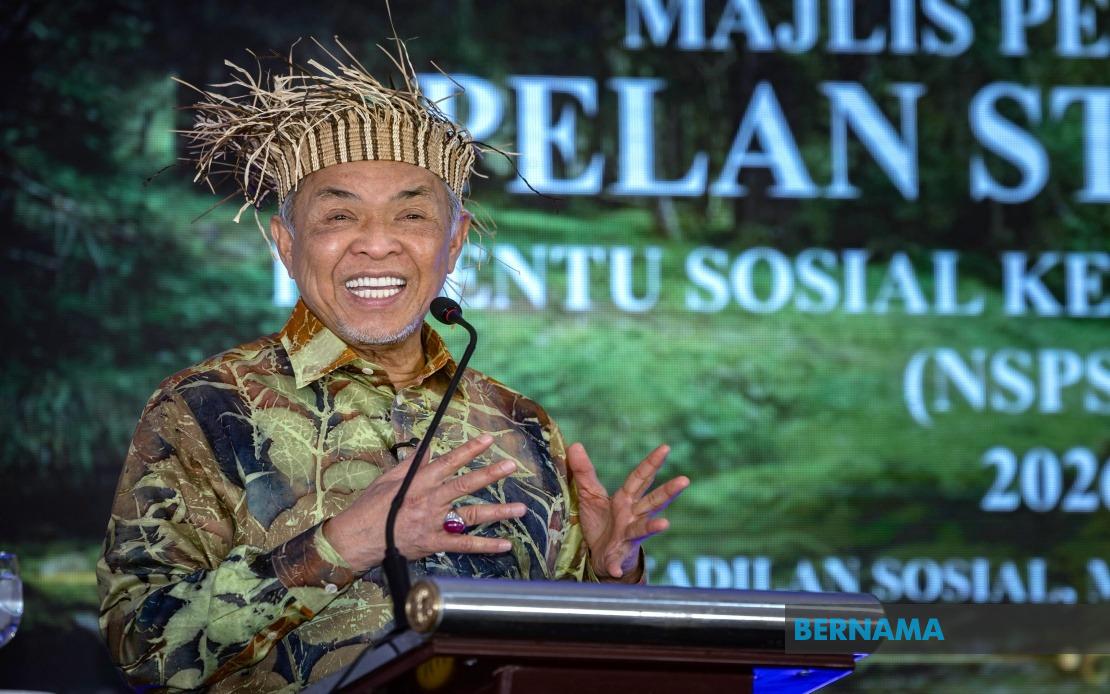
Deputy Prime Minister Datuk Seri Dr Ahmad Zahid Hamidi has appealed to all Malaysians to offer prayers for Prime Minister Datuk Seri Anwar Ibrahim as he recovers from a minor surgical procedure. Speaking in Gerik during the launch of a health initiative for Orang Asli communities, Ahmad Zahid expressed confidence that Anwar would require only a brief recovery period before resuming full duties at the helm of the nation's government.
Anwar underwent an elective laparoscopic procedure to address a para-umbilical hernia, a common condition requiring surgical intervention. The Head of the Prime Minister's Medical Team, Datuk Dr Asri Ranga Abdullah Ramaiah, confirmed that the operation proceeded without complications under the care of a specialist medical team. The procedure, conducted on August 10, represents a routine intervention that typically carries minimal risk when performed by experienced surgical professionals in a controlled hospital environment.
Ahmad Zahid revealed that Anwar had notified him of the planned procedure the previous week, on August 4, providing advance notice to ensure governmental continuity. The Deputy Prime Minister emphasised the importance of prayer and public support during this period, noting that even minor surgical interventions demand adequate rest and recuperation. He described the anticipated recovery window as lasting approximately two days, during which Anwar would remain under medical supervision and undergo physiotherapy to regain full physical capability.
Underscoring the stability of Malaysia's governance structure, Ahmad Zahid confirmed that Anwar had formally requested him to preside over Cabinet meetings in the Prime Minister's absence. This arrangement ensures that critical government business continues uninterrupted, allowing ministers to address pressing matters without delay. The smooth transition of responsibilities demonstrates the institutional readiness of the Malaysian executive branch to manage leadership gaps, even when temporary and anticipated.
The Prime Minister's Medical Team maintained that Anwar remained under continuous specialist supervision to monitor his recovery trajectory. Physiotherapy sessions commenced immediately following the surgical procedure, a standard post-operative protocol designed to restore mobility and prevent complications. This proactive medical management reflects best practices in contemporary surgical care, where early mobilisation and supervised rehabilitation significantly enhance recovery outcomes and reduce hospital stays.
Ahmad Zahid's public remarks serve multiple functions within Malaysia's political context. By explicitly calling for national prayers and emphasising Anwar's expected swift return, the Deputy Prime Minister provides reassurance to government officials, international partners, and the broader public that the nation's leadership remains stable and functioning. The transparency surrounding both the medical condition and the recovery timeline counters potential speculation or rumour, which could otherwise undermine confidence in governmental operations during periods of leadership transition.
The timing of this announcement, made at an official government event launching a health strategic plan, reflects the Malaysian government's capacity to maintain regular business while managing the Prime Minister's medical requirements. The 2026-2035 National Social Determinants of Health Strategic Plan for Orang Asli, which Ahmad Zahid unveiled, addresses critical healthcare disparities affecting indigenous communities—a significant policy initiative that proceeded without delay despite leadership changes. This continuity exemplifies how institutional frameworks function to serve public interests regardless of temporary absences by individual office-holders.
For the broader Malaysian public, this incident reinforces the importance of preventive healthcare and prompt treatment of medical conditions, even when individuals occupy high office. Anwar's willingness to address a health concern through surgical intervention, rather than allowing it to develop further, sets a practical example. The hernia condition, common among the general population, typically responds well to laparoscopic intervention, which involves minimal tissue trauma compared to traditional open surgery.
From a regional governance perspective, Malaysia's handling of this leadership transition reflects institutional maturity. Neighbouring Southeast Asian nations often observe how major democracies manage transitions and continuity. The clear communication from the Deputy Prime Minister, coupled with medical team statements, demonstrates transparent governance that maintains public confidence. This contrasts sharply with political contexts where medical conditions of leaders spark widespread speculation and institutional uncertainty.
The involvement of the Prime Minister's Medical Team in public communication also underscores Malaysia's adherence to standards of medical transparency appropriate for heads of government. Unlike some regional jurisdictions where leaders' health information remains shrouded in secrecy, the Malaysian government's approach provides factual medical details suitable for public understanding, while appropriately maintaining privacy boundaries regarding clinical specifics. This balance reflects international best practices for high-level government medical communications.
As Anwar proceeds through recovery, the government's institutional mechanisms ensure that policy implementation, legislative business, and administrative functions remain on schedule. The Cabinet, under Ahmad Zahid's temporary leadership, can address urgent matters requiring collegial decision-making. This distributed leadership approach, embedded within Malaysia's constitutional framework, prevents concentration of power while ensuring responsiveness to national priorities.

