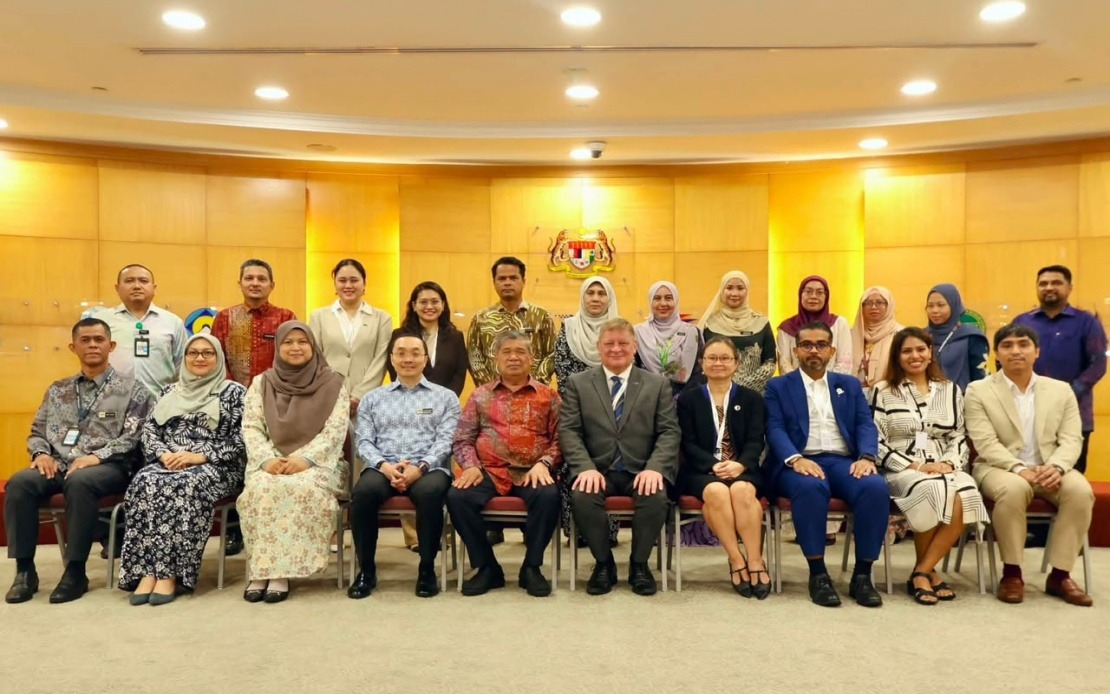
Malaysia is positioning itself as a strategic partner for European agricultural expertise as the country seeks to modernise its food systems and enhance security. Agriculture and Food Security Minister Datuk Seri Mohamad Sabu received EU-ASEAN Business Council executive director Chris Humphrey and a delegation at Wisma Tani in Putrajaya on August 6, signalling renewed emphasis on European collaboration in advancing the nation's agricultural transformation.
The meeting underscored Malaysia's commitment to implementing its National Agro-Food Policy 2.0, a comprehensive framework designed to fortify food security through innovation and technological advancement. The minister highlighted the critical role that agricultural technology and artificial intelligence will play in modernising production systems across the sector. This pivot towards high-tech farming reflects broader regional trends as Southeast Asian countries compete to increase productivity while contending with climate pressures and supply chain vulnerabilities that have become increasingly pronounced since the pandemic.
Beyond technology adoption, both sides discussed structural improvements to Malaysia's dairy industry, recognising that strengthening local supply chains reduces dependency on imports and builds resilience. The meeting also prioritised animal health and biosecurity standards, areas where European expertise and regulatory frameworks could provide valuable benchmarks. These measures are essential not only for domestic food safety but also for ensuring Malaysian agricultural products meet international quality requirements that open doors to lucrative export markets.
Europe represents far more than a trading partner for Malaysia's agricultural sector; the continent functions as a source of technical knowledge and investment capital. The minister acknowledged the European Union's importance as both a commercial and technological ally, particularly as Malaysia navigates the complex challenge of balancing food production growth with environmental sustainability. This recognition reflects a strategic understanding that technological solutions and best practices cannot be developed in isolation but require international collaboration and knowledge transfer.
The discussions around capacity building for local farmers and breeders carry particular significance for rural communities across Malaysia. Enhanced training in compliance with international quality standards and Sanitary and Phytosanitary measures would enable smallholder farmers to access premium export markets, particularly within Europe. Such initiatives address a persistent gap in Malaysian agriculture, where productivity improvements and market access remain unevenly distributed across the sector, with smaller operators often lacking resources to meet stringent international requirements.
Both parties reaffirmed their backing for the ongoing Malaysia-European Union Free Trade Agreement negotiations, a development with substantial implications for Malaysian agribusiness. A comprehensive trade deal would reduce tariff barriers on Malaysian agricultural exports while potentially opening domestic markets to European investment and technology. For Malaysian consumers, such agreements can improve food diversity and potentially moderate prices through increased competitive supply, though careful oversight remains necessary to protect local producers during transition periods.
The minister advocated for deeper strategic collaboration between European companies and Malaysian counterparts, particularly in adopting modern agricultural technologies. This emphasis on public-private cooperation recognises that government policy alone cannot drive the necessary transformation; sustained investment from international businesses provides both capital and expertise. By positioning Malaysia as an attractive destination for European agro-tech ventures, the country could develop competitive advantages in sustainable farming practices and climate-resilient crop varieties.
Food security represents an increasingly urgent policy priority across Southeast Asia, where rapid urbanisation and climate volatility threaten traditional production patterns. Malaysia's proactive engagement with EU partners reflects recognition that feeding a growing population while managing environmental constraints demands innovation and international cooperation. The discussions around addressing global food security challenges and supply chain disruptions acknowledge that no nation can solve these problems unilaterally, and regional solutions require coordinated efforts and shared technological platforms.
Minister Mohamad also used the occasion to extend an invitation for the EU-ABC delegation to participate in the Agriculture, Horticulture and Agro-Tourism Exhibition scheduled for August 28 to September 6, 2026, at the Malaysia Agricultural Expo Park in Serdang, Selangor. This biennial event provides a platform for showcasing Malaysian agricultural innovations and attracting international investment and partnerships. European participation would strengthen the exhibition's global credentials while creating networking opportunities for Malaysian agribusinesses seeking European collaborators or market entry assistance.
The timing of this diplomatic engagement proves significant as Malaysia works to position itself within global agricultural value chains that prioritise sustainability and technological sophistication. By cultivating robust partnerships with European actors, the nation can leverage developed-market expertise while contributing its own tropical agricultural knowledge and biodiversity resources. This reciprocal arrangement benefits both parties: Europe gains access to Southeast Asian agricultural production and emerging markets, while Malaysia accelerates its technological transition and improves export competitiveness in increasingly stringent international markets.

