Sudan's path to peace requires an exclusively Sudanese-led dialogue process, the African Union Peace and Security Council has emphasized, following a high-level meeting in Khartoum that underscored the regional body's concern over external meddling in the country's civil war. The position, delivered during discussions between Sudan's Sovereignty Council Chairman Abdel Fattah al-Burhan and an AU delegation led by Algerian diplomat Mohamed Khaled, signals the continental organization's determination to keep international actors from exploiting the conflict or fragmenting state authority through the establishment of rival administrative structures.
The AU's rotating chair Khaled characterized the Sunday meeting at the presidential palace as productive, though the framing of his remarks revealed deeper anxieties about how Sudan's catastrophic eighteen-month conflict could be weaponized by competing foreign powers. By explicitly condemning any international interference and rejecting schemes to create parallel entities or governments, Khaled articulated a principled stance that resonates across the African continent, where post-colonial states remain acutely sensitive to external pressure and the threat of sovereignty erosion. The council's emphasis that such intervention ultimately "fuels the conflict" reflects a hard-learned lesson from other African crises, where geopolitical competition among external actors has prolonged suffering and complicated peace settlements.
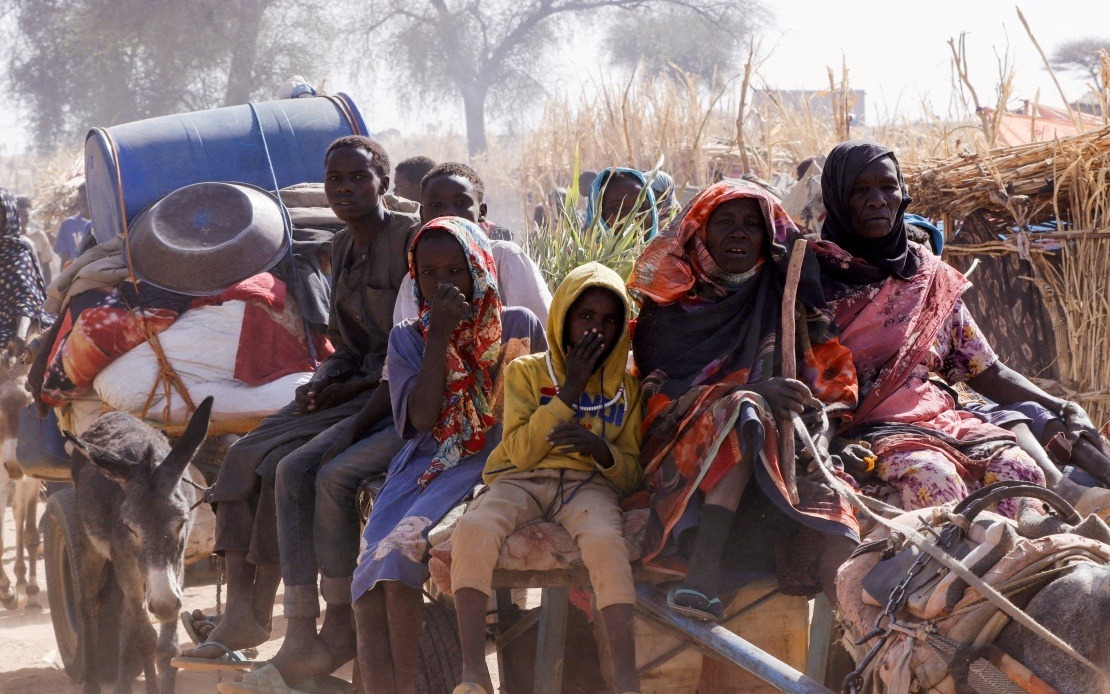
The conflict consuming Sudan since April 2023 erupted from a fundamental dispute over the military's integration of the paramilitary Rapid Support Forces, a schism that has metastasized into a humanitarian catastrophe of staggering proportions. According to United Nations estimates, the war has claimed tens of thousands of lives and displaced approximately thirteen million people—a displacement rate that has destabilized neighboring countries and created regional consequences that extend far beyond Sudan's borders. The sheer scale of this humanitarian emergency underscores why the AU council's emphasis on sovereignty and Sudanese ownership of any peace process matters: external actors pursuing competing agendas have historically prolonged such conflicts or imposed settlements that lack local legitimacy and inevitably collapse.
Khaled's articulation of the path forward stressed that lasting peace in Sudan can only emerge through genuine dialogue, national reconciliation, and a comprehensive political settlement that genuinely reflects Sudanese aspirations rather than external designs. This formulation, while seemingly straightforward, contains significant nuance: it rejects both the narrow military approach that sparked the current war and any international template imposed without authentic domestic consensus. The AU's advocacy for this Sudanese-centric approach implicitly critiques the regional and global powers that have inserted themselves into Sudan's conflict, whether through military support, financial backing, or diplomatic pressure.
Prior to the AU delegation's visit, Sudan's Prime Minister Kamil Idris announced that a Sudanese-Sudanese dialogue would commence soon, signaling at least rhetorical movement toward the kind of inclusive, nationally-driven process that the AU council advocates. This announcement, coupled with Khaled's welcoming of government efforts to restore functionality from Khartoum rather than operating from exile, suggests incremental progress in establishing the institutional foundations necessary for peace. The council's designation of the government's return to performing its duties as "pivotal" to restoring state institutions and delivering essential services reflects recognition that Sudan cannot rebuild while authority remains fragmented and displaced.
However, the AU council's call for greater inclusivity in the transitional process and movement toward national consensus for a constitutional system through free and fair elections presents a formidable challenge amid active warfare. Creating space for political forces beyond the immediate combatants, ensuring that minority voices and civil society participate meaningfully, and establishing credible mechanisms for elections all demand security conditions and institutional capacity that Sudan's current situation does not easily permit. The gap between the AU's aspirational language and the ground reality of a nation torn by conflict reflects the fundamental difficulty of achieving durable peace in contexts where military power remains the primary currency.
From a Southeast Asian and Malaysian perspective, Sudan's crisis offers sobering lessons about the consequences of state fragmentation and the dangers that external powers pose to sovereignty and stability. Malaysia, as a member of the Non-Aligned Movement with historical sensitivities to external interference, would recognize the AU's principled stance as consonant with broader developing-world concerns about respecting national self-determination. The emphasis on avoiding parallel governments and maintaining unity resonates in a region where secessionism and separatism have threatened stability, and where the principle of national integrity remains fundamental to regional order.
The AU's positioning also reflects the continental body's increasing assertiveness in addressing African crises without deferring to external actors, a posture that contrasts with earlier periods when African peace processes were heavily mediated or shaped by the United Nations, regional powers, or Western nations. By emphasizing Sudanese ownership and rejecting parallel structures, the AU council implicitly stakes a claim to custodianship over Sudan's future, though the organization's capacity to enforce this vision depends heavily on the commitment of Sudan's government and armed parties to the dialogue process. The delegation's visit and public statements represent important diplomatic signaling, but translating these principles into concrete progress requires far more substantial engagement and resources.
The underlying tension in the AU's position lies between its advocacy for inclusive dialogue and the reality that Sudan's main combatants show limited enthusiasm for power-sharing arrangements that would dilute their respective positions. The Rapid Support Forces and the armed forces both view the conflict through zero-sum lenses, making the kind of national consensus that the AU promotes exceedingly difficult to achieve without external pressure or changed battlefield circumstances. The AU council's silence on mechanisms to incentivize or enforce compliance with peace agreements suggests the organization may be constrained by its reliance on the commitment of member states, many of which face similar internal conflicts.
Sudan's international alignment patterns further complicate the AU's stated preference for sovereignty and non-interference. Various regional powers have supported different factions, while global actors have pursued contradictory policies. The AU's emphasis on Sudanese-led dialogue and rejection of parallel governance structures implicitly challenges all such external involvement, though the council's capacity to make this position stick remains uncertain. The meeting's characterization as "fruitful" suggests diplomatic progress, but whether this translates into genuine movement toward the comprehensive political settlement that the AU envisions depends on actors far beyond the council's direct influence.
Moving forward, the AU council's articulated position provides a framework that prioritizes Sudanese ownership of any settlement while attempting to delegitimize external interference and governance fragmentation. Whether this framework proves sufficient to guide Sudan toward peace or merely represents aspirational rhetoric in the face of intractable conflict remains to be seen. The council's call for government and political forces to make the transitional process more inclusive while working toward a constitutional system through free and fair elections sets an ambitious agenda that would challenge any conflict-affected state, but particularly one as fractured and war-weary as Sudan currently is.

