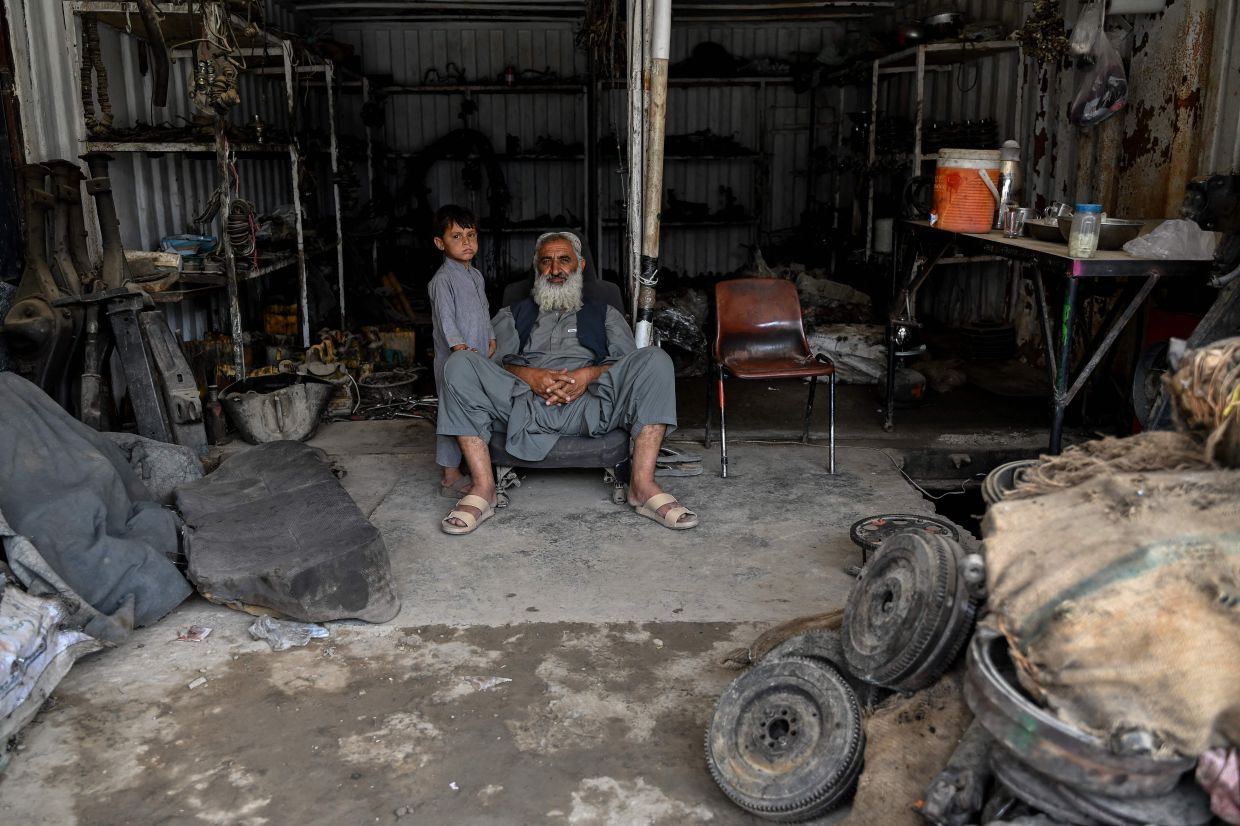
The automotive trade that once sustained thousands of workers across southern Afghanistan's Kandahar province has effectively collapsed under the weight of cascading regional disruptions. In Spin Boldak, a long-established commercial hub where imported vehicle components were transformed into finished automobiles or distributed across the country for repairs, dealers and workshop owners now struggle with near-zero throughput and mounting losses. The sudden strangulation of supply lines reveals how deeply Afghanistan's economy remains vulnerable to external shocks, despite two years of Taliban governance.
The trouble began last October when escalating cross-border violence prompted Pakistan to impose near-total restrictions on the frontier. Until that point, Japanese vehicle parts and components from across Asia had flowed reliably overland through Pakistani territory into Afghanistan's commercial networks. For traders like Abdul Baqi Bina, deputy head of the Kandahar Chamber of Commerce and Investment, the initial closure created immediate headaches. The business community pivoted toward alternative routing through Iran's Bandar Abbas port, a solution that proved cumbersome and expensive but at least temporarily functional. The improvisation allowed merchants to maintain modest operations, albeit at significantly higher overhead.
That fragile workaround unravelled entirely when the Middle East conflict intensified in February, triggering unprecedented disruption across one of the world's most critical maritime chokepoints. The Strait of Hormuz, through which enormous volumes of international cargo passes daily, became a zone of heightened risk. Shipping companies issued warnings that normalisation of transit through the waterway would require months of stabilisation. For importers like Asadullah, who had relied on supplies arriving via Dubai and Japan, the effect was paralysing. The fundamental economics of his business inverted almost overnight—container costs exploded from approximately US$2,000 to US$8,000 per shipment following the conflict's outbreak.
The disruption's scale extends far beyond price inflation. Asadullah currently maintains more than thirty containers stranded in Japan and the United Arab Emirates, unable to progress toward their Afghan destination. The bottleneck has formed partly at Dubai's Jebel Ali port, which functions as a critical logistics hub for the entire region. Every day that containers sit in port warehouses representing inventory worth thousands of dollars, carrying costs accumulate and the calculus of doing business deteriorates. For traders already operating on thin margins in a developing economy, such delays represent catastrophic cash flow crises.
Another importer, Masoud, described the situation in starkly unambiguous terms. His monthly import volumes had previously numbered in the dozens or even hundreds of containers, representing a steady stream of Japanese parts feeding Afghanistan's auto assembly sector. Since the Iranian conflict's eruption, that figure has contracted to zero. The economic logic of maintaining inventory has become untenable. Rather than allowing containers to languish in Middle Eastern warehouses while storage fees accumulate relentlessly, Masoud has begun reversing shipments back to Japan—an admission of complete business failure. The decision guarantees total loss of investment on those shipments, yet continuing to pay storage charges would represent only a slower, more painful version of the same outcome.
The World Bank's assessment in May underscored Afghanistan's structural fragility, characterising the nation as exceptionally susceptible to external economic shocks. The institution flagged a widening chasm between imports and exports, with that gap reaching 70 per cent of GDP in the 2025 fiscal year—a staggering imbalance reflecting the country's profound trade deficit and dependence on imported goods. Afghanistan possesses limited domestic manufacturing capacity and must source most manufactured products from abroad, meaning any disruption to international commerce cascades directly through its domestic economy.
The human consequences materialise across Spin Boldak's workshops and showrooms. Mohammad Naeem, a twenty-one-year-old crane operator, faces an impossible calculus: continue working in a sector with no visible prospects of recovery, or abandon the only livelihood he has known. Young workers like Naeem possess few savings buffers to weather extended income disruption. Meanwhile, workshop owner Samiullah previously maintained a production capacity of five to seven vehicles weekly, work that sustained his employees and generated modest profits. With parts shipments virtually nonexistent, his facility has transformed into an idle space where workers sit among dormant tools and equipment, accumulating losses while receiving wages that must somehow continue flowing.
The showroom proprietor Noor Ali watches inventory languish unsold. A single month has elapsed since his last automobile sale—an eternity in retail—while his lot displays a dozen colourful vehicles constructed from Japanese components now gathering dust. The psychology of commercial failure compounds the arithmetic of financial loss. Ali's comment about hoping parties would reach agreement and fully reopen the Strait of Hormuz reflected not optimism but desperation, a recognition that his business survival depends entirely on factors wholly beyond his control or influence.
The implications extend beyond Spin Boldak's immediate commercial community. Afghanistan's auto parts trade functioned as a significant employer and revenue generator across Kandahar's economy. The collapse undermines government tax collections, reduces purchasing power among affected workers, and creates potential conditions for discontent in a province already strategically important. The broader pattern demonstrates how geographical position and dependence on maritime trade routes can render a developing nation hostage to events occurring thousands of kilometres away. For Malaysia and other Southeast Asian economies with similar vulnerabilities to international supply chain disruptions, Afghanistan's experience offers cautionary evidence of how quickly prosperity can evaporate when external circumstances deteriorate.

