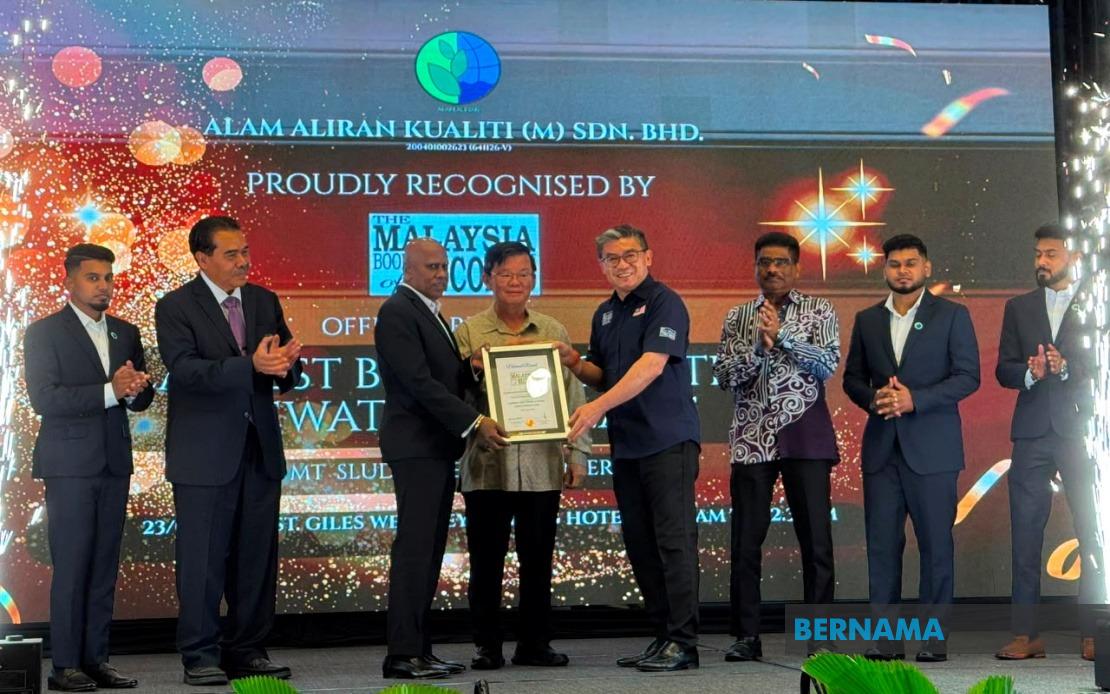
Alam Aliran Kualiti (M) Sdn Bhd, a Penang-based environmental engineering firm, has secured official recognition from the Malaysian Book of Records for developing and operating the nation's largest belt press system dewatering plant. The distinction, presented in George Town on July 23, celebrates the company's Sungai Dua Dewatering Plant, a facility jointly developed with the Perbadanan Bekalan Air Pulau Pinang that represents a significant advancement in Malaysia's water treatment infrastructure and sustainability practices.
The Sungai Dua facility demonstrates substantial technical capacity, processing 10 million litres of water treatment residuals daily while simultaneously managing approximately 450 metric tonnes of alum sludge. This processing volume positions the plant among the largest of its kind in the region and underscores Malaysia's growing capabilities in advanced environmental engineering. AAK director Gokulaan Balan characterised the achievement as validation of domestic engineering prowess, noting that the recognition proves Malaysian expertise can compete on a global stage in delivering sophisticated environmental infrastructure solutions.
Beyond the technical specifications, the facility embodies a broader strategic shift in how Malaysia approaches water treatment byproducts. Traditionally, water treatment sludge has represented a disposal challenge, with substantial volumes destined for landfill sites. The Sungai Dua plant transforms this paradigm by recovering and reusing treated water within the treatment process itself, thereby reducing overall water losses. Simultaneously, the facility converts scheduled waste into Eco Green Cement Bricks, exemplifying circular economy principles that convert residual materials into commercially viable construction products rather than environmental burdens.
Penang Chief Minister Chow Kon Yeow emphasised the economic dimensions of this technological shift during the recognition ceremony. He outlined how the project transcends conventional environmental management by generating measurable commercial value while addressing sustainability imperatives. The recovered water channelled back into active treatment processes strengthens Penang's water security position, a consideration of heightened importance given Malaysia's growing urban water demands and climate variability. Chow framed such initiatives as evidence that environmental responsibility and economic development are complementary rather than competing objectives.
The recognition carries implications that extend beyond AAK's operational scope. Malaysian policymakers increasingly recognise that infrastructure projects addressing environmental challenges can simultaneously stimulate innovation, create employment opportunities, and develop new export-oriented industries. Penang's position as a technology and manufacturing hub makes it a logical location for pioneering advanced water treatment solutions, particularly given the state's existing industrial base and skilled workforce. The Sungai Dua facility demonstrates how establishing centres of engineering excellence can position Malaysian firms competitively in regional and global environmental services markets.
AAK itself has positioned environmental innovation as central to its corporate identity since its establishment in 2004. The company specialises in environmental engineering and scheduled waste management across Malaysia, with the Sungai Dua operation representing the flagship project within its broader portfolio. The plant's integration with an adjacent Eco Green Brick Manufacturing facility illustrates how AAK conceptualises waste management as a multistage value-creation process rather than a unidirectional disposal operation. This vertically integrated approach to resource recovery offers operational efficiencies and commercial resilience.
The recognition from the Malaysian Book of Records itself carries weight within Malaysia's business and professional communities. MBOR certification serves as third-party validation of claimed achievements, enhancing corporate credibility and supporting marketing initiatives. For AAK, the distinction positions the company advantageously when pursuing new contracts with municipal authorities, water utilities, and industrial clients requiring certified environmental solutions. Christopher Wong, MBOR chief executive officer, presented the formal recognition to AAK chief executive officer Datuk Balan Agambram, with Penang Chief Minister Chow Kon Yeow and PAAB chairman Datuk Seri Jaseni Maidinsa witnessing the ceremony.
Gokulaan characterised the MBOR recognition not as a culmination but as an inflection point within AAK's trajectory toward greater environmental innovation. His statement that the award marks "the beginning of a greater responsibility" reflects broader industry trends wherein Malaysian firms increasingly position themselves as solution-providers within global sustainability agendas. This rhetorical framing aligns with Malaysia's commitments under international environmental accords and domestic sustainability frameworks, including targets for waste reduction, water conservation, and circular economy development.
The Sungai Dua facility's partnership structure involving PBAPP, a state-owned water authority, illustrates how public-private collaboration can accelerate environmental infrastructure development. PBAPP's operational expertise combined with AAK's technical innovation creates a model potentially replicable across other Malaysian jurisdictions confronting similar water treatment challenges. States including Selangor, Johor, and Sabah have articulated water security concerns that advanced dewatering and sludge recovery technologies could address, suggesting market expansion opportunities for firms developing such solutions.
From a Southeast Asian perspective, Malaysia's advancement in water treatment technology assumes particular relevance given regional urbanisation trends and intensifying freshwater pressures. Neighbouring countries including Thailand, Vietnam, and Indonesia are expanding municipal water infrastructure to service rapidly growing populations, creating demand for proven treatment solutions. Malaysian engineering firms pioneering such technologies at scale potentially position themselves as regional technology exporters, supporting Malaysia's Vision 2050 ambitions to transition toward higher-value service sectors.
The environmental benefits accompanying the Sungai Dua operation warrant separate consideration. By reducing landfill inputs and recovering treated water, the facility generates measurable reductions in resource consumption and environmental contamination. The conversion of alum sludge into cement bricks represents closed-loop resource utilisation, minimising waste generation throughout the treatment cycle. Such outcomes align with Malaysia's commitments under the Sustainable Development Goals and regional environmental protocols emphasising circular economy transitions.
Looking forward, AAK's recognition positions environmental engineering as a growth sector warranting enhanced policy attention and investment. Malaysia's established manufacturing capability, technical workforce, and geographical position within Southeast Asia create competitive advantages in developing and exporting advanced environmental technologies. The Sungai Dua facility demonstrates that such solutions generate simultaneous environmental, economic, and social benefits, supporting arguments for increased capital allocation toward environmental innovation ecosystems.

