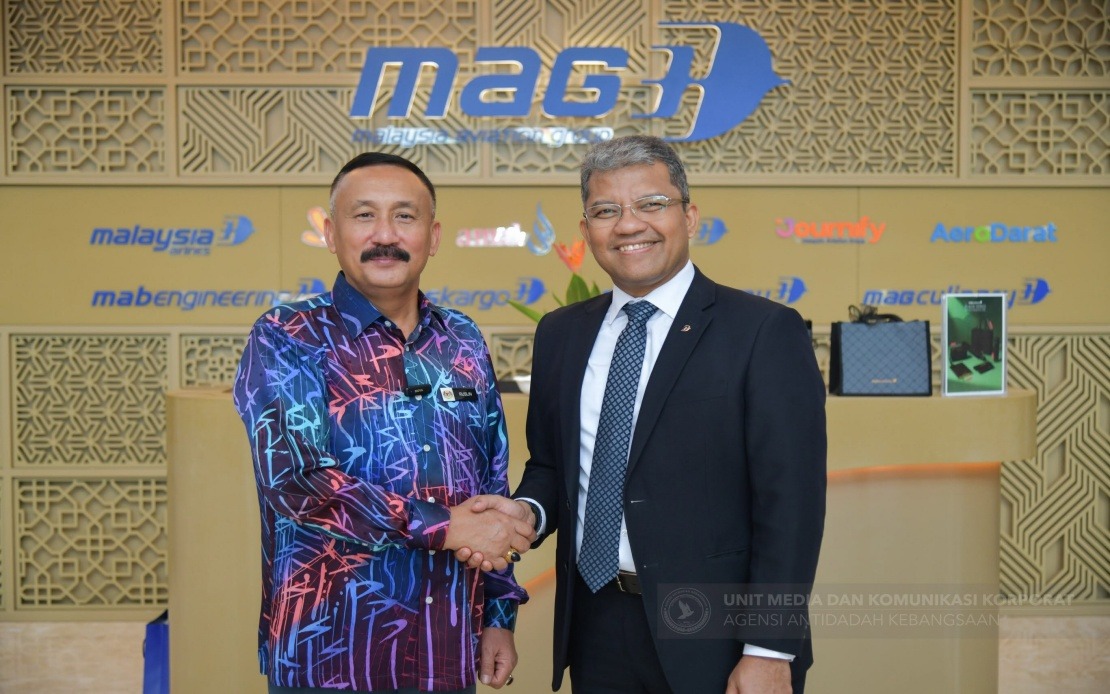
The National Anti-Drugs Agency (AADK) and Malaysia Aviation Group (MAG) have forged a strategic alliance to intensify their collective response to drug and substance abuse, marking a significant expansion of anti-narcotics initiatives beyond traditional enforcement into the critical aviation sector. The partnership, formalised through a new memorandum of understanding, reflects growing recognition that combating drug abuse requires coordination across multiple industries, particularly those where public safety is paramount.
Datuk Ruslin Jusoh, the AADK director-general, outlined the partnership's scope during a meeting at MAG's headquarters in Sepang with the airline group's chief executive officer Captain Nasaruddin A Bakar. The collaboration prioritises three interconnected objectives: preventive measures to stop substance abuse before it takes root, eradication efforts targeting existing drug problems, and sustained public awareness campaigns that educate employees about the dangers posed by narcotics and prohibited substances. This multi-pronged approach acknowledges that effective drug control requires simultaneous action at prevention, intervention, and communication levels.
The aviation industry presents unique challenges for substance abuse prevention, given the safety-critical nature of flight operations and the international mobility of airline personnel. By establishing formal cooperation between AADK and MAG, Malaysia positions itself among nations taking comprehensive approaches to ensure that individuals operating aircraft, managing airport operations, and providing cabin services maintain the highest standards of fitness for duty. The decision to focus on employee-level intervention reflects a preventive philosophy that protects both workforce welfare and public safety simultaneously.
A cornerstone of the partnership is the implementation of the Drug-Free Workplace (TEKAD) initiative across MAG premises and facilities. This programme extends beyond conventional drug testing to encompass workplace culture transformation, designed to create environments where substance abuse becomes socially unacceptable and support systems help struggling employees. For Malaysia Airlines and affiliated entities within the MAG portfolio, establishing drug-free workplaces carries implications beyond corporate responsibility—it directly underpins the integrity and reliability of flight operations that millions of passengers depend upon annually.
Ruslin articulated that workplace drug prevention represents a critical safety imperative rather than merely an administrative requirement. Aviation authorities worldwide recognise that substance abuse among personnel—whether pilots, maintenance technicians, or ground staff—constitutes an unacceptable risk factor. Malaysia's formalisation of this principle through inter-agency cooperation demonstrates mature governance of aviation safety, aligning domestic practices with international standards established by bodies like the International Civil Aviation Organization.
The partnership extends the AADK's influence beyond its traditional law enforcement remit into occupational health and organisational development territories. By collaborating with private sector entities like MAG, the agency amplifies its reach and effectiveness. Rather than relying solely on punitive measures, this approach leverages corporate structures and human resources frameworks to address substance abuse holistically. Malaysia Airlines, as Southeast Asia's prominent carrier operating extensive international routes, serves as a flagship platform for demonstrating Malaysia's commitment to integrated drug prevention.
For Malaysian aviation workers, the initiative promises enhanced support systems and clearer pathways for treatment and rehabilitation. Rather than viewing substance abuse strictly as a disciplinary matter, the TEKAD framework emphasises wellness, recovery, and reintegration. This humanistic dimension distinguishes modern drug prevention from approaches focused exclusively on detection and punishment, potentially encouraging affected individuals to seek help proactively rather than conceal problems until they escalate into operational hazards.
The delegation attending the Sepang meeting, including AADK deputy director-general (Operations) Zainudin Abdullah and representatives from both organisations, reflected the formal institutional commitment underpinning the partnership. Such high-level engagement signals that drug prevention has achieved priority status within both organisations' strategic agendas, rather than remaining peripheral to core operations. This visibility helps translate policy frameworks into actual workplace practices.
For the broader Malaysian context, the AADK-MAG cooperation exemplifies how government agencies can work effectively with private sector partners to address cross-cutting challenges. As Malaysia continues navigating drug abuse as a persistent social issue, formalised collaborations demonstrate that solutions require engagement across public and private boundaries. The aviation sector's visibility and international profile mean that demonstrable success here could catalyse similar partnerships in other industries—from banking to healthcare to manufacturing—each tailoring the drug-free workplace concept to sector-specific requirements.
The partnership also addresses an often-overlooked dimension of Malaysia's drug problem: substance abuse among employed, relatively affluent individuals who maintain professional appearances while struggling with addiction. By targeting the workplace directly, the AADK and MAG acknowledge that drug abuse affects not only economically marginalised communities but penetrates professional environments where consequences include compromised judgment in safety-critical roles. This inclusive framing strengthens the moral authority of prevention messaging.
Looking forward, success metrics for this collaboration will likely include employee participation rates in awareness programmes, effectiveness of workplace screening mechanisms, and recovery outcomes for identified cases. Such measurement will provide evidence regarding whether formal inter-agency cooperation generates tangible improvements in workplace safety and employee wellbeing compared to isolated departmental efforts. Should outcomes prove positive, the model could attract replication across other government-linked companies and private enterprises.
The initiative arrives amid evolving drug markets in Southeast Asia, where new psychoactive substances and synthetic drugs pose challenges that traditional enforcement struggles to address. Prevention-focused partnerships like the AADK-MAG arrangement represent a strategic pivot toward limiting demand and identifying abuse early, complementing supply-side enforcement. For Malaysia's aviation sector and the thousands of employees it encompasses, this partnership signals that organisational safety culture and anti-drug commitment are becoming indistinguishable imperatives, reinforcing the industry's reputation for professionalism and reliability.

