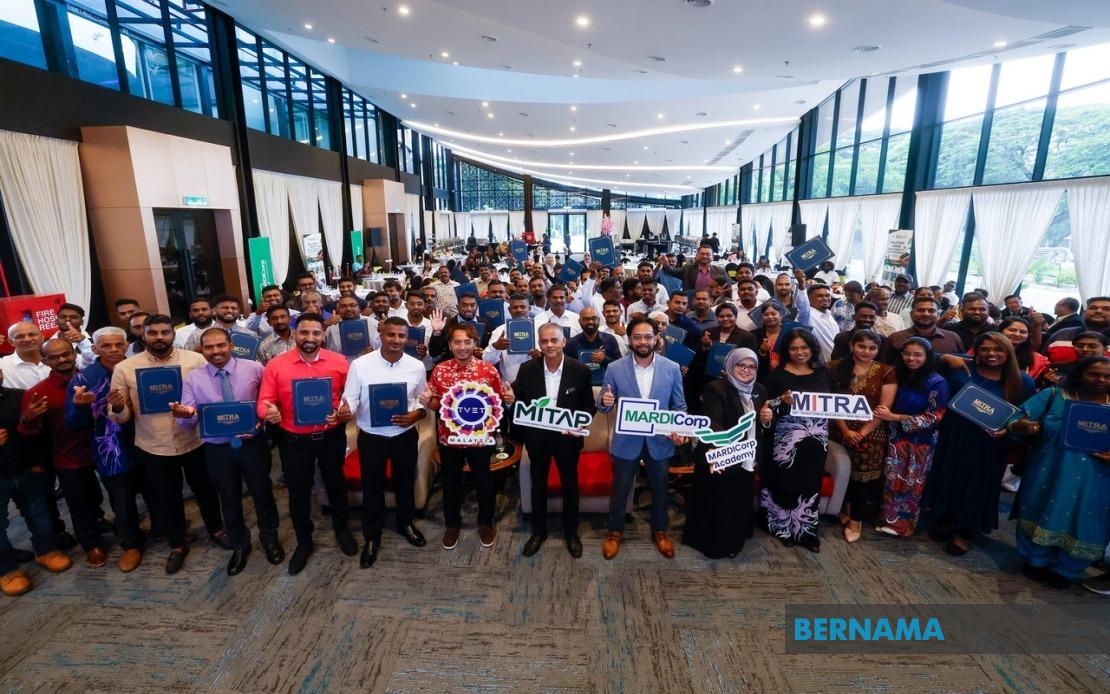
A significant push to diversify Malaysia's agricultural workforce has resulted in 68 young agropreneurs from the Indian community receiving RM30,000 each in Agricultural Transformation Grants. The funding, distributed at a ceremony in Putrajaya on August 13, forms part of the Malaysian Indian Transformative Agri Programme (MITAP), a strategic initiative designed to broaden participation in farming among members of the Indian community and create new entrepreneurial opportunities in the sector.
The MITAP framework represents a collaborative effort between the Malaysian Indian Community Transformation Unit (MITRA) and MARDICorp, operationalised through the Indian Community Socioeconomic Development Programme. This partnership reflects growing governmental recognition that Malaysia's agricultural sector benefits when supported across diverse demographic groups, and that targeted interventions can unlock entrepreneurial potential within communities that have historically been underrepresented in commercial farming.
According to K. Raveendran Nair, the director-general of MITRA, the programme operates across two distinct components that address different stages of agricultural entrepreneurship. The QuickWin MITRA component, which funded the 68 grant recipients announced this week, provides rapid capital deployment to aspiring young farmers. Running parallel to this is the Young Agropreneur Programme (PUM), an intensive 10-month training curriculum designed to build foundational skills and business acumen. Eight participants have already completed the PUM cycle, with plans for cohorts to continue enrolling.
The Agricultural Transformation Grants target six primary agricultural subsectors, reflecting both traditional farming practices and emerging opportunities within the sector. Recipients are pursuing ventures in food crop production, which remains foundational to domestic food security; dairy cattle management, an area requiring substantial technical knowledge and capital investment; beekeeping, which offers high-value production with relatively lower land requirements; oyster mushroom cultivation, a profitable specialty crop suited to Malaysia's climate; freshwater fish farming, which aligns with national aquaculture development goals; and food processing technology, which adds value to primary agricultural output. This diversification ensures that grant recipients can pursue pathways aligned with their capabilities and local market conditions.
The support structure extends well beyond the initial capital injection. Mohamad Zamir Ghazali, managing director of MARDICorp, emphasised that the corporation views ongoing mentorship and technical assistance as central to participant success. MARDICorp has committed to guiding farmers through the entire value chain—from production optimisation through to market access and product development. The corporation recognises that many young farmers face particular challenges when moving from production to commercialisation, and the post-grant support framework attempts to address this critical juncture.
Networking and collective empowerment form an underappreciated dimension of MITAP's strategy. Ghazali highlighted that bringing participants together creates leverage with government agencies and market actors, ensuring that these young farmers maintain prominence in policy discussions and development initiatives. Several participants have already formalised their participation in agricultural associations, a step that provides both credibility and access to group marketing channels. This collective approach contrasts with atomised agricultural development, where individual smallholders lack bargaining power or visibility to larger market opportunities.
For Malaysia's agricultural sector, the initiative carries implications that extend beyond immediate employment creation. The Indian community has historically concentrated in specific geographic regions and agricultural subsectors, and MITAP represents an effort to redistribute agricultural participation more broadly. By deliberately targeting young people in this demographic, the programme addresses succession challenges in farming while building a new generation of commercially-oriented agropreneurs. This matters as Malaysia continues efforts to modernise its agricultural base and increase domestic production across multiple food categories.
The timing of the MITAP grants also reflects broader Malaysian policy priorities around food security and rural development. As the nation seeks to reduce import dependency for key agricultural products and strengthen rural economies, programmes that activate young entrepreneurs across diverse communities become strategically valuable. The emphasis on food processing technology—a relatively sophisticated agricultural subsector—indicates ambitions to move beyond primary production toward value-added activities, which generate higher margins and more sustainable rural employment.
Sustainability of the initiative depends partly on whether grant recipients can successfully translate initial capital and training into viable, scalable enterprises. The transition from training to profitable operation remains a critical juncture for agricultural entrepreneurship programmes globally, and MARDICorp's commitment to continued technical support acknowledges this reality. However, success also hinges on market conditions, commodity pricing, and whether the broader agricultural policy environment remains supportive of smallholder and youth-focused farming ventures.
Looking forward, MITAP's model—combining targeted capital grants, skills development, and ongoing mentorship within a community-specific framework—could potentially be adapted for other demographic groups underrepresented in Malaysian agriculture. The programme suggests that with appropriate institutional support and capital provision, participation barriers in farming can be meaningfully reduced. As Malaysia confronts demographic shifts in its rural population and seeks to maintain agricultural vibrancy, initiatives like MITAP that deliberately cultivate new agricultural entrepreneurs may become increasingly important to sectoral health and rural economic resilience.

