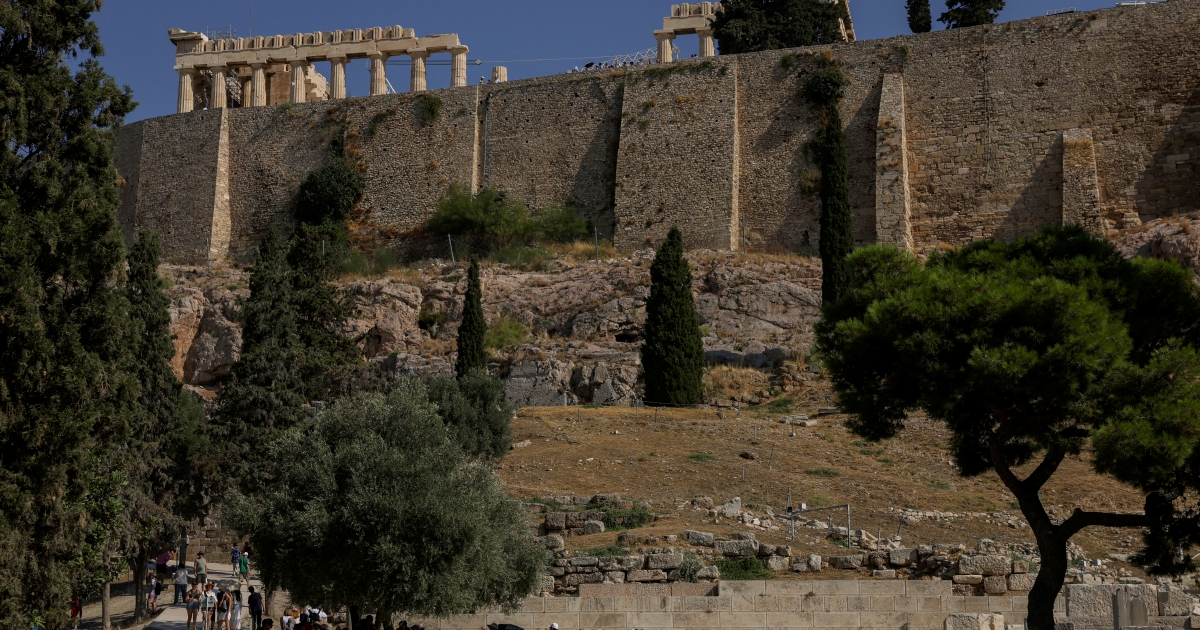
A violent incident in central Athens has prompted heightened concerns about tourist safety at one of Europe's most visited archaeological destinations. On Tuesday, a 60-year-old man wielded a knife against two Greek-American visitors in the immediate vicinity of the Acropolis, the iconic hilltop site that anchors Greece's ancient heritage and attracts hundreds of thousands of international visitors annually. Police responded swiftly to the incident and took the suspect into custody, though details surrounding the attack's circumstances remain under investigation.
The Acropolis and its surrounding precinct represent the historical heart of modern Athens, drawing tourists from across the world who come to witness monuments spanning millennia of human civilization. The site's prominence in global consciousness means that security incidents there reverberate beyond local significance, potentially influencing travel decisions and perceptions of Greece as a destination. The area surrounding the ancient monuments, including streets and plazas frequented by visitors, has long been a focal point for Athens's tourism economy and cultural identity.
Incidents of this nature raise questions about visitor protection and crowd management in high-traffic heritage zones. The Acropolis area, like many major archaeological sites worldwide, presents unique security challenges owing to its open nature, dense pedestrian flows, and the difficulty of establishing comprehensive protective measures without compromising the visitor experience or the site's historical integrity. Authorities must balance accessibility and preservation with the safety concerns of the thousands of people who navigate these spaces daily.
Greece's tourism sector forms a cornerstone of the national economy, contributing substantially to employment, government revenue, and regional development. Negative incidents affecting visitor safety can have measurable impacts on booking trends and traveler confidence, particularly among North American and international tourists who represent key market segments. The Greek government and Athens municipal authorities typically respond to such occurrences by reviewing security protocols and reassuring the international travel community about ongoing protective measures.
For Malaysian travellers and others from Southeast Asia considering trips to Greece, such incidents warrant awareness rather than alarm. Greece remains a comparatively safe destination by global standards, and violent crimes targeting tourists, while occasionally reported, are not characteristic of the broader travel experience. Nevertheless, visitors to any major international destination should exercise standard precautions and remain attentive to their surroundings, particularly in crowded public spaces and areas known to attract large visitor concentrations.
The arrest of the 60-year-old suspect indicates that local law enforcement responded effectively to the emergency, demonstrating the police capacity to intervene and prevent further harm. The swift apprehension also suggests that security presence in the Acropolis vicinity, while sometimes invisible to casual observers, operates with sufficient readiness to address acute threats. Investigation into the suspect's motivations and mental state will likely proceed through Greece's legal system, which may shed light on whether this constituted a random act, mentally-driven violence, or an incident arising from specific interpersonal circumstances.
The Acropolis complex continues operating as a major tourist attraction, and such isolated incidents have historically not led to significant operational disruptions or the implementation of heavy-handed security measures. The site's appeal to international visitors remains robust, underpinned by the irreplaceable nature of its classical monuments and the unique perspective they offer on Western civilization's foundations. Authorities and tourism stakeholders in Athens maintain that responsible management and proportionate responses to security incidents allow the site to remain accessible and welcoming while protecting visitors.
For the two Greek-American tourists involved in Tuesday's attack, the experience will likely prove deeply disturbing, though the apparent rapid police intervention presumably prevented escalation to more severe injury. Victim support and trauma counselling services available through Greek authorities and diplomatic channels can assist those affected in processing such traumatic encounters. Their experience and recovery will be closely observed by international media and travel communities as an indicator of how Greek authorities handle crisis response in heritage-tourism contexts.
Looking forward, the incident underscores the importance of continuous dialogue between Greek tourism authorities, law enforcement, site management, and international visitor networks regarding safety protocols and best practices. While no destination can guarantee absolute security, transparent communication about how authorities manage risks and respond to incidents builds confidence among potential visitors. The resilience of Greece's tourism sector, demonstrated through its recovery from previous crises, suggests that this week's attack will not fundamentally alter the nation's position as a premier heritage destination for global travellers, including those from Malaysia and the wider Southeast Asian region.

