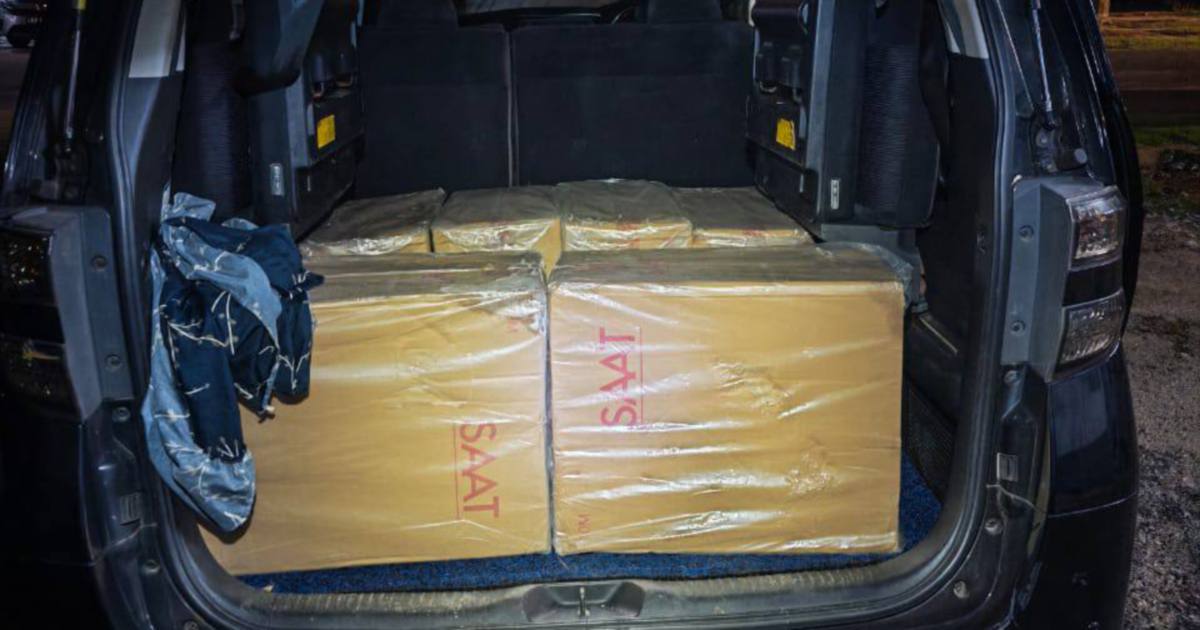
In a coordinated early morning enforcement operation, the General Operations Force successfully intercepted a Toyota Vellfire at Pasir Tumboh Bridge in Kota Baru and recovered a substantial cache of illicit cigarettes. The vehicle, which was stopped at the roadside, contained approximately 60,000 cigarettes suspected to have evaded customs duties. The haul, with an estimated market value of RM112,200, represents a significant seizure in the ongoing battle against contraband tobacco trafficking in the northern corridor.
The driver of the vehicle, a 37-year-old male, was taken into custody following the discovery. Law enforcement personnel conducting the inspection found the cigarettes during a standard checkpoint procedure, triggering further investigation into the source and intended destination of the shipment. The operation underscores the vigilance maintained by authorities along major transportation routes, particularly in states like Kelantan which sit on important transit corridors.
Duty-unpaid cigarettes represent a substantial underground economy in Malaysia, with illegal shipments typically originating from neighbouring countries or sourced through clandestine domestic networks. The tax differential between legitimate retail prices and untaxed alternatives creates powerful economic incentives for smuggling operations. When excise duties are factored in, the price gap widens considerably, making black-market cigarettes attractive to price-sensitive consumers and generating enormous profits for organised trafficking networks.
The Pasir Tumboh Bridge, located along the main commercial transport route through Kelantan, has historically been a focal point for enforcement activities. Its strategic position makes it a natural checkpoint location where authorities regularly conduct inspections. The bridge serves as a critical juncture for traffic heading towards or from the Thailand border, necessitating sustained monitoring to prevent contraband goods from moving freely through the region.
The seizure quantity of 60,000 units suggests this operation may have disrupted a mid-level distribution operation rather than an isolated trafficking attempt. Commercial-scale shipments of this magnitude typically indicate organised involvement, with carefully planned logistics and established distribution networks. Such operations often rely on routine vehicle movements and driver familiarity with common routes to evade detection.
Government revenue leakage from illicit tobacco sales represents a persistent policy challenge. Each year, Malaysia loses substantial excise tax revenue through contraband cigarette trade, funds that would otherwise support public services and healthcare initiatives. This revenue loss compounds the public health concerns already associated with cigarette consumption, as duty-unpaid products lack regulatory oversight and quality assurance.
The GOF continues to maintain operational presence across northern Malaysian highways, particularly targeting high-traffic corridors vulnerable to smuggling activities. Their interdiction efforts form part of a broader compliance framework designed to protect fiscal revenue and maintain fair competition within the legitimate tobacco retail sector. Individual retailers operating lawfully face disadvantageous pricing when competing against untaxed alternatives.
This month's arrest contributes to a pattern of seizures reflecting intensified enforcement attention in Kelantan and surrounding areas. The consistent discovery of significant contraband quantities indicates that trafficking remains a persistent problem despite previous intervention efforts. The sophistication of smuggling operations has evolved, with operators employing various concealment techniques and vehicle selection strategies to minimise detection risk.
The detained driver now faces potential charges under customs and excise legislation, with penalties including substantial fines and possible imprisonment depending on aggravating circumstances and his level of involvement in the trafficking network. Prosecution of drivers and operators serves as a deterrent, though sustained success requires addressing underlying demand factors and supply-chain vulnerabilities that smugglers continue to exploit.
Regional cooperation remains essential for combating cross-border cigarette trafficking. Kelantan's proximity to Thailand, where production costs and regulatory frameworks differ substantially, creates structural advantages for smugglers. Coordinated intelligence sharing between Malaysian and Thai authorities, combined with enhanced port and border monitoring, could reduce the flow of contraband entering Malaysian supply chains.
The seizure reflects broader strategic priorities within Malaysia's law enforcement community, where tobacco trafficking ranks alongside narcotics enforcement in terms of resource allocation and operational focus. However, meaningful progress requires complementary policy interventions addressing demand elasticity, retail compliance mechanisms, and the economic viability of legitimate distribution channels competing against black-market alternatives.

