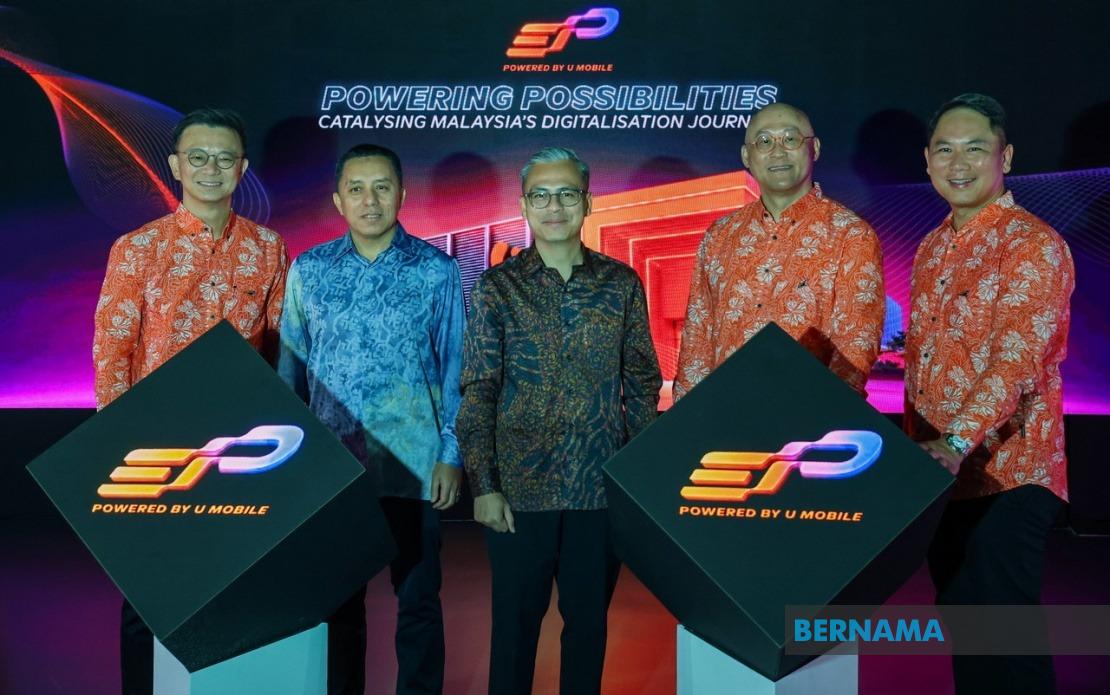
Malaysia stands at the threshold of a technological shift that could reshape how its key economic sectors operate, according to Communications Minister Datuk Seri Fahmi Fadzil. Speaking at the launch of the U Mobile Enterprise Innovation Platform Hub in Kuala Lumpur, Fahmi outlined how 5G Advanced—also known as Ultra 5G—technology represents a major opportunity for the country to enhance productivity and operational efficiency through the integration of artificial intelligence and robotics across multiple industries.
5G Advanced is the latest iteration of fifth-generation mobile network technology, built on a 5G Standalone architecture that delivers significant improvements over previous generations. The network offers enterprise-grade connectivity with ultra-low latency, network slicing capabilities that allow customised service delivery, double the data capacity of conventional 5G systems, and AI-powered security features. These technical advantages position the technology as far more than an incremental upgrade, but rather a foundational platform for digital transformation across sectors.
In healthcare settings, Fahmi identified immediate applications where Ultra 5G could alleviate pressures on medical staff. The technology's ultra-low latency and reliable connectivity enable real-time monitoring and remote assistance capabilities that could reduce the workload burden on nurses in hospital wards. This addresses a persistent challenge in Malaysia's healthcare system, where staffing constraints have long pressured frontline workers. By automating routine monitoring tasks and facilitating faster communication between medical professionals, 5G Advanced could improve both worker wellness and patient care quality simultaneously.
The agricultural sector, particularly Malaysia's substantial palm oil industry, could see productivity gains through enhanced connectivity and automation. Modern plantations increasingly rely on sensor networks and remote monitoring systems to optimise crop management and detect issues early. 5G Advanced's superior speed and capacity would enable more sophisticated data collection from oil palm plantations, allowing operators to make faster decisions about irrigation, pest control, and harvesting schedules. The technology also supports deployment of autonomous systems and drones for crop monitoring, reducing labour requirements while improving yields and sustainability metrics.
Retail represents another significant opportunity for transformation through Ultra 5G's advanced data analytics capabilities. Malaysian retailers, from large shopping centres to smaller establishments, struggle with inventory management inefficiencies and limited customer insights. 5G Advanced enables real-time tracking of stock movements across multiple locations, predictive analytics for demand forecasting, and sophisticated tools for identifying emerging consumer trends. These capabilities become especially valuable in Malaysia's increasingly competitive retail environment, where businesses must respond quickly to changing preferences and manage supply chains more effectively to remain competitive against both regional and international competitors.
Beyond commercial applications, Fahmi emphasised the strategic security potential of 5G-enabled surveillance systems. He revealed that 5G connectivity is already supporting drone operations for monitoring purposes in several locations across Malaysia, including along border areas. Drones powered by reliable, low-latency 5G networks can transmit high-definition video feeds in real time, enabling operators to detect and respond to security threats with minimal delay. This capability becomes particularly valuable for Malaysia's geographically extensive border regions, where traditional ground-based surveillance proves challenging and costly to maintain comprehensively.
The minister indicated that relevant security agencies require proper assessment before expanding such deployments. The Malaysian Border Control and Protection Agency and the Royal Malaysia Police should evaluate whether 5G-enabled drone surveillance suits their operational requirements and strategic objectives. Such assessments would determine deployment priorities, identify necessary infrastructure investments, and establish protocols for integrating drone surveillance with existing security frameworks. This measured approach reflects recognition that technological capability alone does not guarantee operational success without thoughtful integration and workforce training.
Addressing the infrastructure dimension of this transition, Fahmi noted that the Malaysian Communications and Multimedia Commission maintains readiness to collaborate with other government ministries to expand internet coverage in border areas. The Home Ministry partnership would prove essential for deploying surveillance technology in remote frontier regions where telecommunications infrastructure remains underdeveloped. Such collaboration represents the broader coordination challenge facing Malaysia's digital transformation—ensuring that advanced technologies reach beyond major urban centres to areas of strategic importance but limited commercial viability.
The launch of U Mobile's Enterprise Innovation Platform Hub signals growing private sector engagement with these opportunities. Telecommunications providers increasingly recognise that 5G Advanced success depends not merely on deploying networks, but on helping enterprises identify practical applications and develop capabilities to exploit them. Innovation hubs serve this purpose by creating spaces where businesses can experiment with new technologies, share experiences, and access technical expertise. For Malaysia's industrial landscape, such platforms could accelerate adoption timelines and help smaller enterprises access capabilities previously available only to large corporations.
For Southeast Asia more broadly, Malaysia's positioning of 5G Advanced as a development tool carries regional implications. As countries across the region pursue digital economy goals, Malaysia's sector-specific focus on agriculture, healthcare, and retail provides a practical roadmap. Rather than pursuing technology adoption for its own sake, the emphasis on measurable productivity improvements and tangible problem-solving could influence how neighbouring nations approach similar investments. This approach also reflects Malaysia's broader development strategy, balancing technological advancement with practical economic benefits and social improvements.
The broader context matters significantly here. Malaysia's economy has long grappled with productivity challenges, particularly in agriculture and traditional sectors facing labour shortages and rising costs. 5G Advanced offers a pathway toward modernisation that doesn't necessarily require wholesale industry restructuring. By enhancing existing operations through better data, faster communication, and automation of specific tasks, sectors can improve competitiveness without complete transformation. This incremental approach may prove more politically and economically sustainable than more disruptive alternatives.
Looking forward, successful 5G Advanced deployment will depend on factors beyond technology itself. Enterprise adoption rates will reflect how effectively telecommunications providers and government agencies communicate the value proposition to businesses, particularly small and medium enterprises that often lack in-house expertise to evaluate emerging technologies. Training and education initiatives will determine whether Malaysia's workforce can effectively manage and maintain new systems. Regulatory frameworks must balance encouraging innovation with protecting consumers and ensuring fair competition. These implementation challenges will ultimately determine whether Ultra 5G's significant technical potential translates into the widespread transformation Fahmi envisions across Malaysia's key economic sectors.

