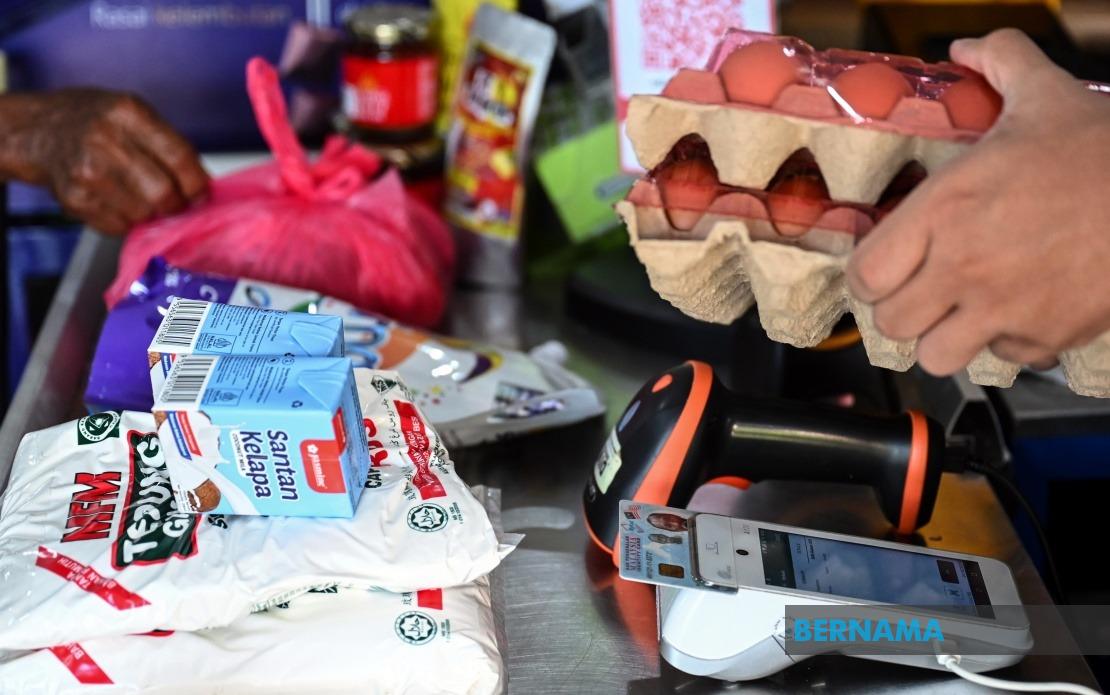
Malaysia's Ministry of Finance has initiated Phase 3 disbursements of the Sumbangan Tunai Rahmah (STR) cash assistance programme, reaching 5.3 million households nationwide with an initial allocation of RM1.2 billion. The staged rollout began today, marking another significant milestone in the government's effort to provide targeted financial relief to vulnerable Malaysians grappling with persistent cost-of-living pressures. This latest phase represents a substantial expansion of the programme, which has grown considerably since the beginning of 2026.
The recipient pool has swollen by 300,000 households during the first eight months of this year, growing from the five million baseline recorded in January. The expanded coverage now encompasses 3.9 million low- and middle-income households alongside 1.4 million single senior citizens. The composition of beneficiaries reflects the government's dual focus on working families struggling with household expenses and elderly Malaysians surviving on fixed or minimal incomes. This targeted approach seeks to channel assistance to those demographic groups facing the greatest financial vulnerability.
Payment amounts under Phase 3 vary according to individual circumstances, ranging from RM150 to RM600 for low- and middle-income households, with the quantum determined by income level and number of dependent children. Single senior citizens receive a flat amount of RM150. By consolidating disbursements across the first three quarterly phases plus monthly SARA basic income support, qualified recipients can accumulate up to RM3,300 in total assistance by August 2026, excluding a separate one-off nationwide payment to all Malaysian citizens aged 18 and above. This layered approach aims to provide more consistent support throughout the year rather than relying on periodic distributions.
The total federal expenditure committed to STR and SARA in 2026 amounts to RM15 billion, the highest allocation in the Federal government's history. This figure approaches three times the amount distributed through the Bantuan Rakyat 1Malaysia (BR1M) programme in 2016, indicating a substantially increased commitment to direct cash transfers. The quantum leap reflects the government's assessment that living costs have intensified significantly over the past decade, requiring more generous and frequent interventions to maintain household welfare.
Starting from this year, the assistance architecture underwent comprehensive restructuring to align payments with household rhythms rather than arbitrary government schedules. STR now distributes payments on a quarterly cycle, while SARA delivers monthly basic income to those meeting eligibility criteria. This recalibration aims to provide more predictable cash flow to recipients, enabling better household financial planning compared to the ad hoc distribution patterns of previous programmes. The reformed structure signals an attempt to move beyond emergency relief toward establishing quasi-permanent income support mechanisms.
Prime Minister Datuk Seri Anwar Ibrahim emphasised that the expanded programme reflects government acknowledgment that many households continue facing genuine hardship despite broader economic management efforts. He noted the deliberate increase in STR households from 3.7 million at year start to 3.9 million under Phase 3, acknowledging that initial eligibility thresholds required adjustment to capture additional struggling families. The Prime Minister framed assistance not merely as welfare but as a complementary policy working alongside structural economic reforms intended to generate employment opportunities and wage growth that would eventually reduce dependency on government transfers.
Distribution logistics accommodate recipients across the entire socioeconomic spectrum. Those maintaining bank accounts receive Phase 3 payments through direct credit starting immediately, representing the most efficient and secure transfer mechanism. Unbanked populations can collect cash payments at any Bank Simpanan Nasional branch throughout the country, ensuring geographic accessibility regardless of residence in urban or remote areas. This dual-channel approach recognises that banking penetration remains incomplete in certain communities, particularly among elderly and rural populations.
The Ministry of Finance attributed the programme's expansion partly to improved fiscal management and governance reforms that have redirected additional state revenue toward direct assistance schemes. These administrative improvements, the ministry suggested, created fiscal space previously unavailable for such large-scale transfers. The reallocation reflects a policy choice to prioritise immediate household relief over alternative expenditure categories, signalling government prioritisation of poverty alleviation within budgetary constraints.
Recognising chronic programme leakage through fraudulent applications, the ministry maintains year-round intake for new applicants and appeals through the official STR portal at bantuantunai.hasil.gov.my. Continuous application windows theoretically permit eligible households excluded through initial screening to access support once circumstances change or documentation gaps are resolved. Comprehensive frequently asked questions on both STR and SARA are accessible through dedicated government portals, enabling self-service navigation without bureaucratic intermediaries.
Cyberfraud represents an emerging threat as cash assistance programmes gain visibility and value. The Ministry of Finance issued explicit warnings against fraudulent links and scam websites purporting to represent government assistance services. Recipients are instructed to verify information exclusively through official government portals rather than following links distributed via unsolicited messages or third-party websites. This advisory reflects growing awareness that economically vulnerable populations prove particularly susceptible to digital scams exploiting awareness of legitimate government programmes.
The STR expansion occurs within broader context of Malaysia's economic management challenges. Despite government commitments to structural reform and income growth, inflation and cost pressures on essential services continue outpacing wage growth in many sectors. The programme represents an explicit acknowledgment that market-driven income generation alone cannot adequately protect lower-income Malaysians, necessitating temporary targeted transfers until underlying wage and employment improvements materialise. The sustainability of RM15 billion annual allocations remains contingent upon maintaining budget surpluses or redirecting resources from alternative expenditure categories.

