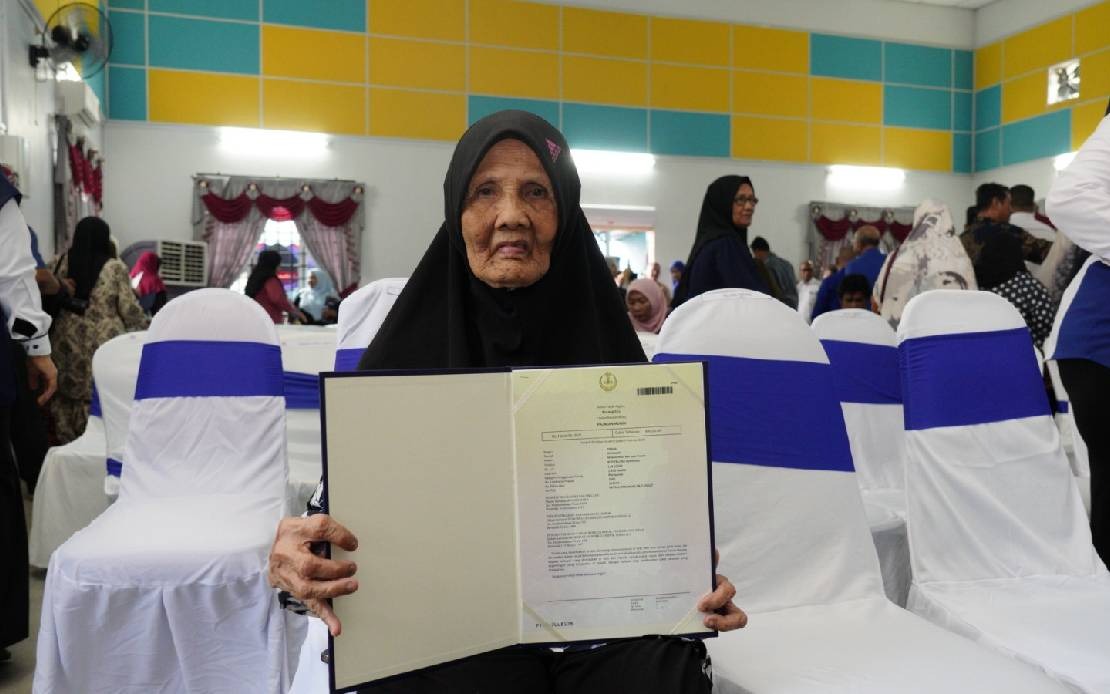
Forty-seven families in Perak's Seri Gala locality have been handed formal documentation granting them land ownership through the FELCRA Berhad consolidation programme, an achievement that underscores the ongoing transformation of Malaysia's rural economy. The grants, distributed during a ceremony held in Ipoh on July 14, represent tangible progress in converting previously underdeveloped agricultural land into productive assets that provide economic security for rural households across the state.
State leadership views the land transfer initiative as far more than routine bureaucratic procedure. Perak Menteri Besar Datuk Seri Saarani Mohamad characterised the grant handover as a deliberate effort to restore dignity to rural populations by establishing legitimate property ownership, thereby anchoring the financial future of participating families within formal economic structures. This framing reflects a broader philosophical shift in Malaysian rural policy that recognises property ownership as fundamental to building community resilience and confidence.
The FELCRA Consolidation and Rehabilitation Programme has emerged as one of Malaysia's most systematically successful rural development models, according to state officials. Rather than simply distributing agricultural land without support structures, the programme combines land transfer with ongoing technical assistance, market linkages, and community infrastructure development. This comprehensive approach has demonstrated tangible results: previously marginal land has been converted into productive agricultural assets, household incomes have risen, local business ecosystems have developed around participating communities, and rural youth have gained employment opportunities that previously would have required migration to urban centres.
Pearak now ranks as the country's second-largest operational region for FELCRA activities, with the agency managing approximately 32,000 hectares across nearly 20,000 participant families. Only Pahang, historically the largest FELCRA state, exceeds Perak in terms of programme scale. This concentration reflects both the state's agricultural heritage and the effectiveness of implementation at the regional level, where local officials have adapted the national framework to suit Perak's specific geographical and demographic conditions.
Zainal Abidin Alias, FELCRA's director of participant affairs, positioned the Seri Gala grant ceremony within a wider reconceptualisation of rural development articulated by Deputy Prime Minister Datuk Seri Dr Ahmad Zahid Hamidi. Contemporary rural policy, he noted, extends beyond traditional physical infrastructure projects such as roads, water systems, and electricity networks. Instead, comprehensive rural advancement now encompasses human capital development through vocational training and education, strengthening of community-based economic enterprises, enhancement of entrepreneurial capacity, measurable improvements in living standards, and crucially, empowerment of rural communities to shape their own economic trajectories rather than remaining passive recipients of government initiatives.
This reframing has profound implications for how Malaysia approaches regional inequality. For decades, rural development focused on connecting agricultural areas to urban markets and modernising production methods without necessarily transferring wealth or ownership to rural populations. The shift toward asset ownership represents acknowledgment that sustainable rural prosperity requires that communities accumulate capital and control productive resources, not merely participate as wage labourers or tenant farmers in development schemes controlled from distant bureaucratic centres.
For Malaysian policymakers, the Seri Gala ceremony also demonstrates that rural development programmes can simultaneously achieve multiple policy objectives: land productivity increases, rural income rises, youth employment improves, and rural-urban migration pressures ease. When rural families hold formal land ownership and can build wealth through agriculture, they have stronger incentives to remain in their home communities and invest in family enterprises rather than seeking urban employment at lower wages.
The programme's success in Perak carries broader relevance for Southeast Asia, where numerous countries grapple with similar rural-urban divides and agricultural transformation challenges. Malaysia's FELCRA model, with its combination of land consolidation, participant education, market facilitation, and gradual asset transfer, offers a practical template that other regional governments increasingly reference in their own rural development planning.
Yet the expansion of FELCRA activities also raises questions about programme sustainability and scalability. Managing nearly 20,000 participant families across 32,000 hectares requires substantial administrative capacity, continuous monitoring of land productivity, maintenance of market linkages, and provision of extension services. As the programme expands, ensuring consistent service quality across all participants becomes increasingly challenging, particularly in more remote areas where infrastructure and specialist expertise may be limited.
The grant distribution in Seri Gala also reflects shifting attitudes toward rural tenure security in Malaysia. Formal land ownership documentation provides participants with collateral for agricultural credit, inheritance clarity for family succession, and psychological ownership that encourages long-term investment in land improvement. This contrasts sharply with historical arrangements where rural families cultivated land under informal arrangements or government schemes with limited security of tenure.
For Perak specifically, the programme's expansion addresses historical economic structures where agricultural communities historically remained dependent on large plantation companies or middlemen traders. By converting participants into asset-owning farmers with documented title, the FELCRA model redistributes economic power within rural communities and reduces extractive intermediation that had previously captured much of agricultural value.
Looking forward, the continued expansion of such programmes will likely depend on government commitment to maintaining funding, ensuring programme staff receive adequate training, and adapting delivery mechanisms to accommodate digital systems and modern agricultural technologies. The 47 families receiving grants in Seri Gala represent not merely administrative completion of a process, but rather the beginning of their integration into formal property markets and credit systems—a transition that requires sustained institutional support beyond the initial grant handover ceremony.

